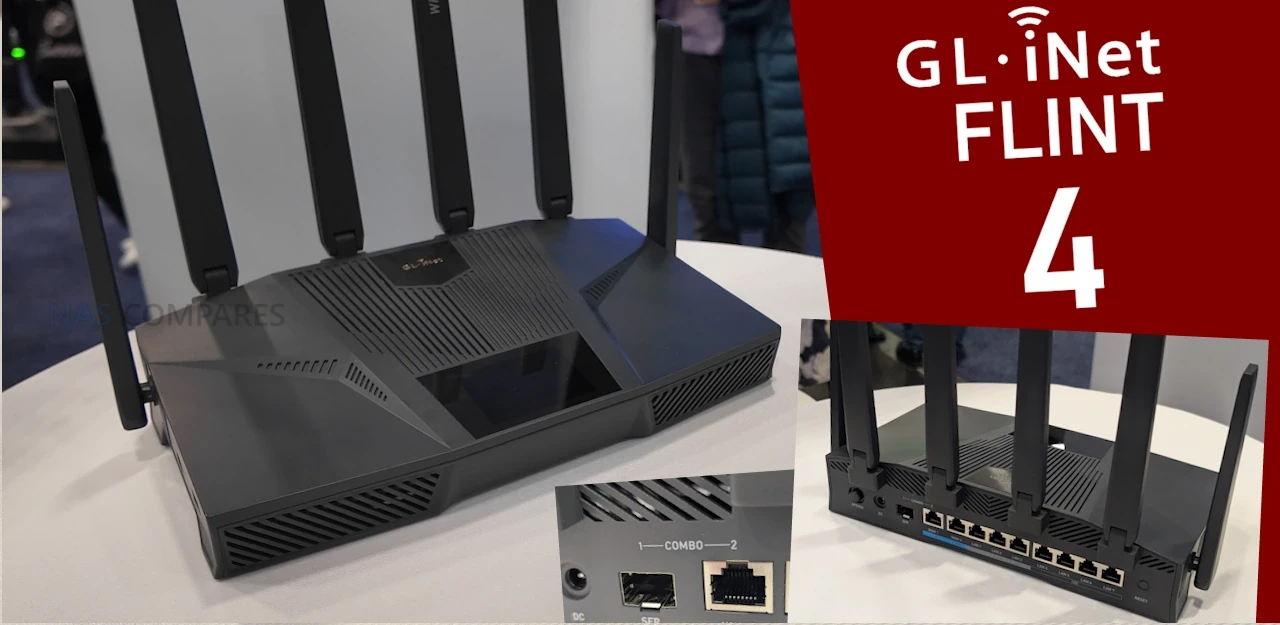
Gl.iNet Flint 4 WiFi7 Router Revealed at CES 2026
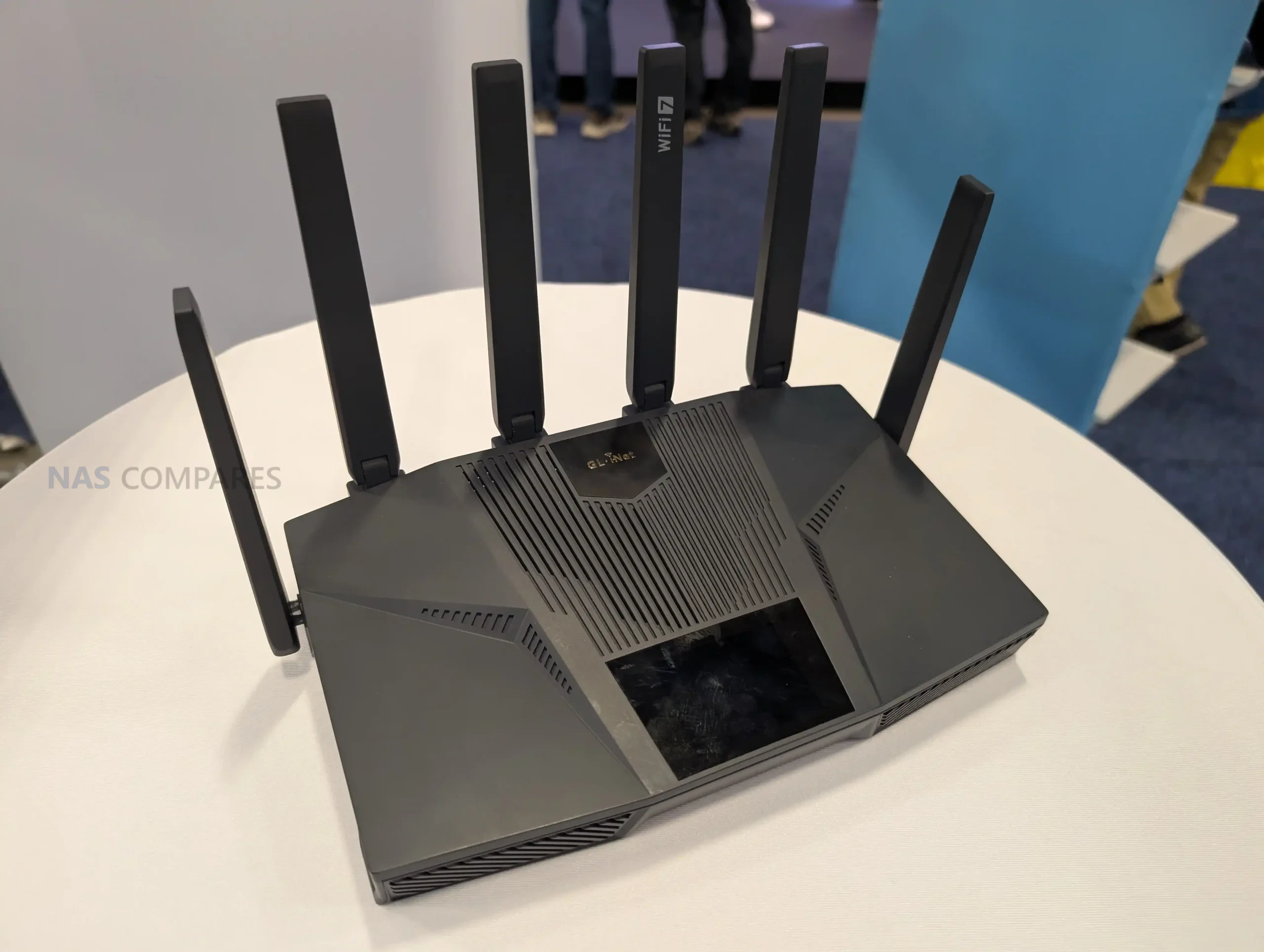
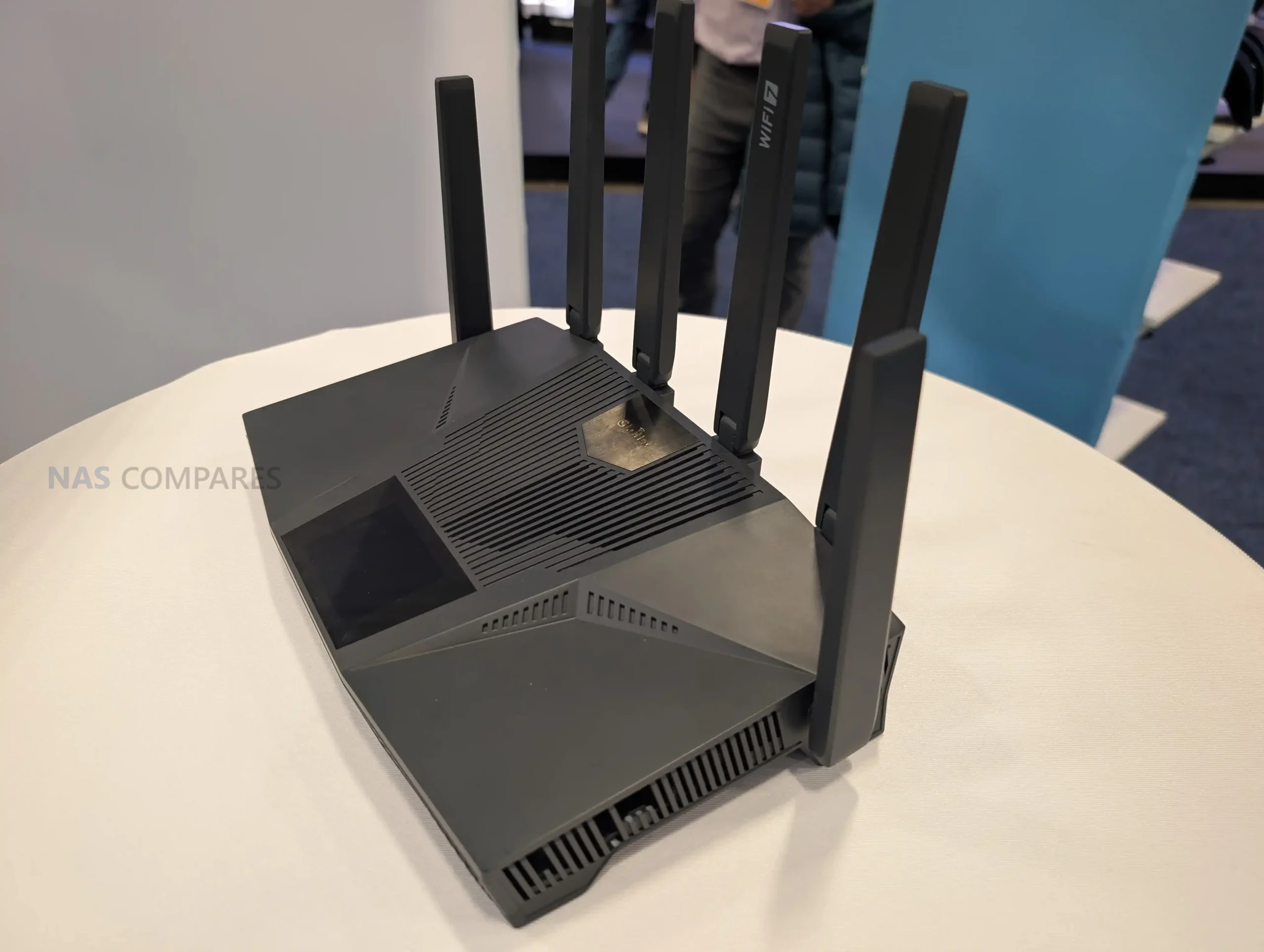
GL.iNet used CES 2026 to preview the Flint 4 as an in-development desktop router, and the prototype shown on the stand reads like a higher-tier extension of what the Flint line has been building toward. The unit on display pairs a more “feature-forward” exterior, including a top-mounted touchscreen, with a port layout aimed at users who want multiple wired speeds in a single device: a 10GbE option via a shared SFP or copper connection, several 2.5GbE ports, and additional 1GbE LAN ports. On the wireless side, it is presented as a Wi-Fi 7 platform expected to cover 2.4 GHz, 5 GHz, and 6 GHz, with 6 external movable antennas, but GL.iNet has not yet locked down details such as whether it stays strictly tri-band or adds a second 5 GHz radio. With RAM and storage still unconfirmed, the safest way to view Flint 4 at this stage is as a prototype focused on connectivity and interface direction rather than a finalized retail spec sheet.

Gl.iNet Flint 4 Router – Everything We Know
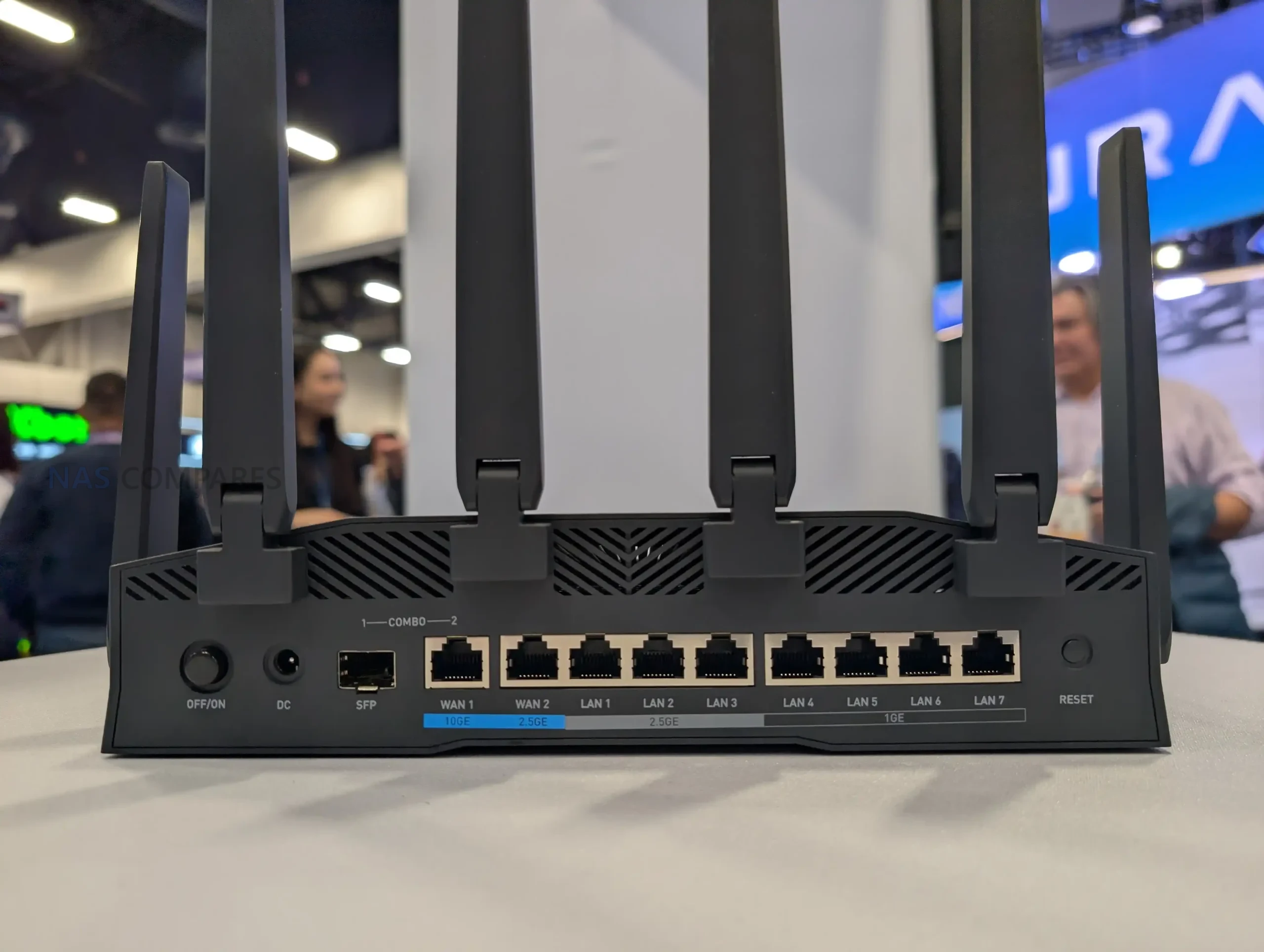
Flint 4 is centered on wired connectivity, combining multiple Ethernet speed tiers in a single chassis. The prototype shows a 10GbE combo arrangement with 1x SFP and 1x 10GBASE-T copper where only 1 of the 10GbE interfaces is intended to be active at a time, and that shared link can be assigned as WAN or LAN. Below that are 4x 2.5GbE ports presented as 1x WAN and 3x LAN, plus 4x 1GbE LAN ports for additional wired clients.
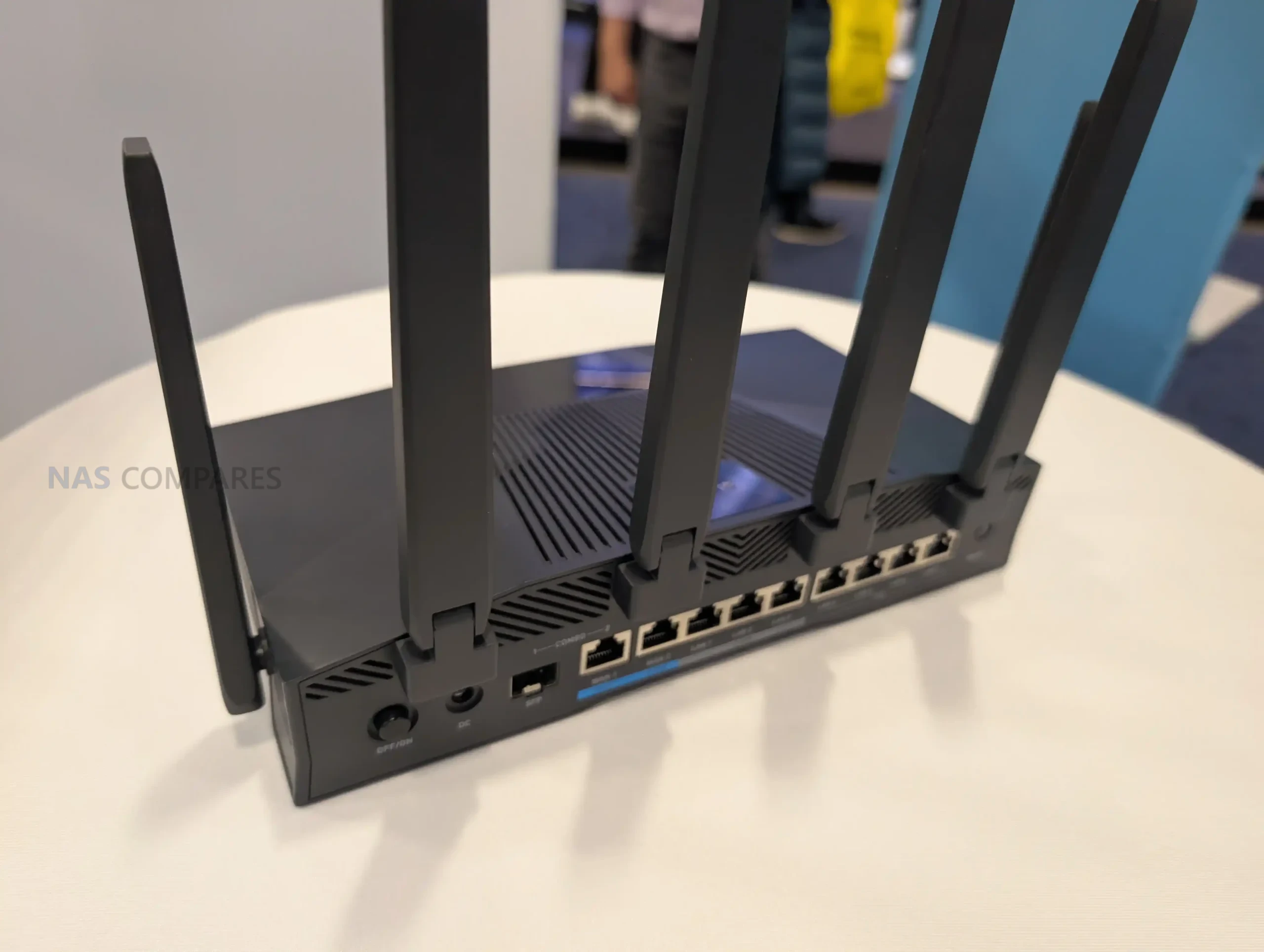
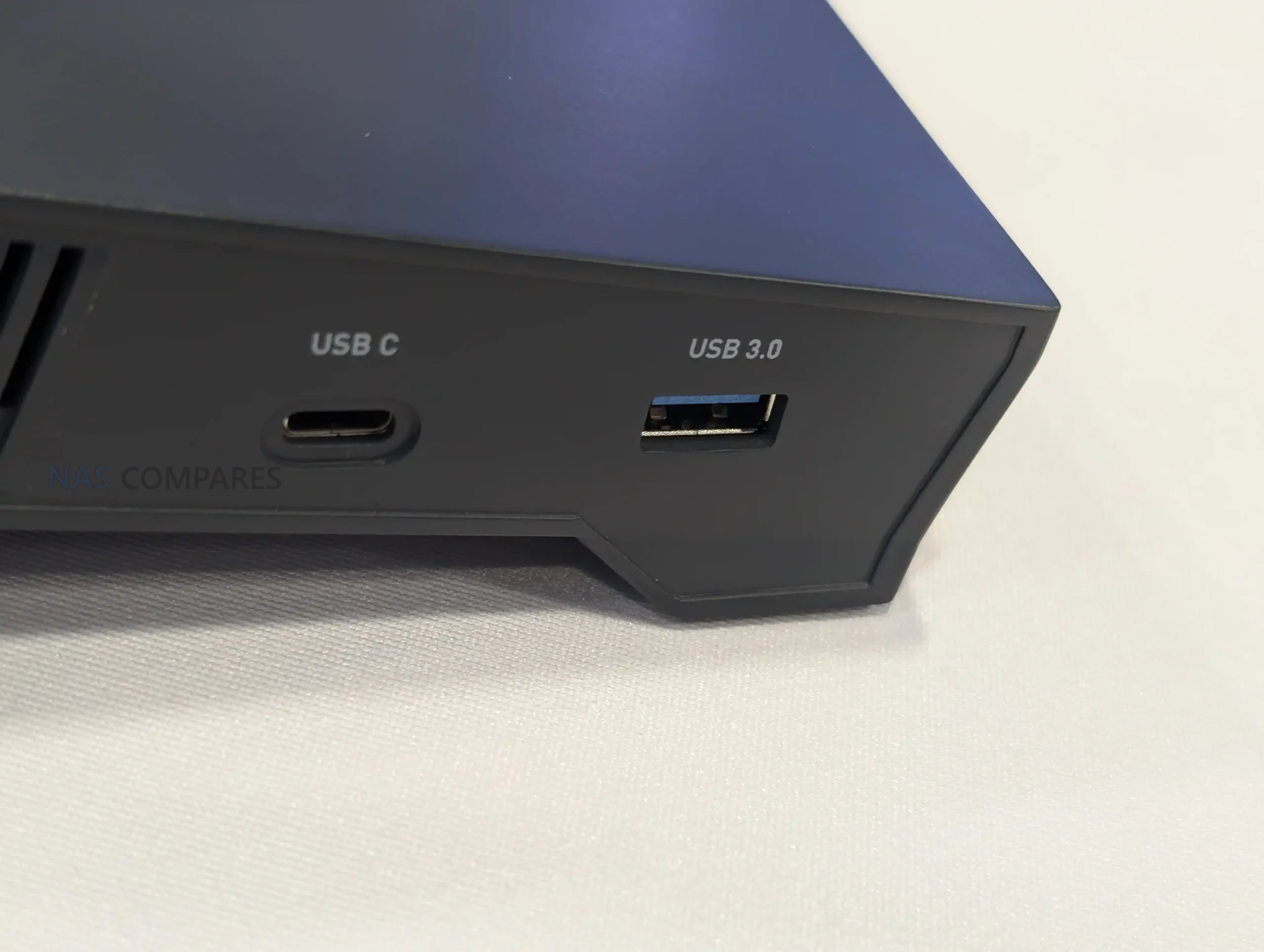
On the USB side, the unit shown includes 2 ports: 1x USB-C and 1x USB-A. Both are described as 5 Gb/s, which positions them for common router add-ons such as external storage, tethering, or peripheral connectivity, depending on how GL.iNet implements the final firmware support.
Wireless is described as Wi-Fi 7 with support spanning 2.4 GHz, 5 GHz, and 6 GHz, but the exact radio layout is not confirmed. In the CES prototype discussion, GL.iNet could not confirm whether the final design stays at 3 bands or adds a second 5 GHz radio, which would affect how it handles simultaneous clients, channel width choices, and multi-link operation in practice.
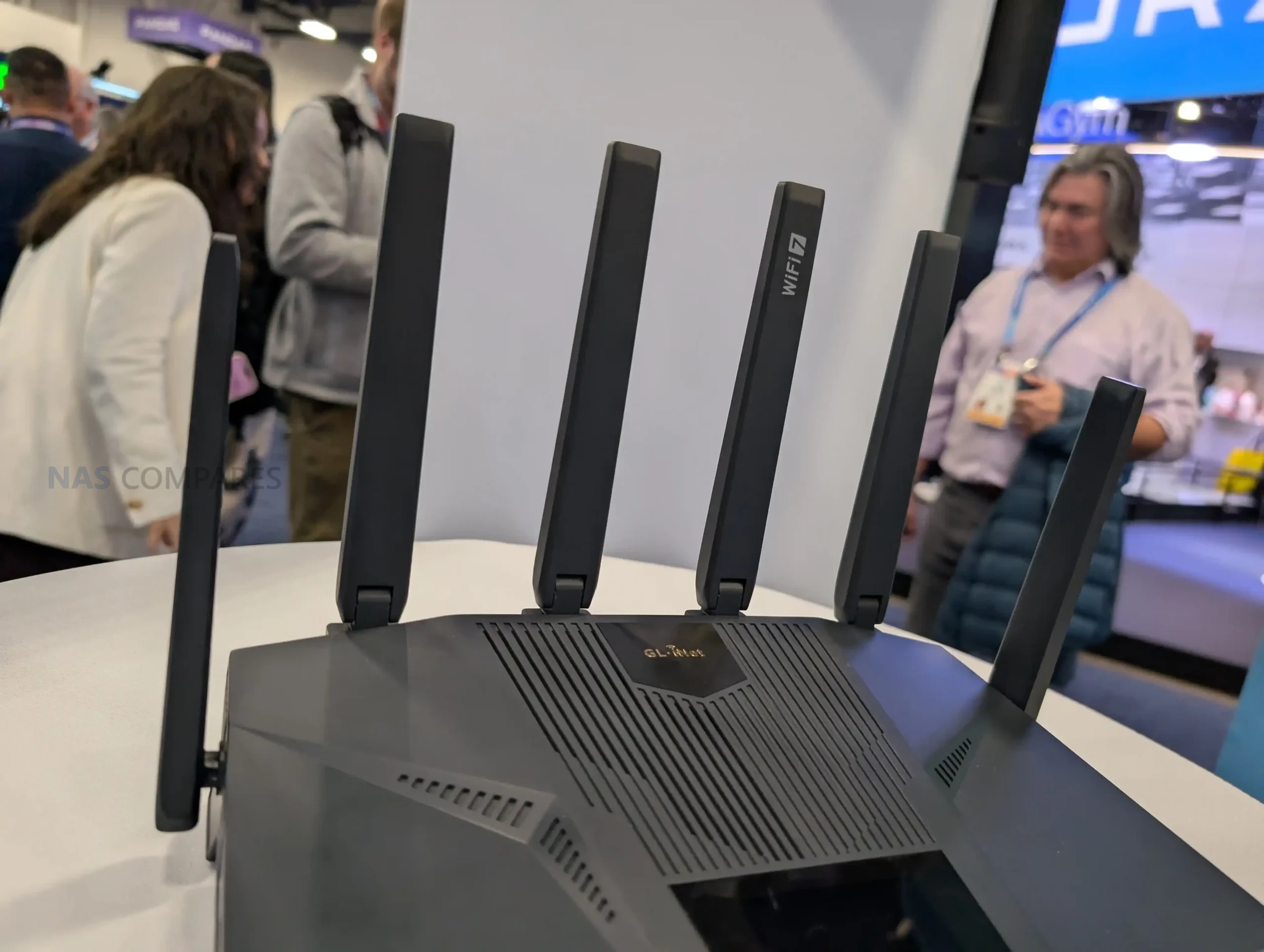
The antenna design is a visible part of the hardware approach, with 6 external movable antennas shown on the prototype. The intent is clearly desktop coverage rather than travel portability, and the final tuning and band distribution across those antennas is likely to depend on the confirmed radio configuration.
Processing is described as a quad-core MediaTek platform. No clock rate or specific model is provided in the details you shared, so performance expectations should be framed around the feature set implied by the port configuration and Wi-Fi 7 support rather than any confirmed throughput numbers.
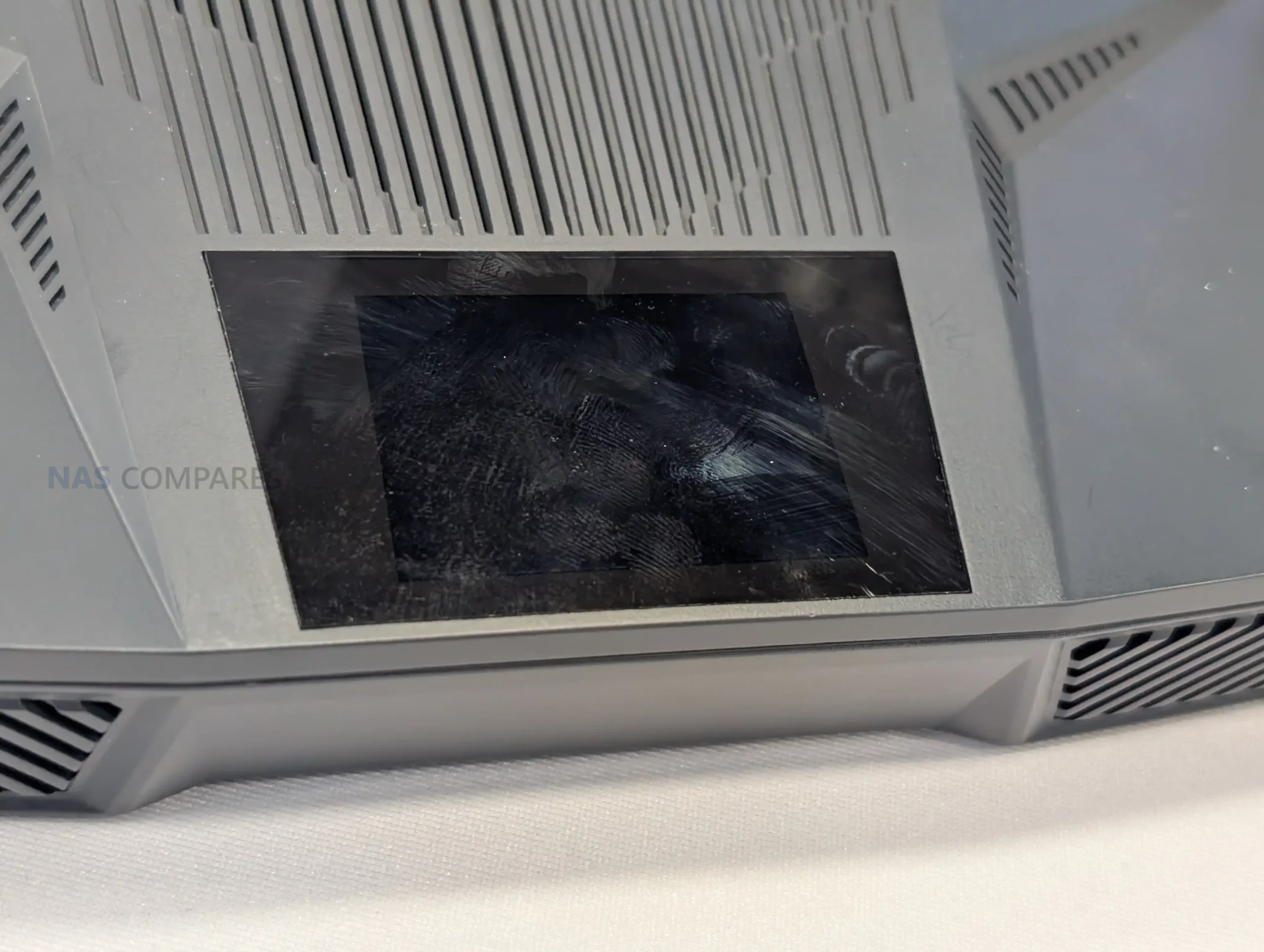
A top-mounted touchscreen display is built into the design, which is a change from the typical Flint-style front-panel indicators. GL.iNet has not stated what the interface will expose in retail firmware, but the inclusion suggests on-device visibility for status and basic controls rather than relying solely on a browser or app for routine checks.
Gl.iNet Flint 4 Router – Worth Waiting For?
Flint 4, as shown at CES 2026, is a prototype built around a connectivity-first spec, combining a 10GbE combo interface with additional 2.5GbE and 1GbE ports, dual 5 Gb/s USB, and a Wi-Fi 7 design that is expected to cover 2.4 GHz, 5 GHz, and 6 GHz. The addition of a top-mounted touchscreen and 6 external antennas further separates it from smaller GL.iNet products, indicating a desktop router intended for heavier home or small-office use rather than travel scenarios.
At the same time, several core details remain unresolved, including the final wireless radio configuration as well as RAM and storage. Because the unit is still in early development, the most accurate takeaway is the direction of the product rather than a final purchasing proposition: GL.iNet is exploring a Flint-series router with aggressive physical I/O and a more direct on-device interface, but the final performance and positioning will depend on the hardware choices that are still listed as TBC.