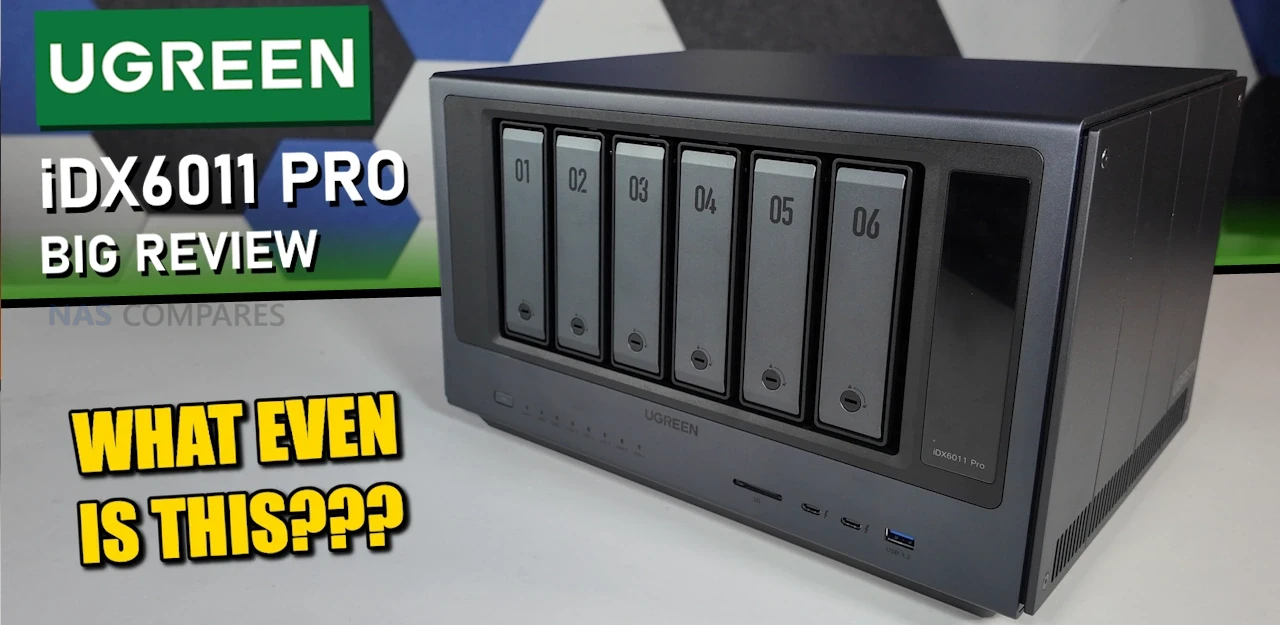
UGREEN AI NAS Review – Is the iDX6011 Pro NAS a Kind of Greatness or Gimmick?
UGREEN has moved from being a peripheral brand in storage accessories to a recognisable name in turnkey NAS hardware in a relatively short time, helped in part by the NASync range that arrived via crowdfunding in 2024 and then transitioned into regular retail availability. The NASync iDX6011 series is the company’s next step, and it is a bigger swing than the earlier systems because it is trying to appeal to 2 different audiences at once. On one side, it is a high spec 6 bay NAS with features typically aimed at heavier workloads, including dual 10GbE, dual Thunderbolt 4, PCIe Gen4 expansion, and NVMe slots for caching or SSD volumes. On the other side, it is being marketed as a “local AI NAS” built around an on device assistant and offline processing, intended for people who like the idea of using natural language to search, summarise, and organise large private libraries without sending data to a public cloud. The practical question is whether buyers actually need an AI layer on a NAS, since many users simply want reliable storage, backups, and fast access, and will judge it on fundamentals like performance, noise, power, and software stability first. Based on hands on testing of the iDX6011 Pro hardware and the early UGOS Pro plus AI implementation, the platform looks close to finished on the hardware side, while the AI layer feels more like a developing feature set that is not yet consistently polished, which raises the possibility that UGREEN is attempting to deliver a full “appliance plus assistant” experience before every part of that assistant workflow is fully mature.
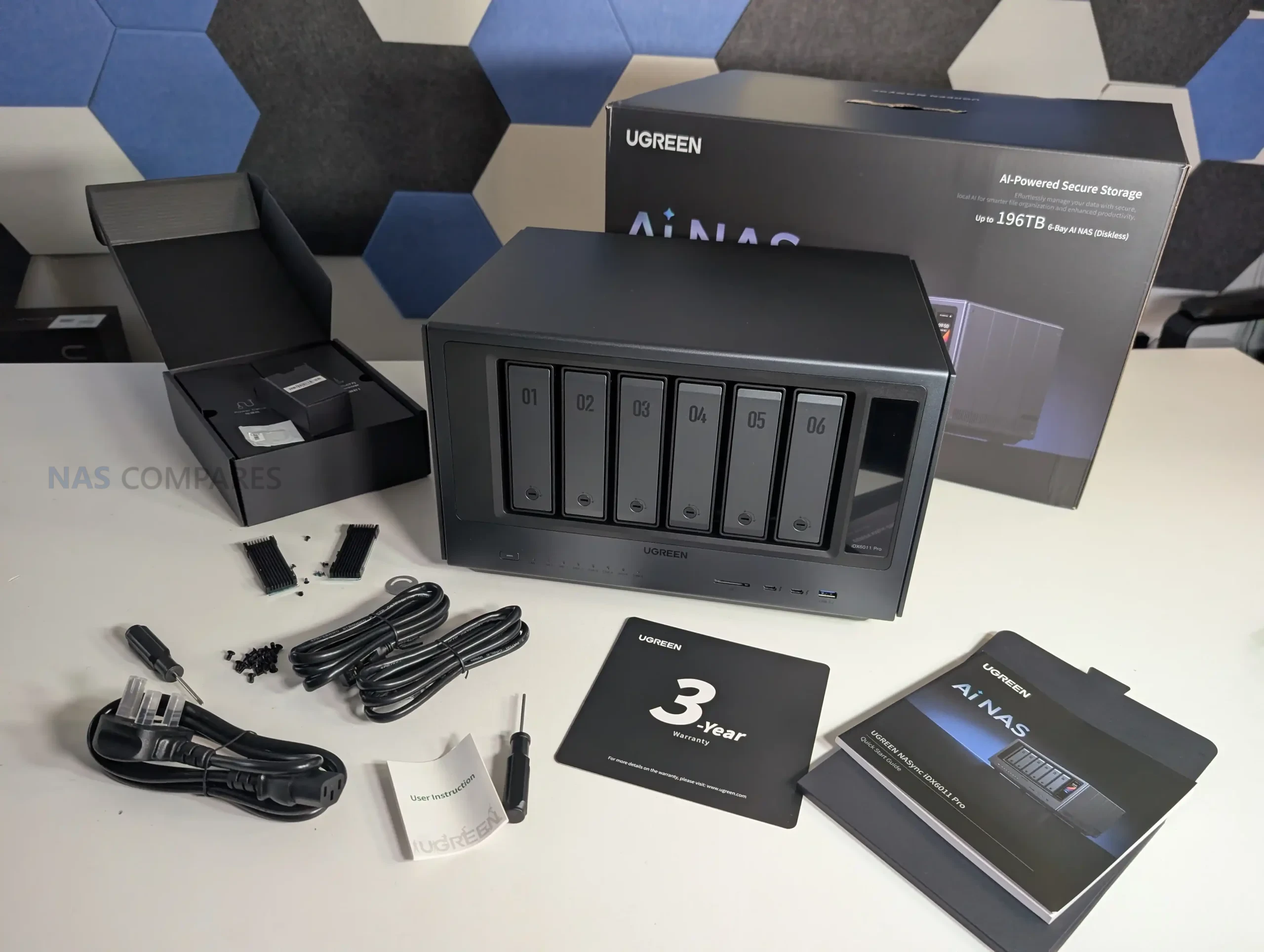

| Spec | iDX6011 Pro (64GB) | iDX6011 (64GB) | iDX6011 (32GB) |
|---|---|---|---|
| Maximum storage | 196TB | 196TB | 196TB |
| SATA drive bays | 6 | 6 | 6 |
| Operating system | UGOS Pro | UGOS Pro | UGOS Pro |
| CPU | Intel Core Ultra 7 255H, 16C/16T, up to 5.1GHz, 96 TOPS, 28W TDP | Intel Core Ultra 5 125H, 14C/18T, up to 4.50GHz, 34 TOPS, 28W TDP | Intel Core Ultra 5 125H, 14C/18T, up to 4.50GHz, 34 TOPS, 28W TDP |
| RAM | 64GB LPDDR5X | 64GB LPDDR5X | 32GB LPDDR5X |
| System drive capacity | SSD 128GB | SSD 128GB | SSD 128GB |
| M.2 SSD slots | 2 | 2 | 2 |
| RAID | JBOD, Basic, 0, 1, 5, 6, 10 | JBOD, Basic, 0, 1, 5, 6, 10 | JBOD, Basic, 0, 1, 5, 6, 10 |
| LAN ports | 10GbE x2 | 10GbE x2 | 10GbE x2 |
| Thunderbolt 4 | 2 | 2 | 2 |
| USB 3 | 2 | 2 | 2 |
| USB 2 | 2 | 2 | 2 |
| PCIe expansion | Gen4 x8 x1 | Gen4 x8 x1 | Gen4 x8 x1 |
| OCuLink | 1 | 0 | 0 |
| SD card slot | SD 4.0 x1 | SD 4.0 x1 | SD 4.0 x1 |
| HDMI | 8K | 8K | 8K |
| LCD display | 3.71 inch | 0 | 0 |
| UPS support | Yes | Yes | Yes |
| Docker support | Yes | Yes | Yes |
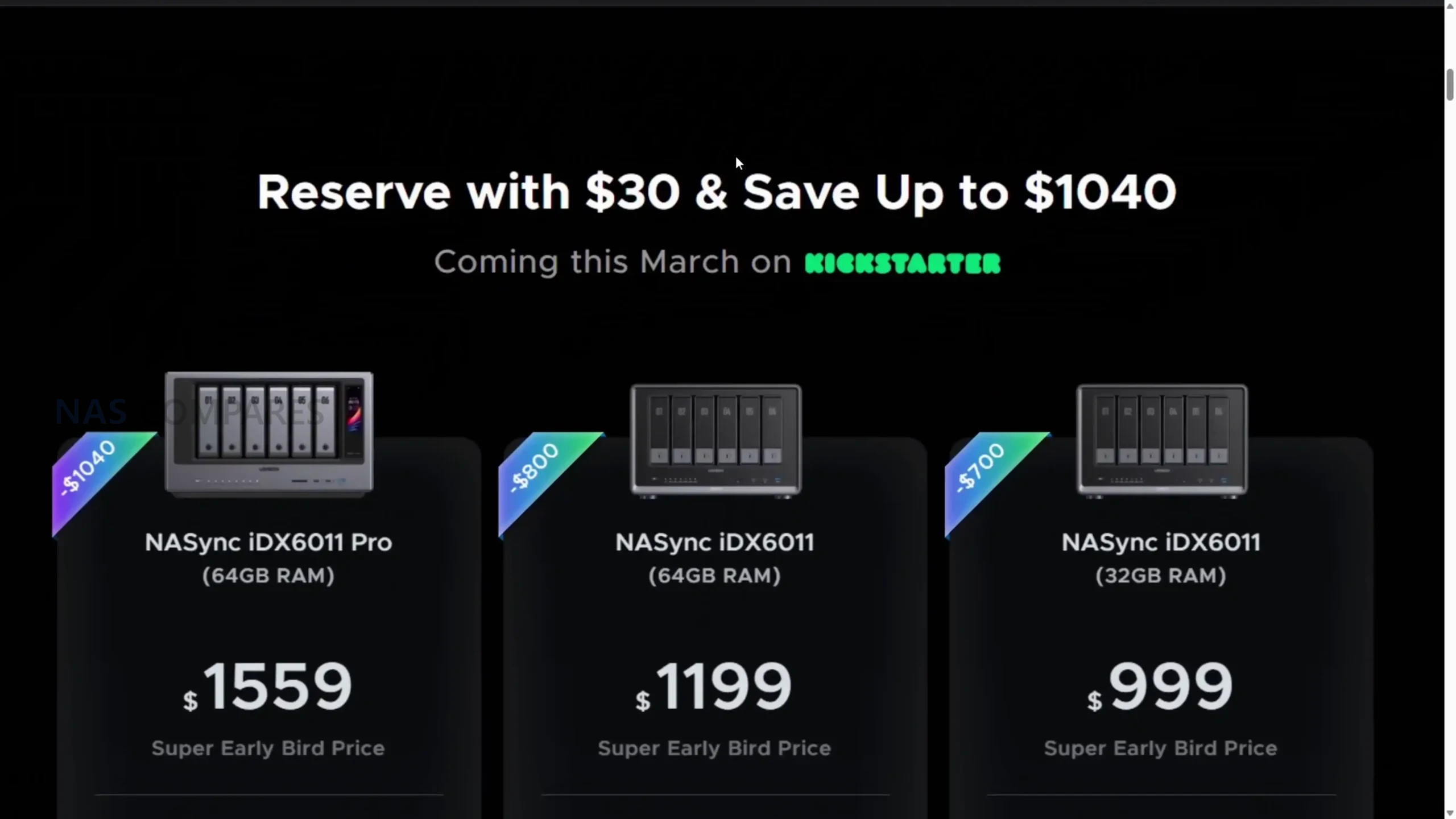
| Reservation deposit required for super early bird | $30 | $30 | $30 |
| Price with deposit (Super Early Bird) | $1559 | $1199 | $999 |
| Kickstarter launch price (Early Bird) | $1819 | $1399 | $1189 |
| RRP (MSRP) | $2599 | $1999 | $1699 |
IMPORTANT DISCLAIMER! This is KICKSTARTER…
This product is being sold through a crowdfunding campaign rather than as a conventional retail NAS, and that changes the risk profile regardless of brand size or prior success. Pricing is tied to a refundable reservation deposit system and early bird tiers, and delivery timing is based on stated production and dispatch windows rather than the predictable stock availability that comes with established retail channels. Even though UGREEN has previously completed a large NAS crowdfunding campaign and later moved those products into normal retail, that track record does not remove the usual Kickstarter variables, such as software features changing between prototype and shipping units, performance tuning continuing during the campaign window, and schedules shifting due to manufacturing or regional fulfilment constraints. In this case, the hardware shown appears close to final, but the software, particularly the AI layer, is explicitly described as still in active optimisation, so any evaluation should treat feature completeness as provisional until the campaign is live, the final software build is confirmed, and post launch updates show what is actually delivered at scale.
UGREEN iDX6011 Pro Review – Quick Conclusion
The UGREEN NASync iDX6011 Pro is a high spec 6 bay NAS that, in hardware terms, behaves more like a compact workstation class storage appliance than a typical consumer NAS, with dual 10GbE, dual Thunderbolt 4, PCIe Gen4 x8 expansion, OCuLink, 8K HDMI, 2 x M.2 NVMe slots, and a dedicated 128GB system SSD, backed by an Intel Core Ultra 7 255H and 64GB fixed LPDDR5X memory. In testing, the fundamentals were generally strong, including RAID 5 throughput around 950 MB/s read and 670 MB/s write with SSD caching, internal NVMe performance around 5.5 to 6.0 GB/s, acceptable sustained thermals for a metal chassis under long access periods, and noise and power figures that tracked with a 6 drive high performance platform rather than a low power home NAS. The main performance concern was that SMB multichannel scaling was uneven, with reads around 2200 to 2300 MB/s but writes closer to 1300 to 1500 MB/s in a dual 10GbE client setup, suggesting software or tuning limits that may or may not improve by launch. UGOS Pro is broadly feature complete for mainstream NAS use, with Docker, VMs, snapshots, iSCSI, and comprehensive backup and sync options, but it still lacks some ecosystem level elements that established competitors deliver, including ZFS and a more comprehensive security posture scanner, and the app catalogue gap around Plex remains notable. The local AI layer, marketed as a key differentiator, is currently the least mature part of the product, with useful building blocks like document summarisation, audio transcription, and photo recognition, but inconsistent workflows that rely on manual uploads rather than directory level crawling, limited smart commands, and permission controls that can be too rigid for practical assistant use, while also not offering generative photo or video creation. Overall, the iDX6011 Pro looks close to finished on hardware and competitive on capability at its early campaign pricing, but the AI experience still feels in development, and the Kickstarter purchase route adds risk for buyers who expect fully polished features on day 1.

UGREEN iDX6011 Pro Review – Design and Storage
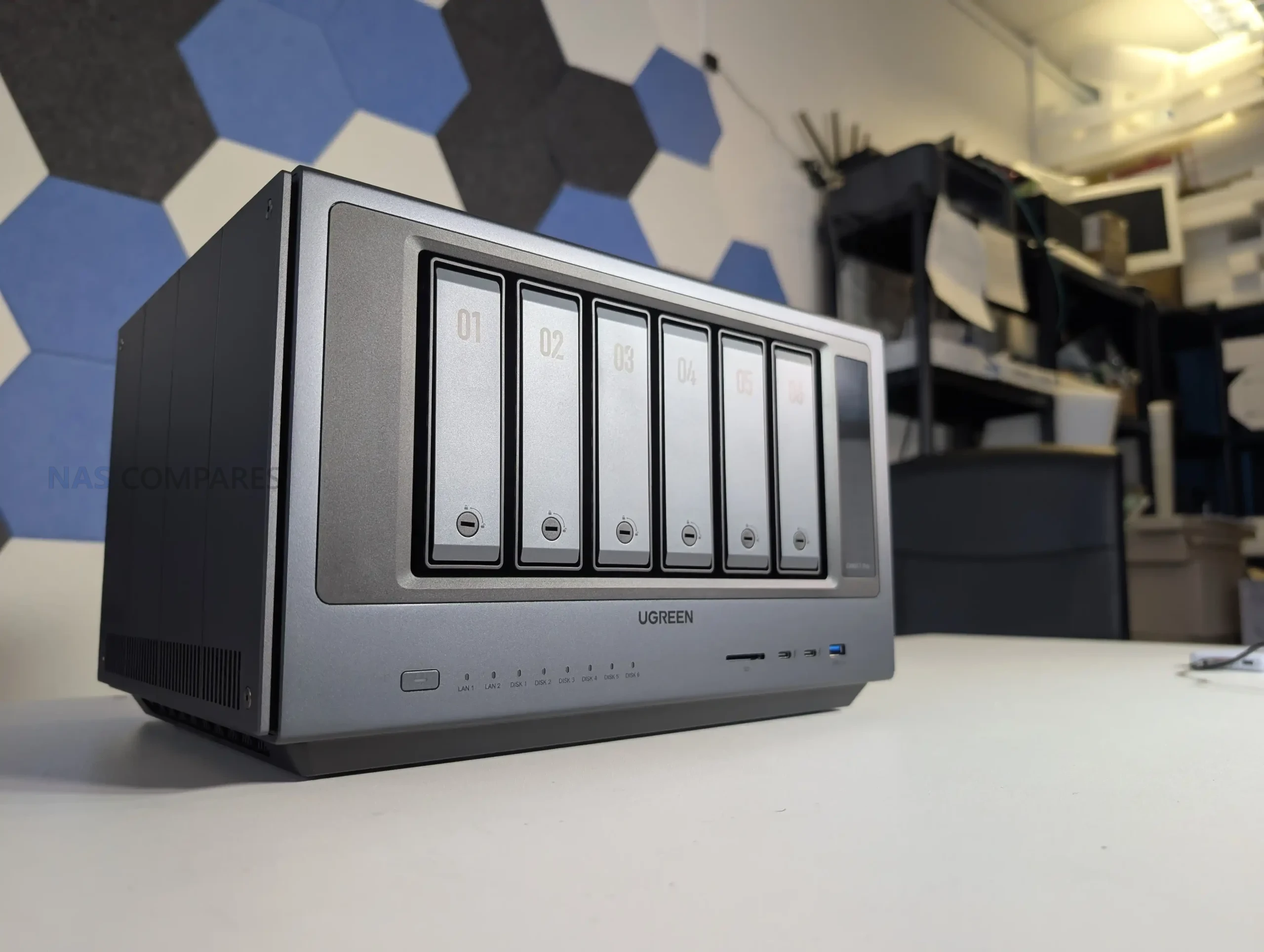
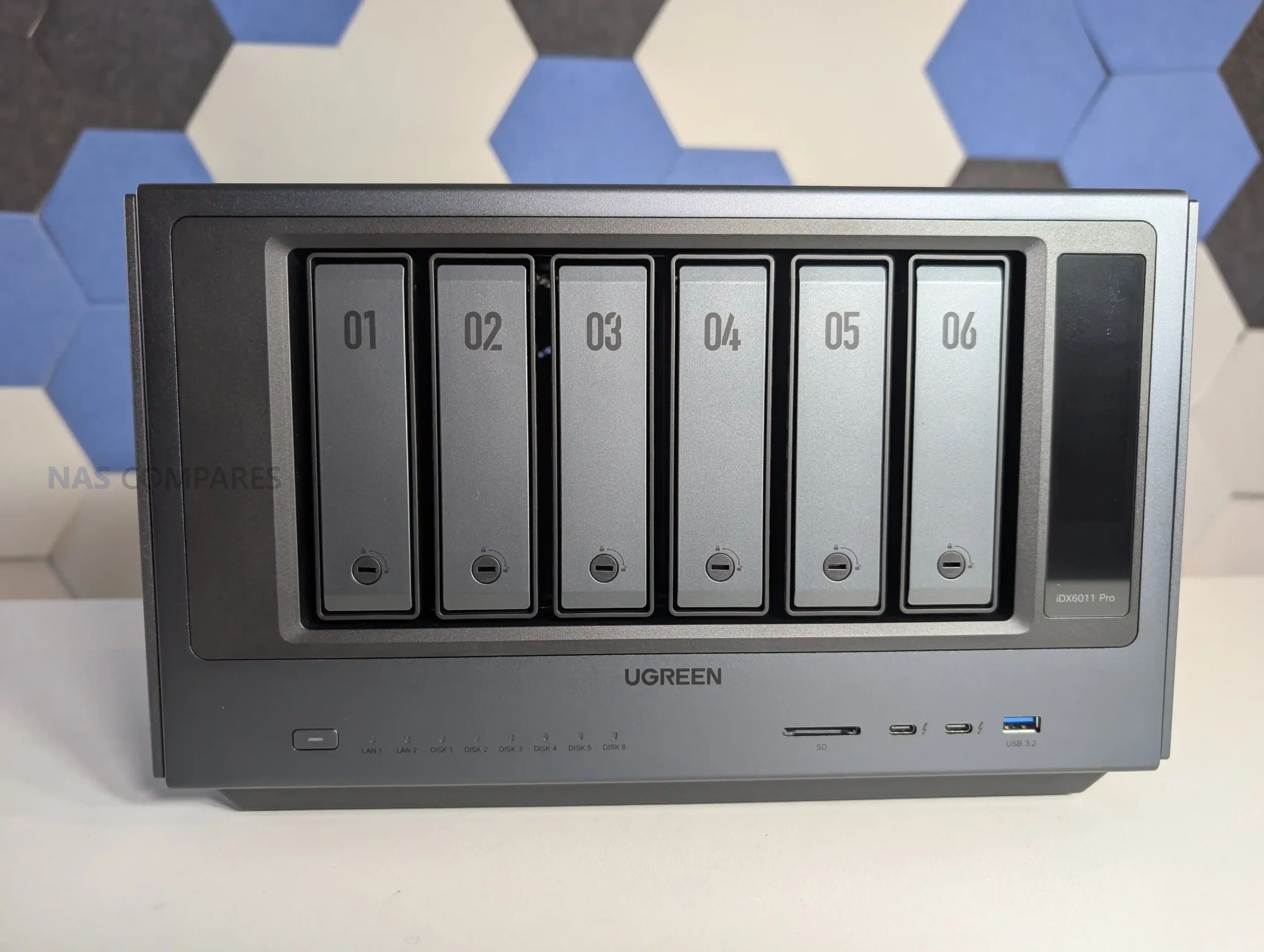
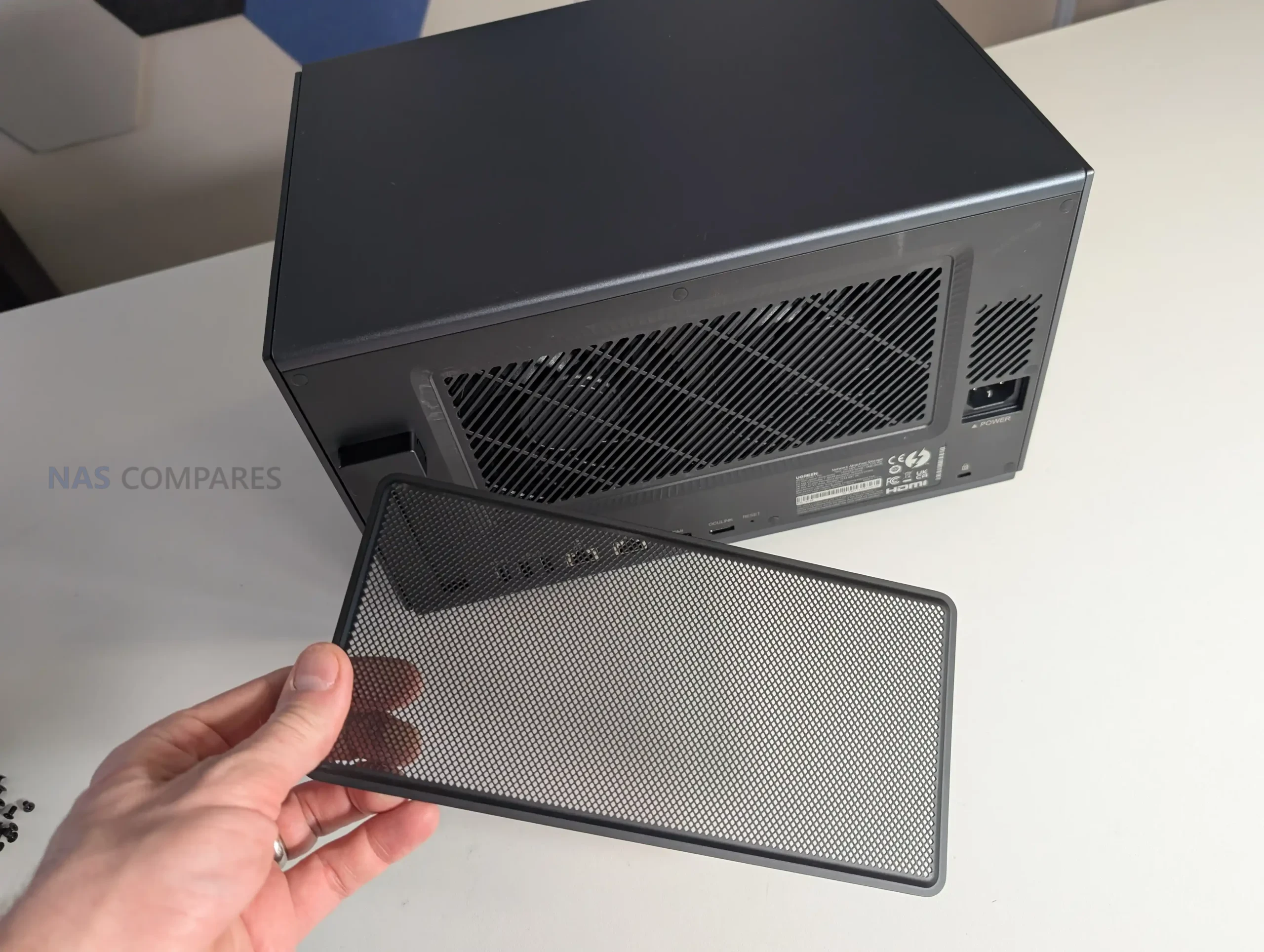
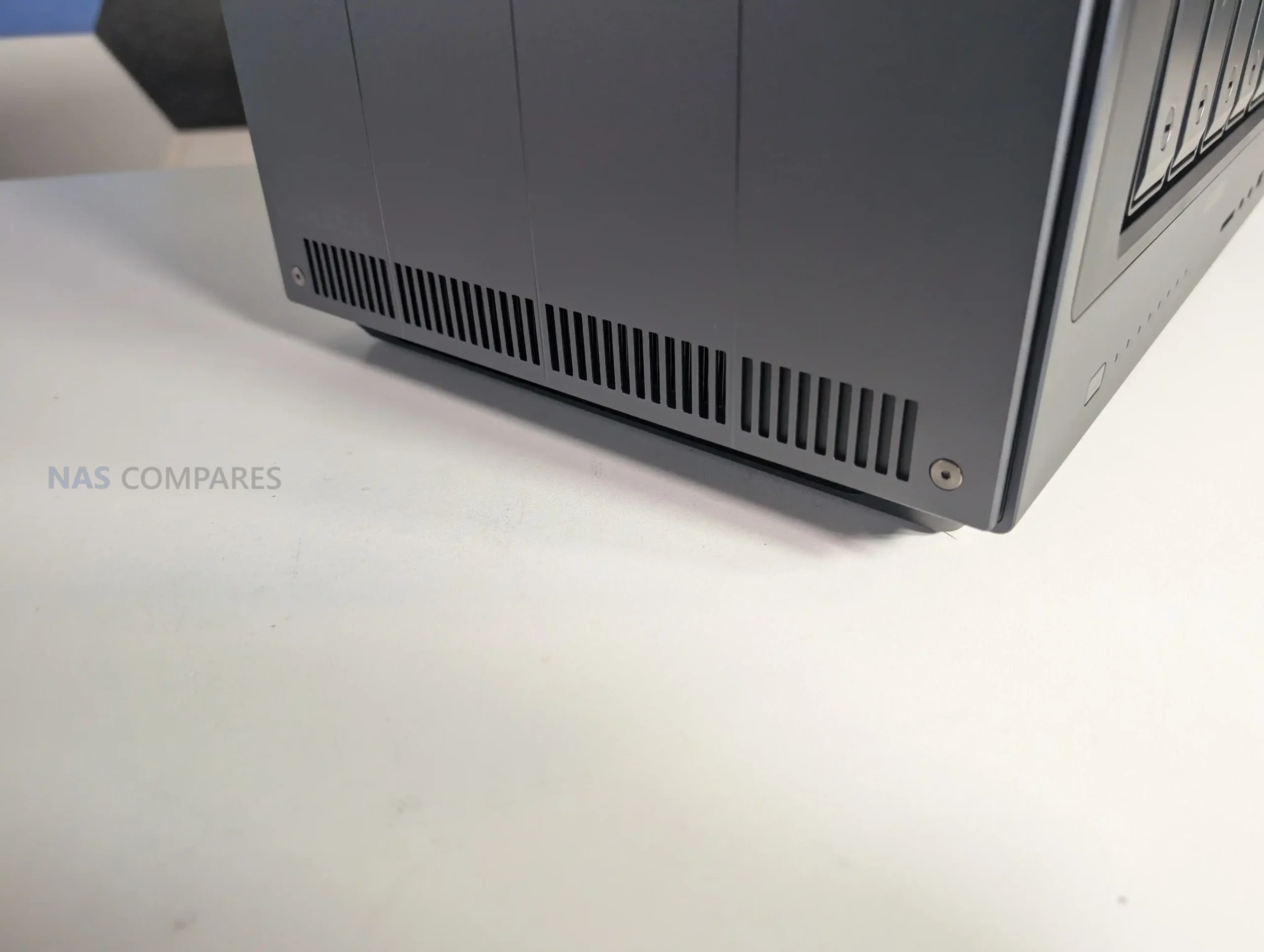
The iDX6011 Pro is physically a more industrial looking unit than UGREEN’s earlier NAS designs, with a full metal outer chassis that feels closer to workstation gear than living room appliance styling. It is not a sealed box either, as the side panels are removable and intended to give access to internal expansion areas, though the process uses a hex key rather than a simple tool free latch. That approach is functional and keeps the exterior clean, but it also makes routine access slightly slower if you expect to swap SSDs or a PCIe card regularly. Ventilation is distributed around the sides rather than concentrated in a single grille, and the chassis is raised off the surface to allow airflow beneath, which matters in a system designed to host 6 hard drives plus NVMe storage and a higher performance CPU class than entry NAS models.
 |
 |
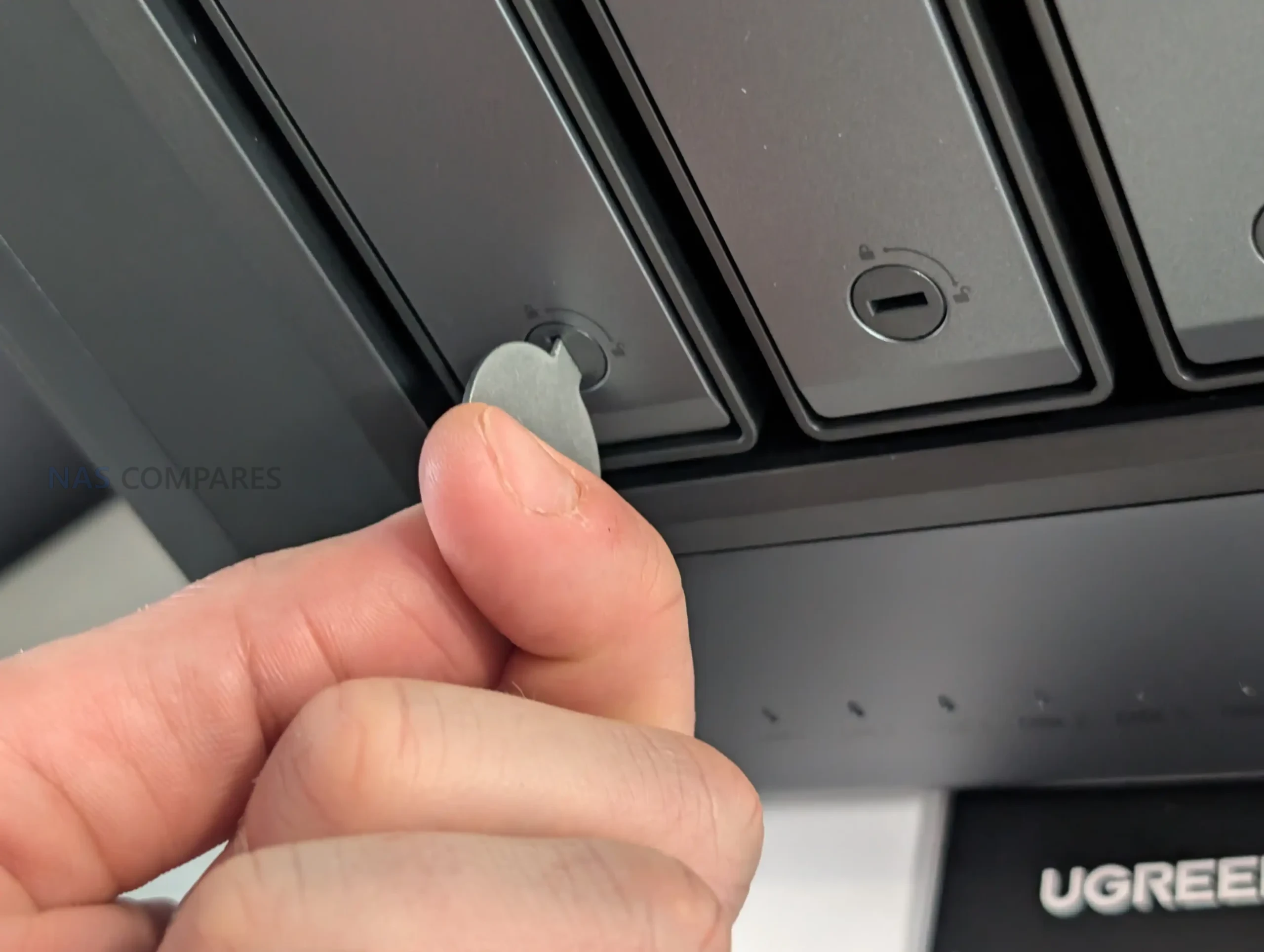
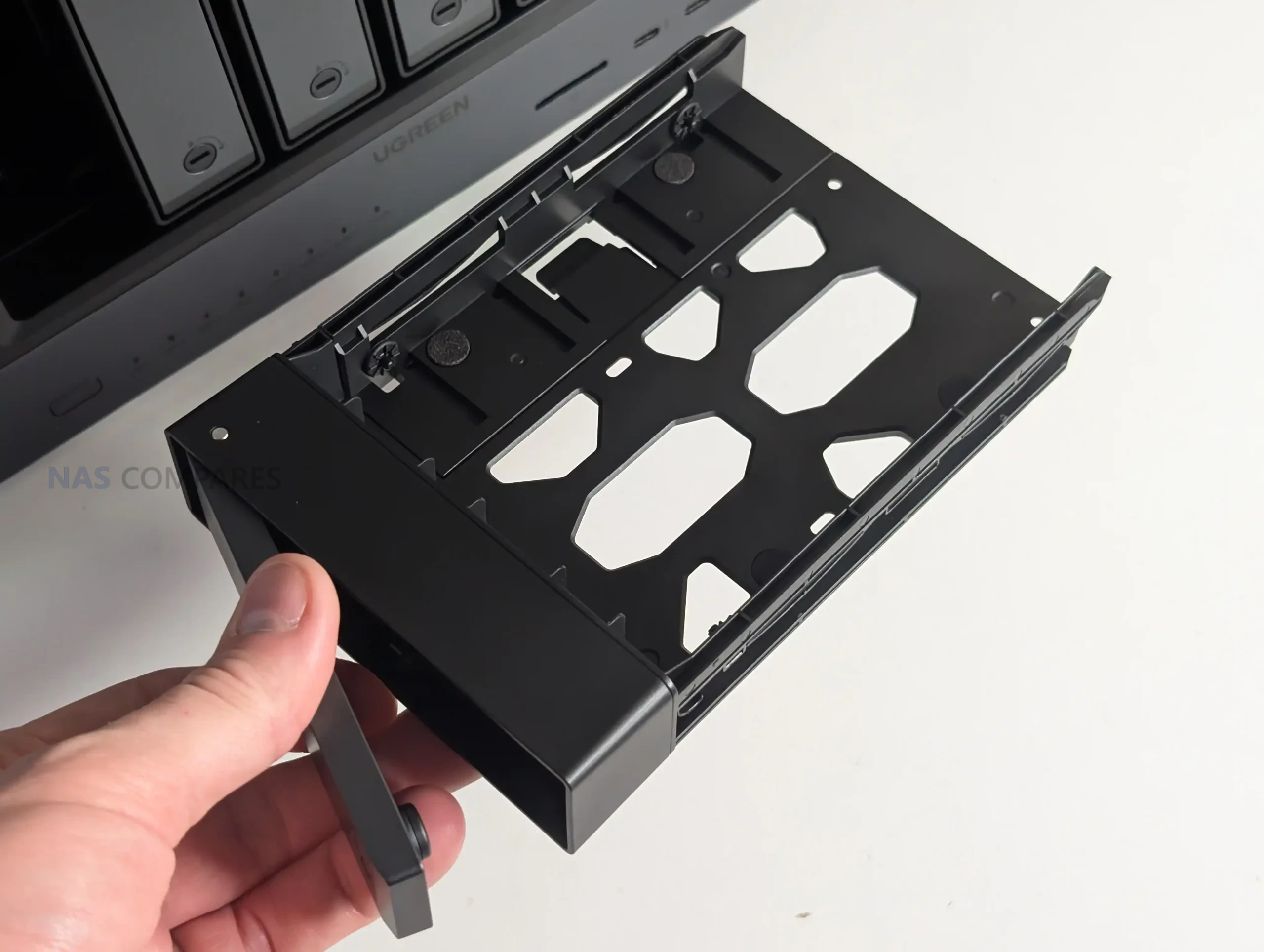
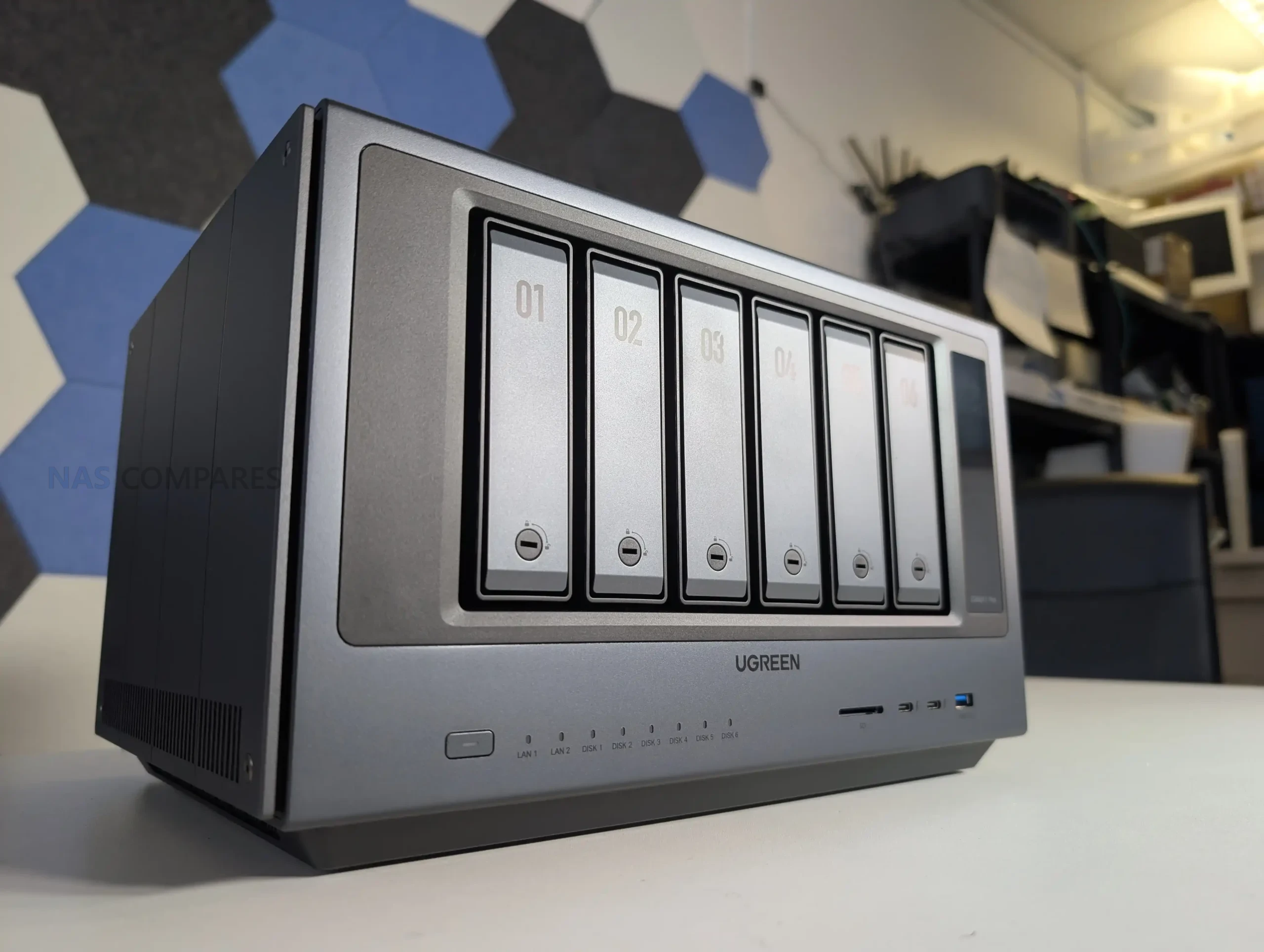
Storage capacity is built around 6 front loading SATA bays, with UGREEN quoting 196TB maximum raw capacity for the platform. Drive insertion uses the same general tray approach seen on the company’s recent NAS units, including lockable bay fronts and a plastic click and load mechanism intended to speed up installation without tools. It is a conventional arrangement for a 6 bay desktop NAS, but the metal enclosure can make drive acoustics more noticeable depending on the HDD model and rotational behaviour, which becomes relevant when users populate the unit with larger capacity drives that often have more platters and more audible seek patterns. The front bay layout is straightforward, prioritising density and serviceability, with the expectation that this is a system meant to hold a large primary library rather than act as a small secondary backup target.
 |
 |
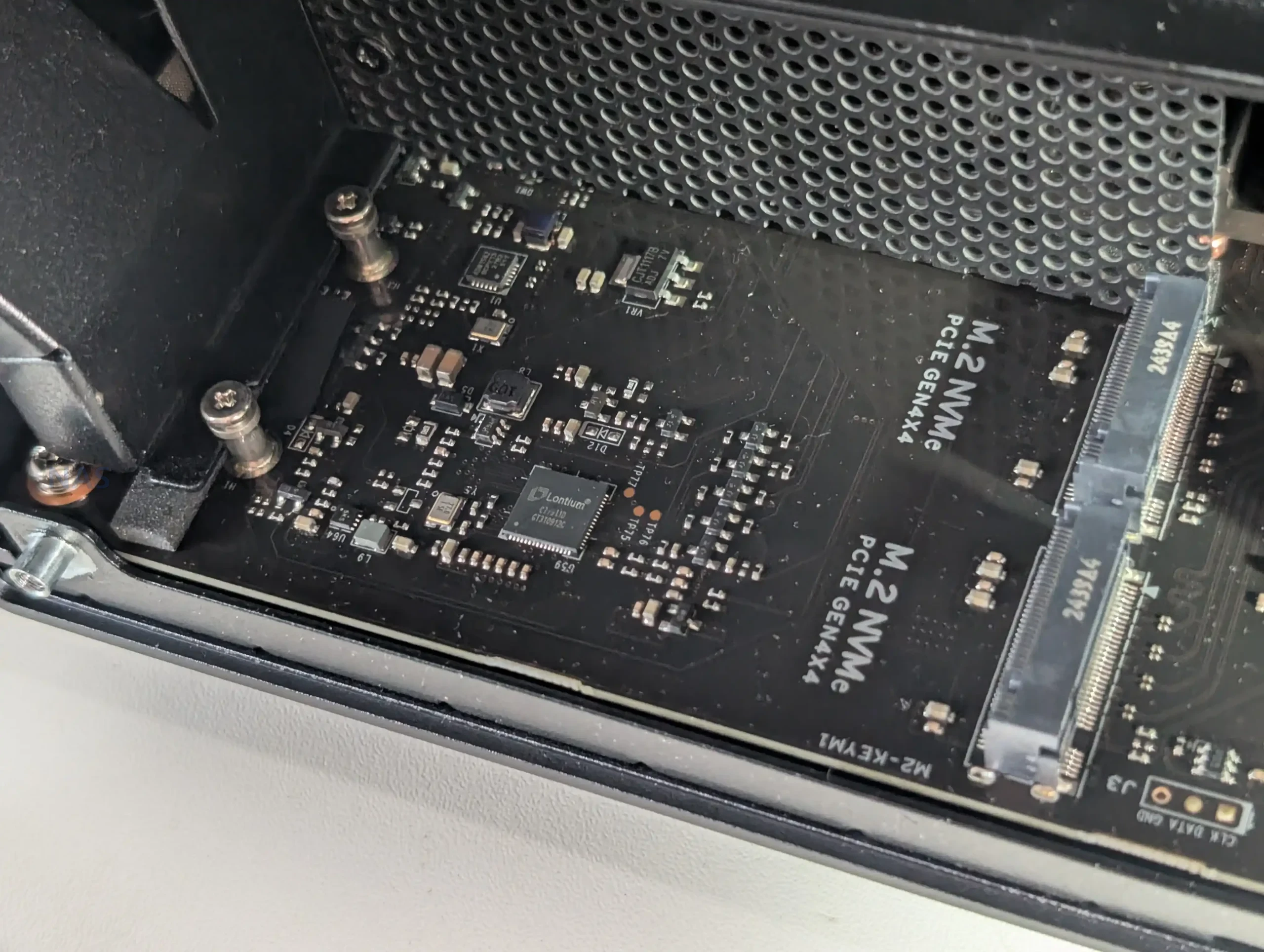
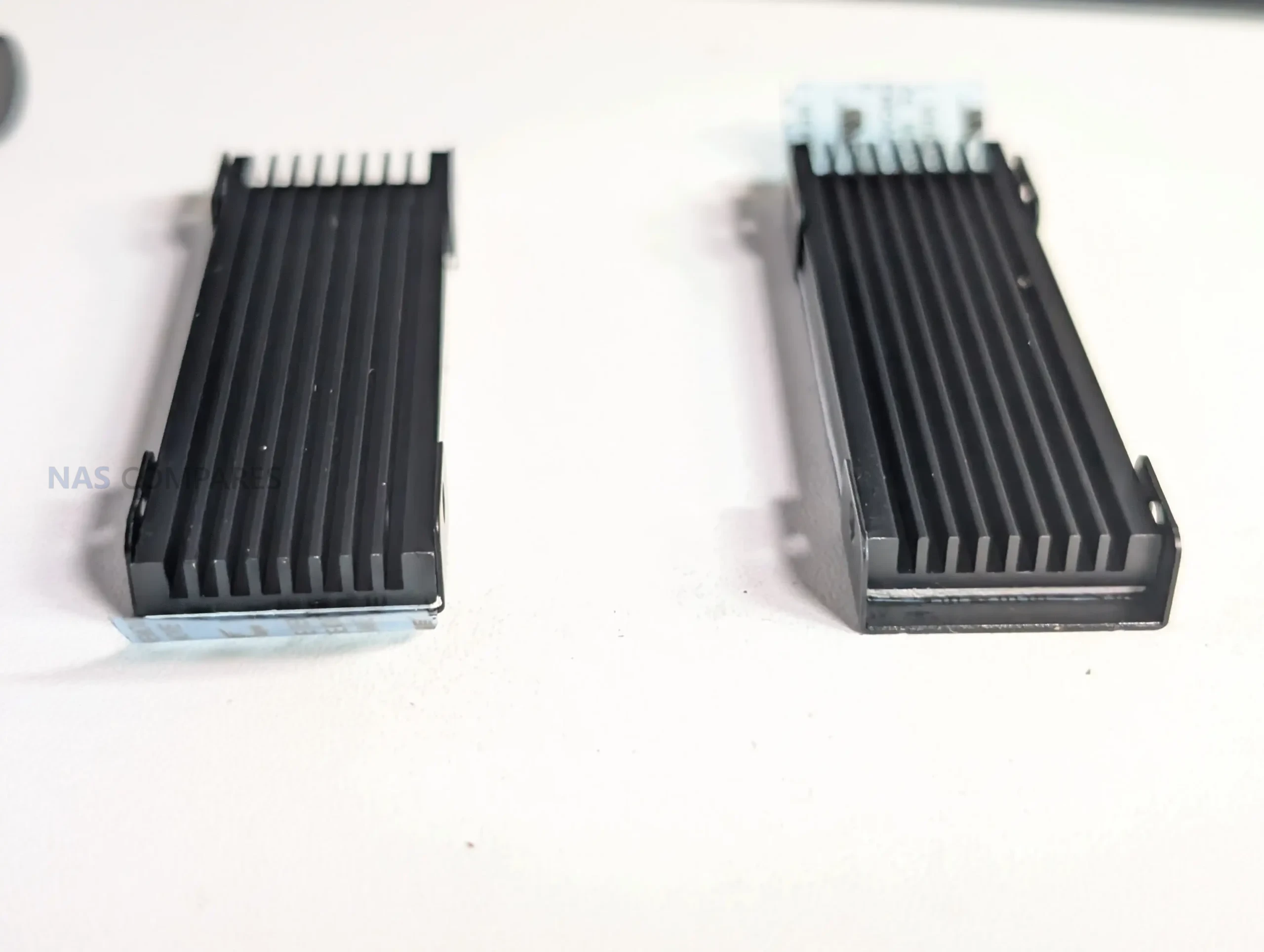
Alongside the 6 bays, UGREEN separates the operating system onto a dedicated 128GB internal SSD, which avoids consuming any of the user’s drive pool for the system partition and aligns with how most modern NAS vendors isolate OS storage. In practical terms, that makes initial setup cleaner and reduces the chance that a storage rebuild or volume reconfiguration impacts the boot environment, though it also means the overall platform depends on an internal system SSD that is not part of the RAID group. Two internal M.2 NVMe slots are available for SSD cache or SSD volumes, and in testing they behaved like high performance local storage rather than token add ons, which fits the broader design goal of making this NAS suitable for heavier workflows and not just cold storage. The storage story here is therefore split into 3 layers, hard drive bays for capacity, M.2 for performance acceleration, and a separate system SSD for OS stability.
 |
 |
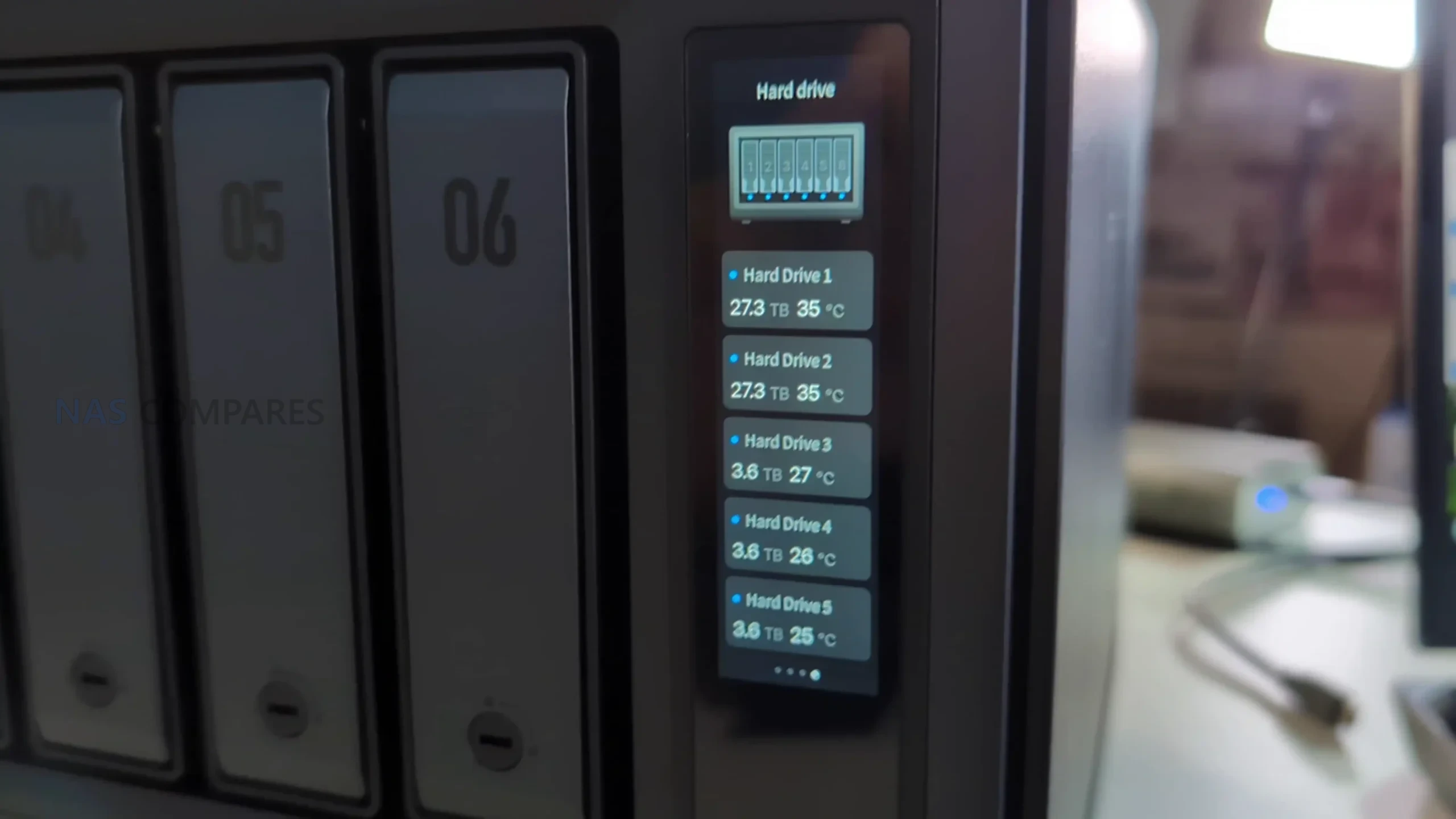
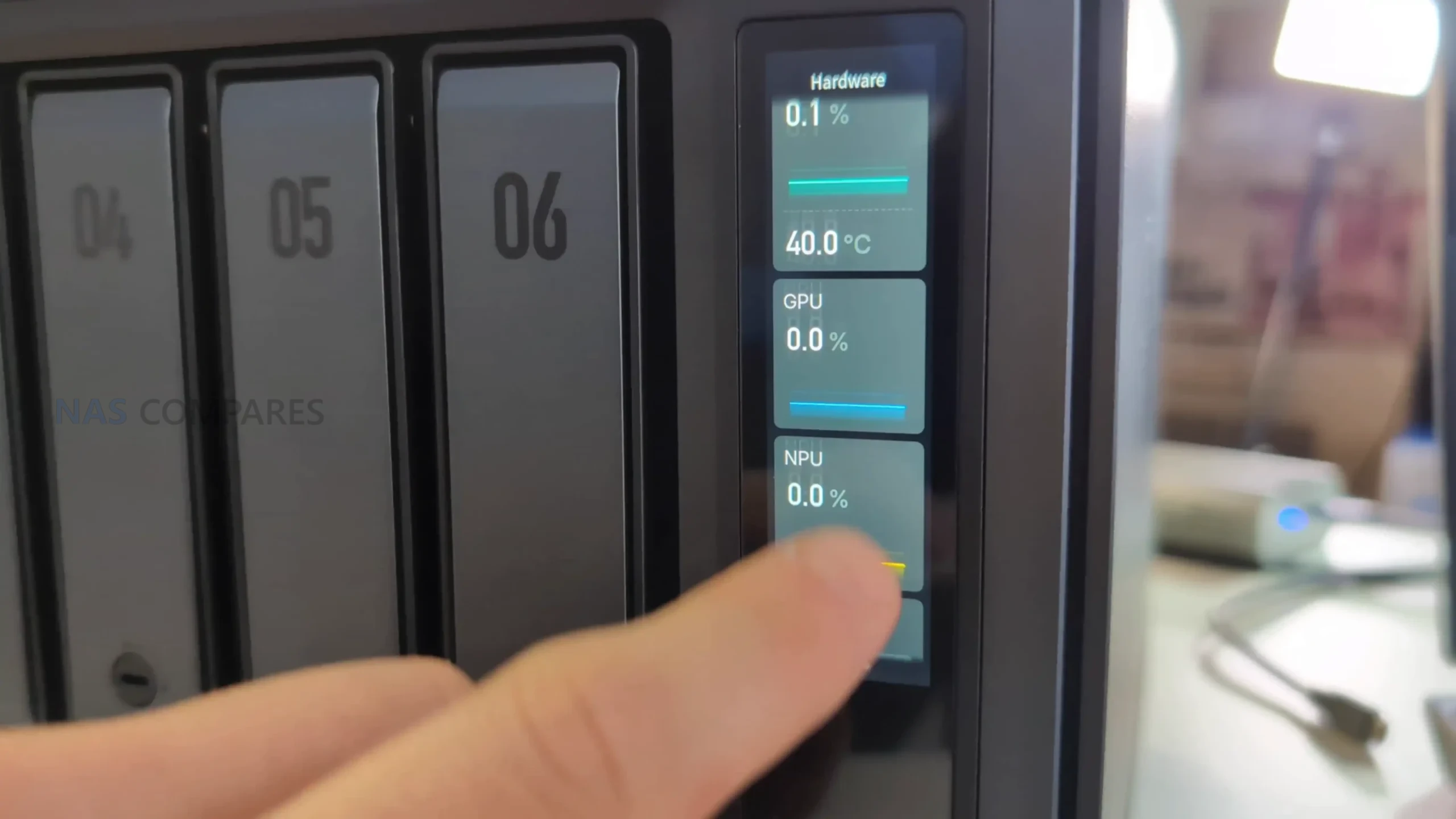
The Pro model also adds a front mounted 3.71 inch LCD, which provides real time status visibility such as usage and system state at a glance. As implemented in early hardware, it appears more like a monitoring and basic control surface than a full management interface, and it is not treated as a secure console with authentication, so it is best understood as a convenience feature rather than an administrative tool. In a shared environment, that trade off matters because a display that is easy to use is also easy to interact with physically, so the value depends on where the unit is placed and who has access to it. For some users it will be useful simply to confirm system health without opening the web UI, but it does not replace normal management, and it is not aimed at the same kind of on device control that some touchscreen equipped NAS systems attempt.
 |
 |
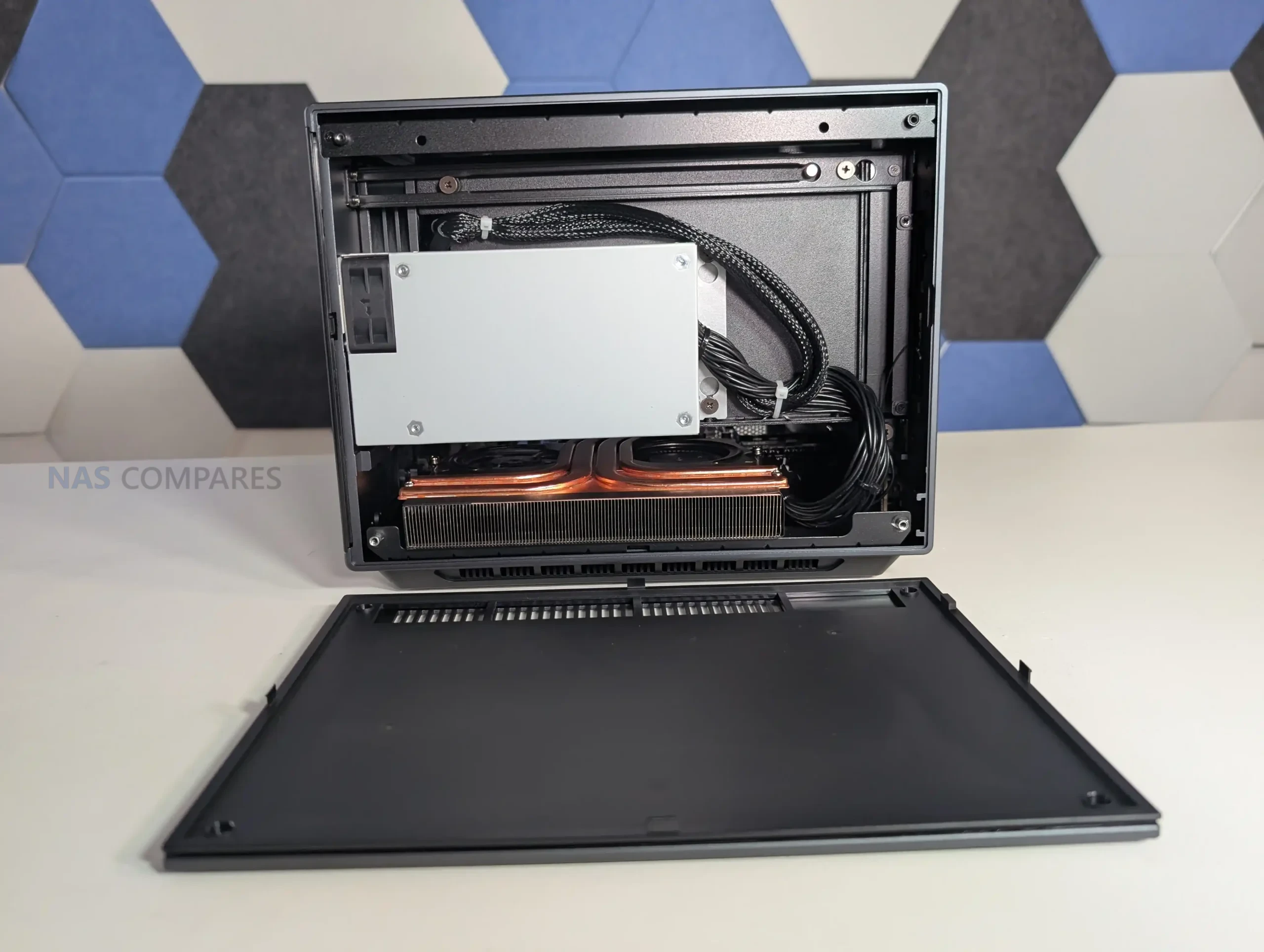
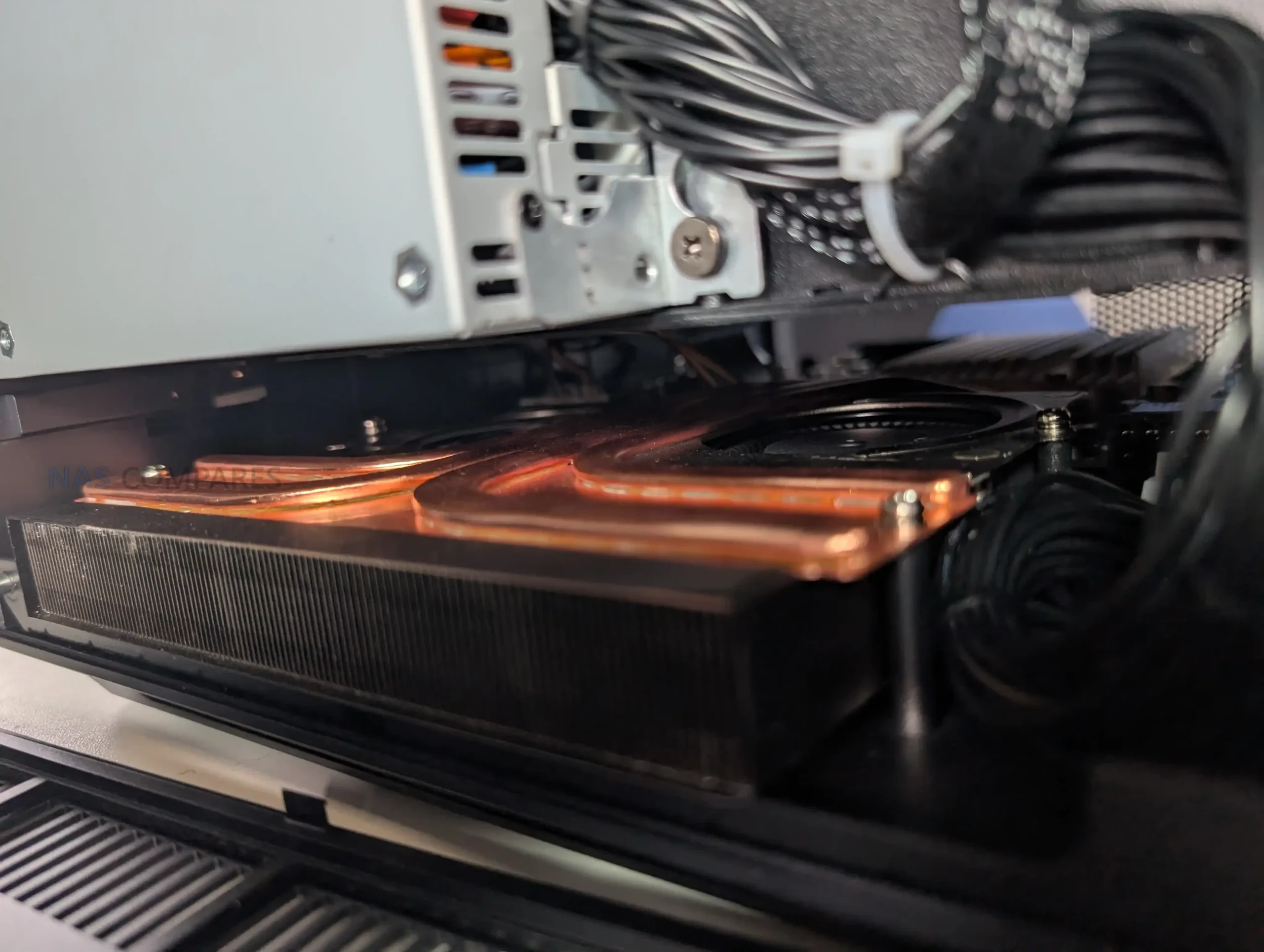
Maintenance and long term usability are supported by design choices such as accessible cooling and a removable rear panel area, which makes it easier to clean and service the main fans compared with fully enclosed designs. The unit includes an internal power supply, reducing external power brick clutter, and cooling is built around a combination of rear system fans and a dedicated CPU cooling assembly using copper heat piping and a dual fan arrangement. User control in software focuses on the rear fans, while the CPU fan behaviour is not exposed in the same way, which is typical for compact systems where CPU thermals are managed automatically. Overall, the enclosure and storage layout suggest UGREEN is treating this as a high duty appliance expected to run continuously, host large volumes, and remain serviceable, even if some access choices like hex key panels are more conservative than tool free designs.
 |
 |
UGREEN iDX6011 Pro Review – Internal Hardware
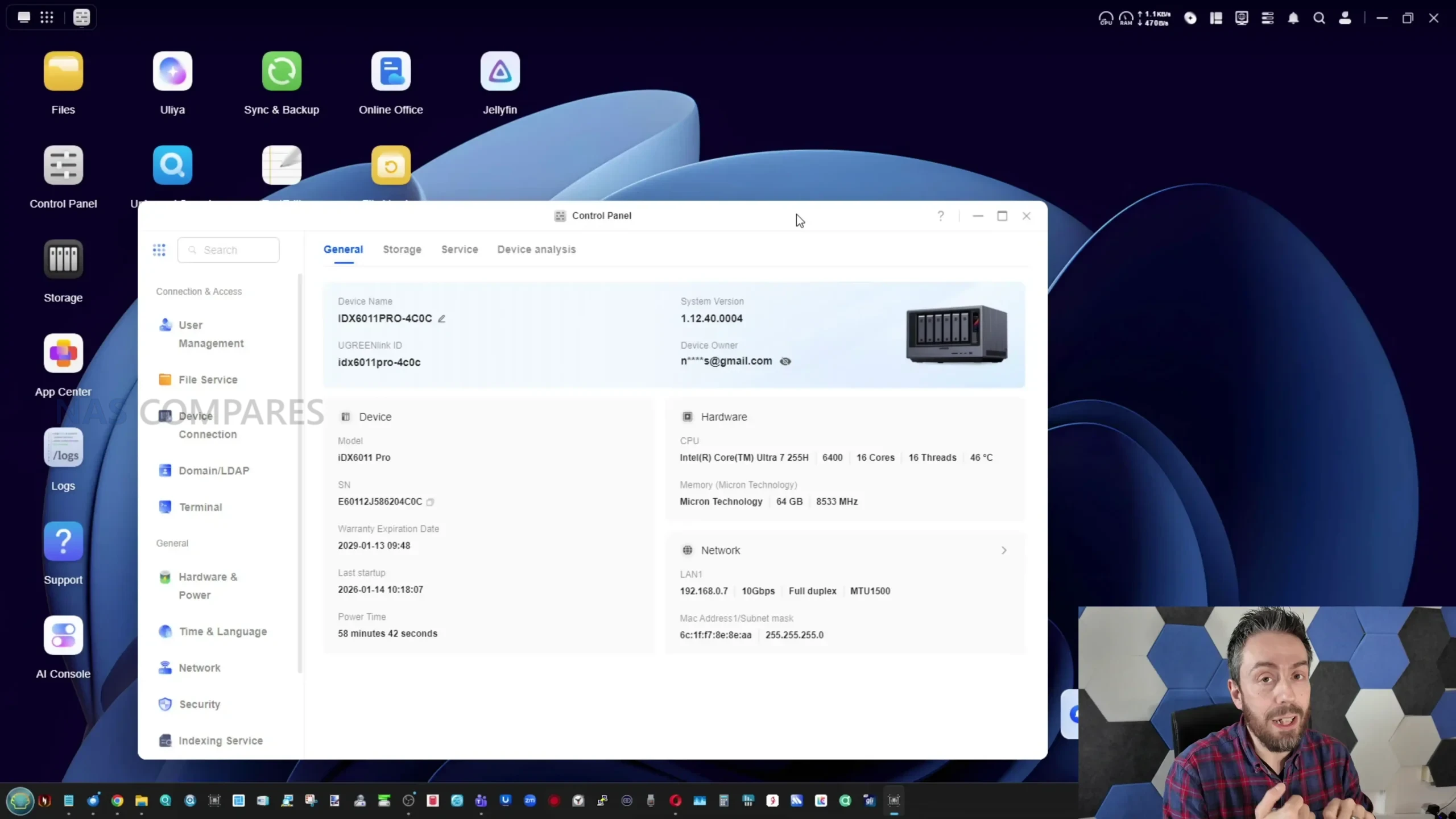
At the centre of the iDX6011 lineup is a split CPU strategy, with the Pro model using Intel Core Ultra 7 255H and the non Pro models using Intel Core Ultra 5 125H, both in a 28W class envelope but with different core layouts and advertised AI compute capability. In practical terms, the Pro is the higher headroom option for simultaneous workloads, including heavier multitasking, more concurrent services, and more demanding local indexing or analysis tasks, while the Ultra 5 models are positioned as a lower cost entry that still retains the broader platform features. The Core Ultra family also brings an integrated graphics and NPU component, which matters here because UGREEN’s “local AI” positioning depends more on on device acceleration and sustained compute than on a simple low power NAS CPU. The important point from testing is that the system behaves like a higher performance appliance than the entry level NAS class, with clear implications for throughput, thermals, and power draw once you start adding drive count, caching, and background services.
 |
 |
Memory is LPDDR5X across all configurations, offered at 64GB on the Pro and one of the Ultra 5 models, and 32GB on the lower tier Ultra 5 model. This memory is fixed rather than modular, so there is no user upgrade path later, and buyers need to decide upfront how much headroom they want for containers, virtual machines, caching, and AI services. Fixed memory can bring benefits in bandwidth and power efficiency, but it also removes one of the typical ways NAS owners extend lifespan as demands grow. In the context of UGOS Pro, 32GB is likely to be workable for mainstream file services and lighter container use, but 64GB is the safer fit if the system is intended to run multiple applications at once, keep more services resident, or handle heavier indexing tasks, particularly when the AI layer is enabled and models are loaded into memory during use.
 |
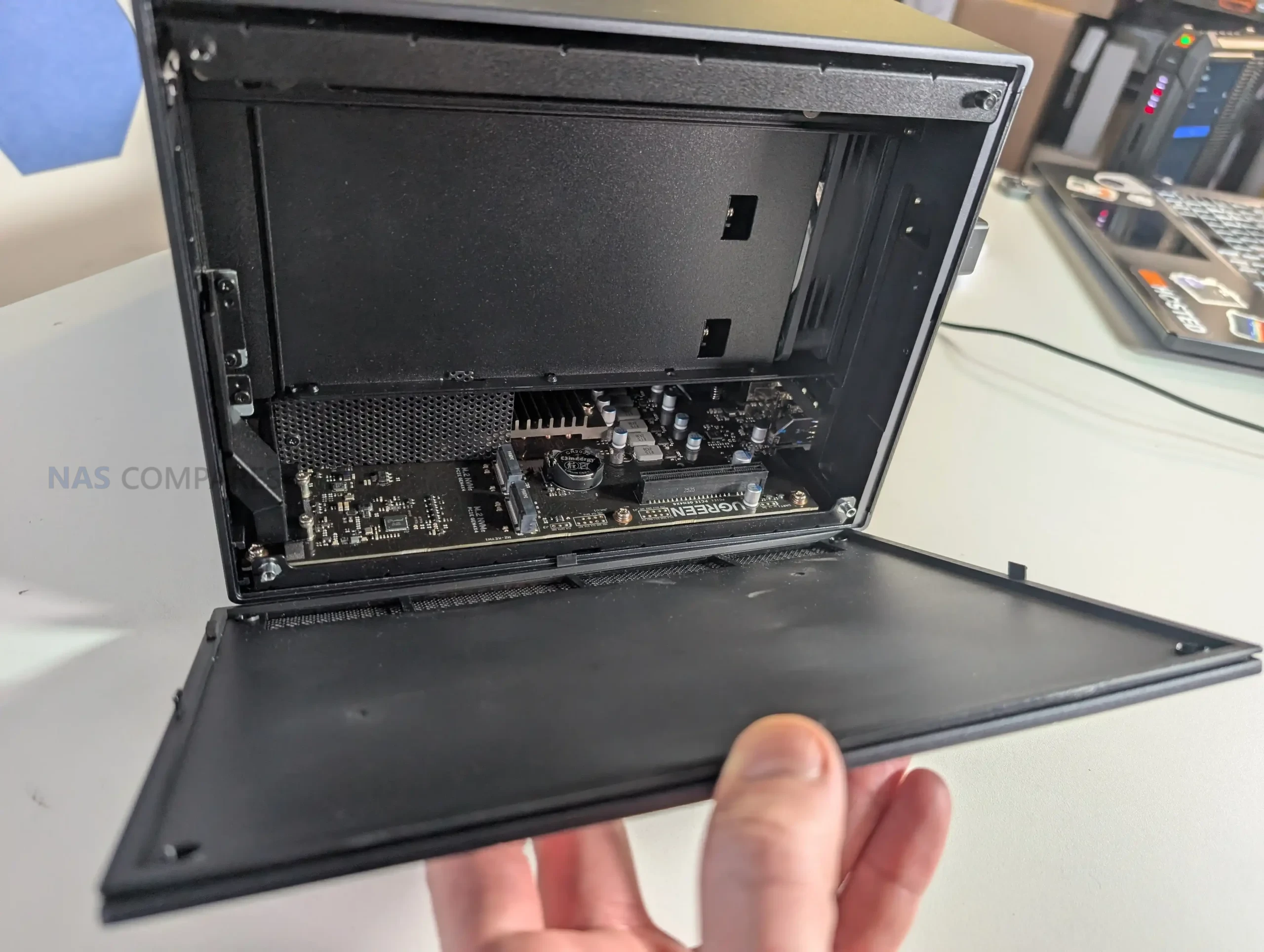 |
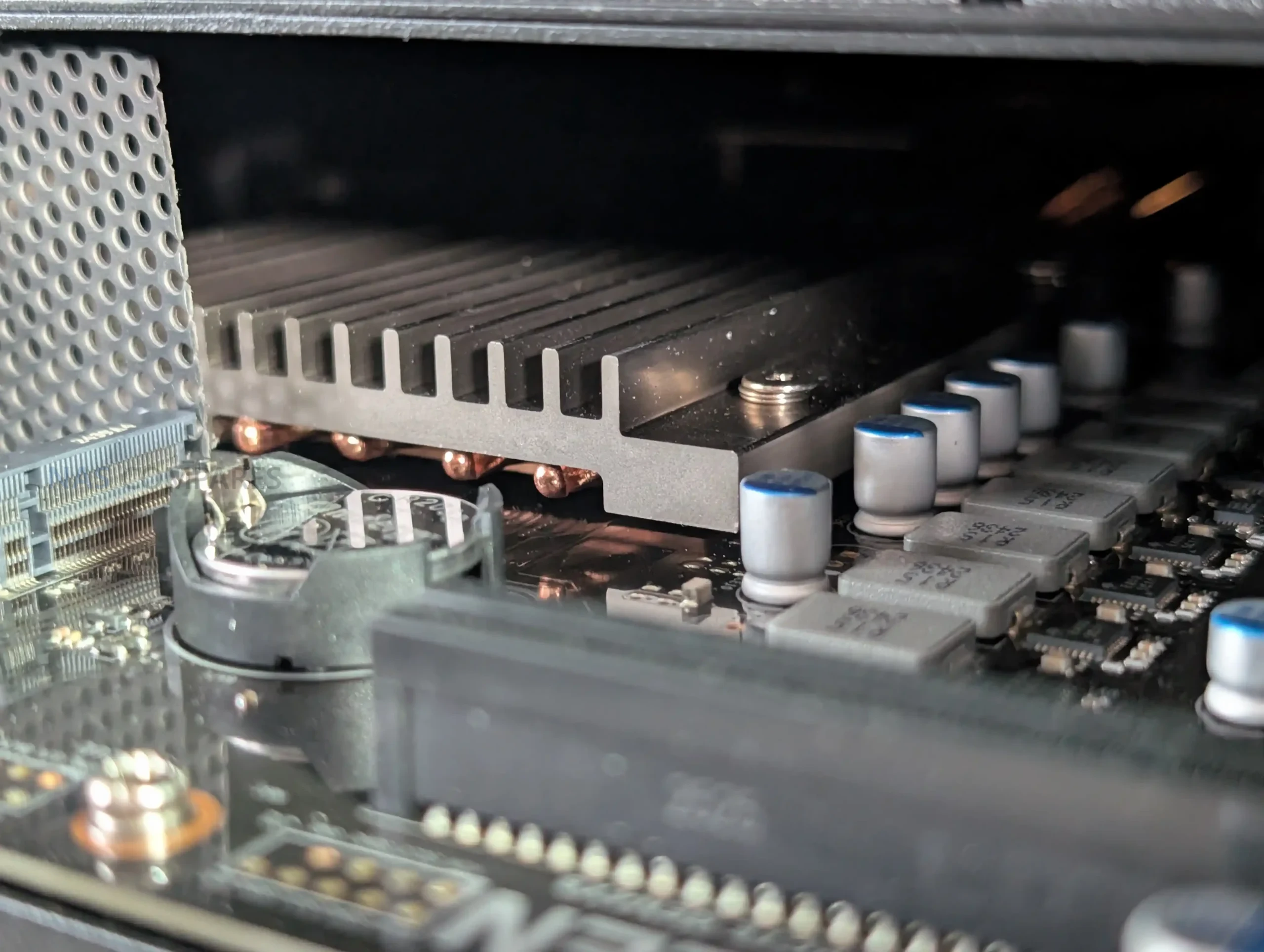
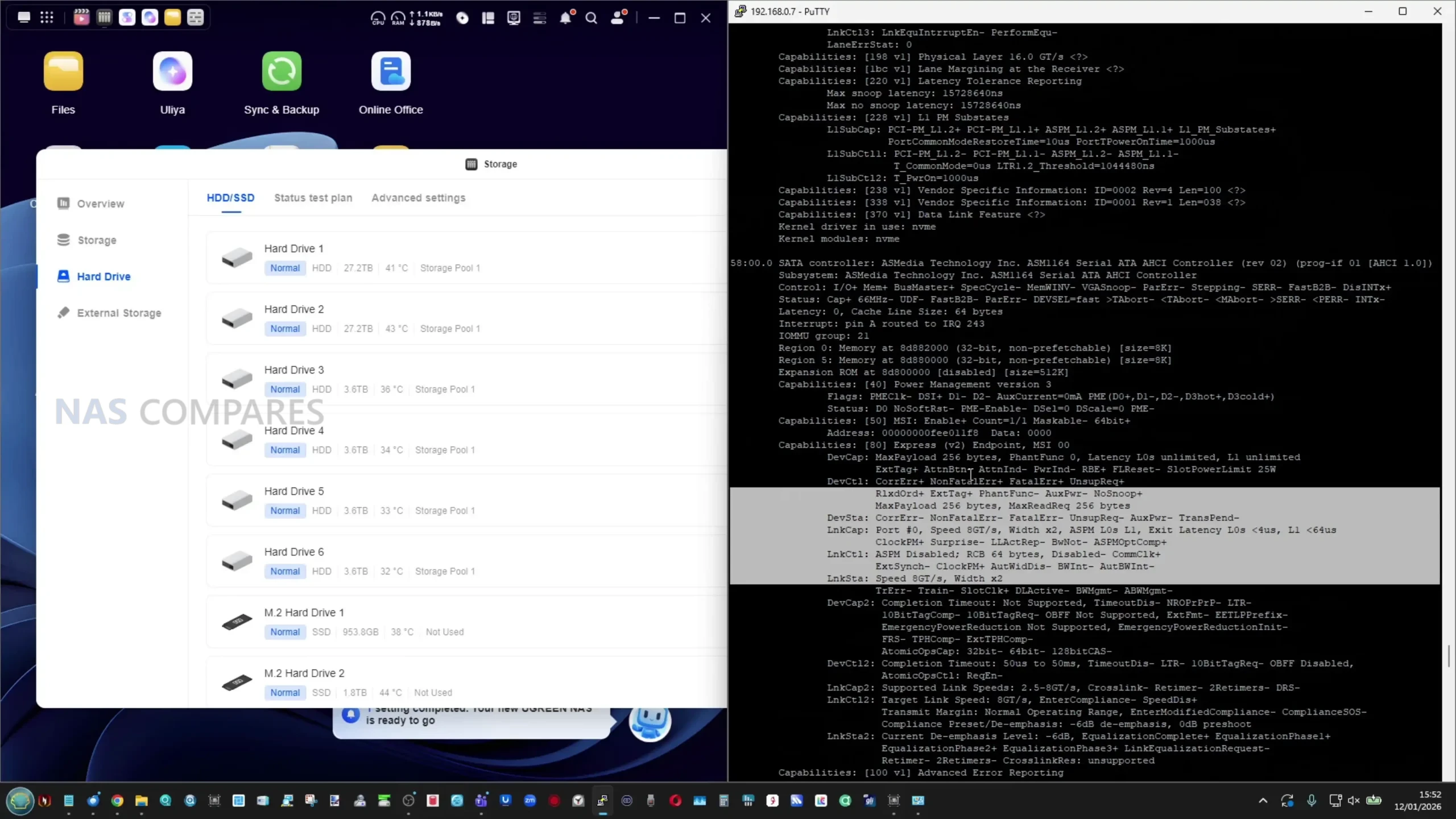
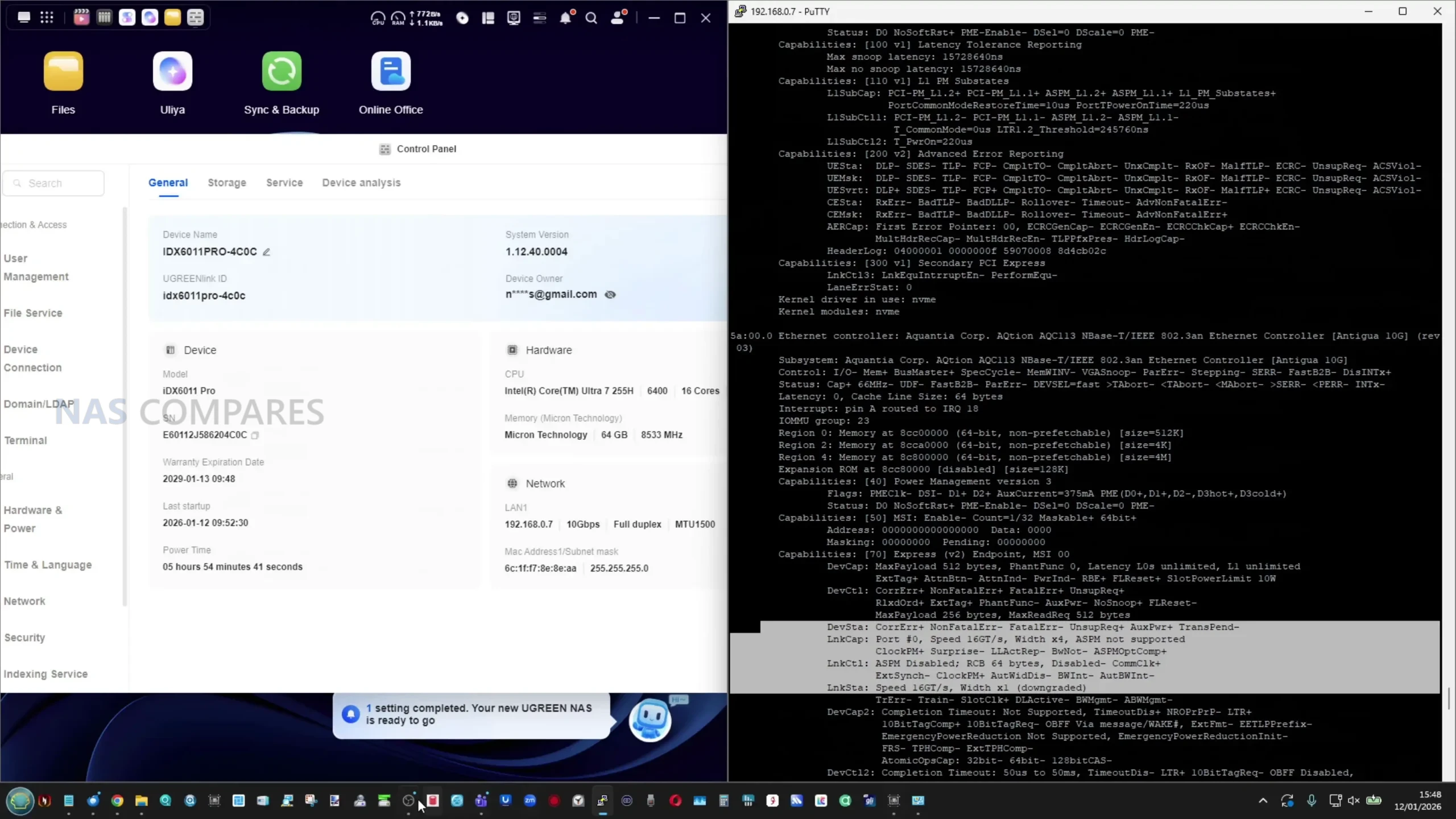
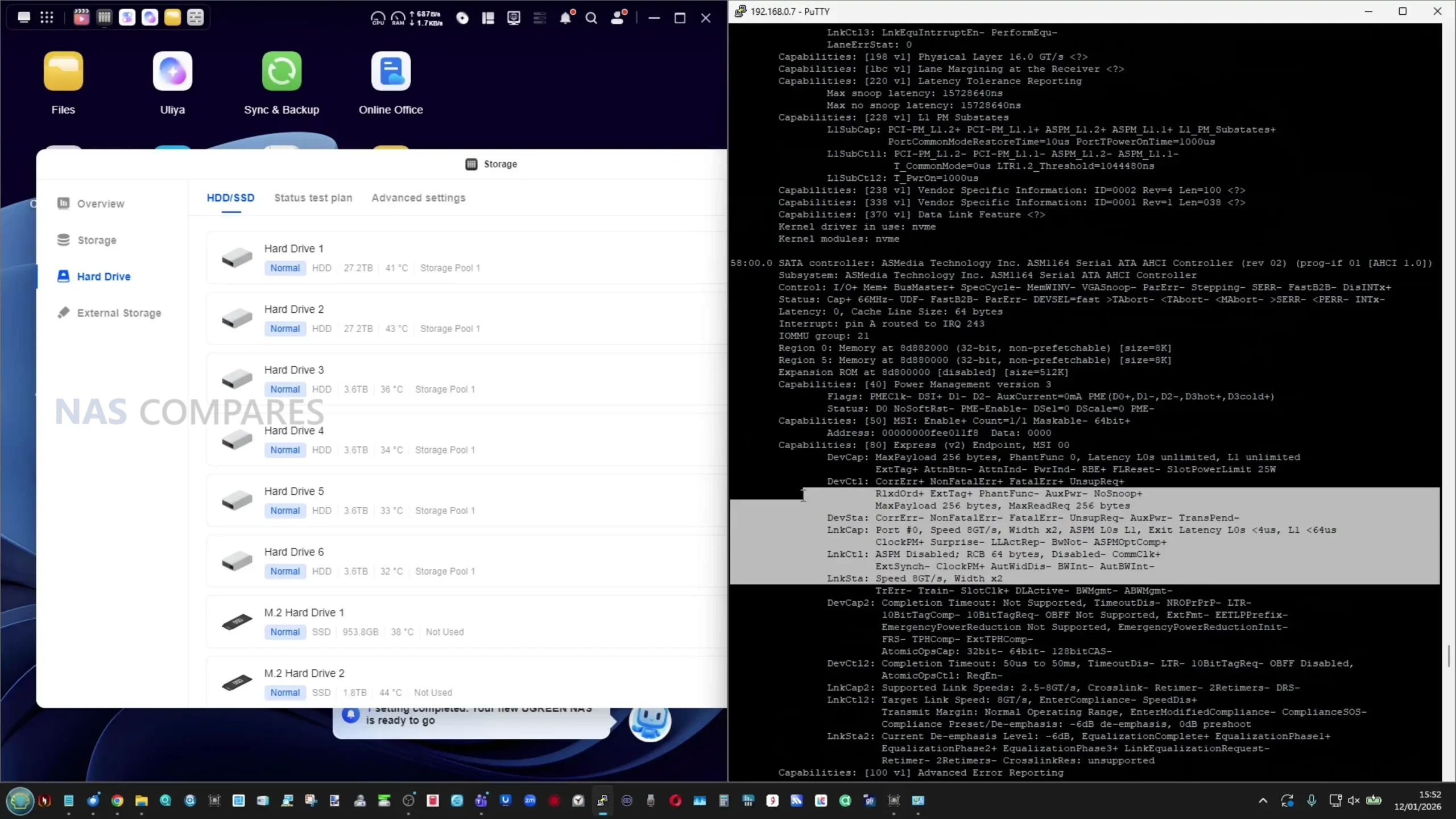
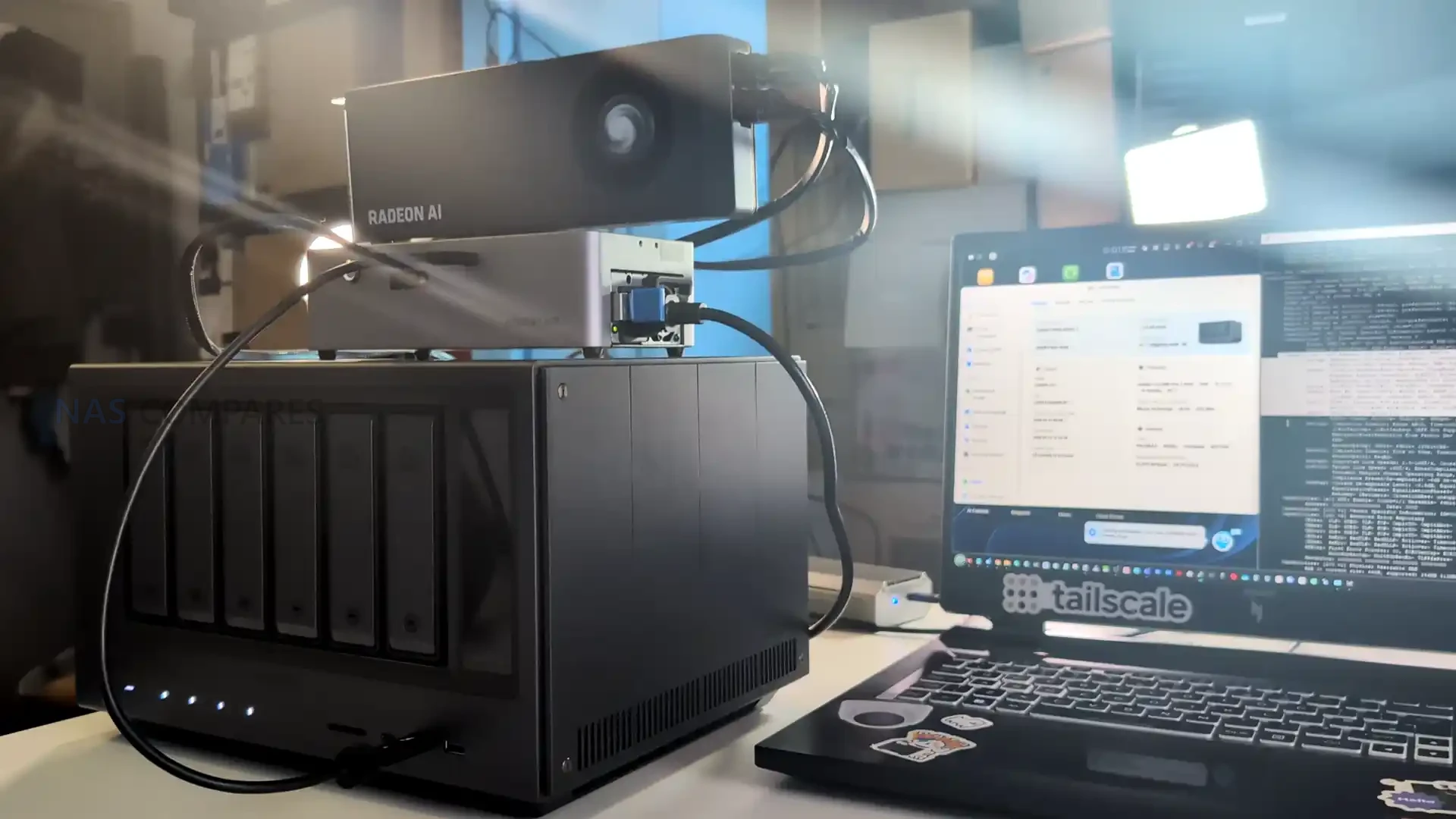
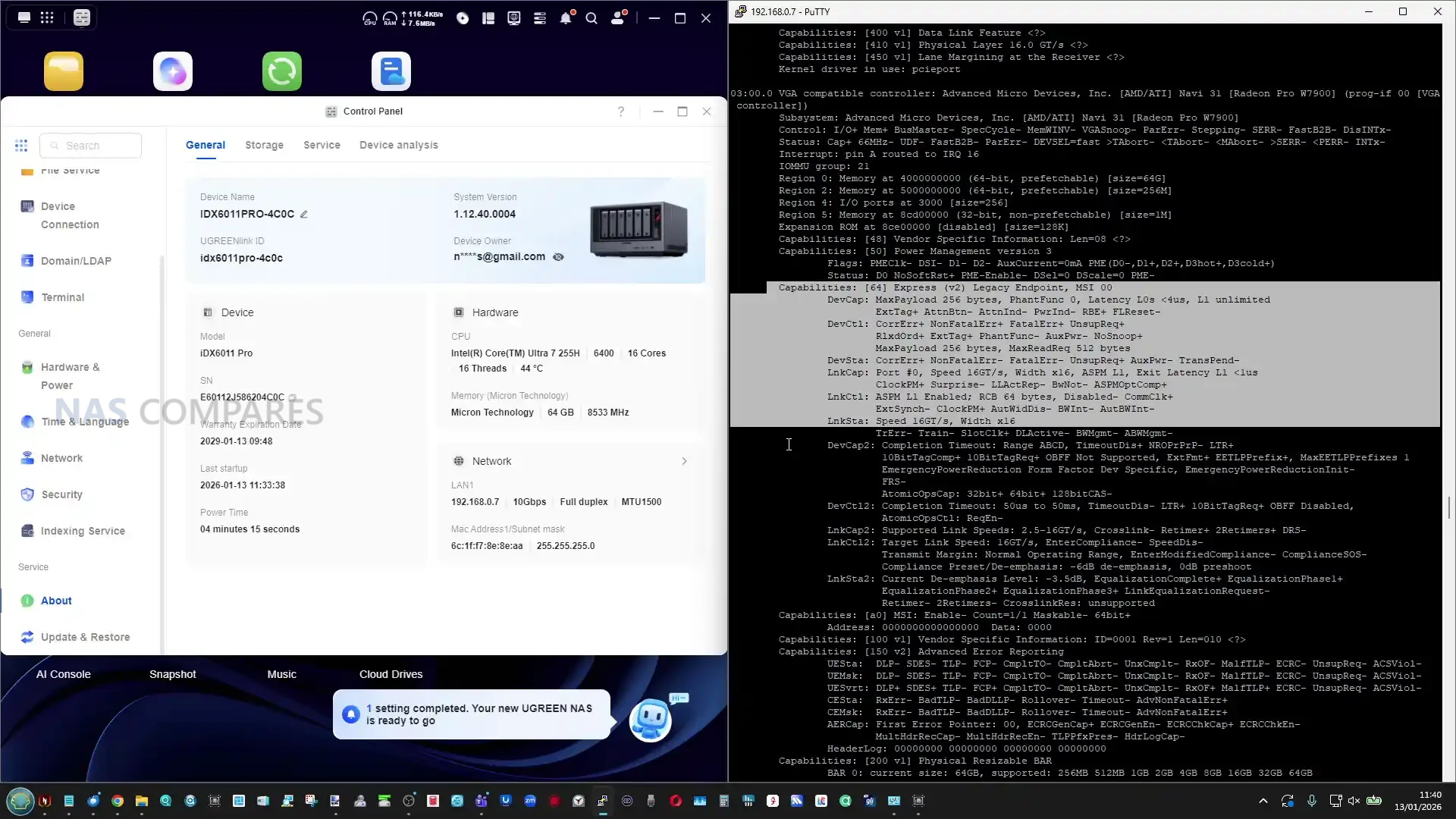
Storage connectivity inside the chassis is arranged so that the M.2 NVMe slots operate as high speed local devices rather than secondary add ons, and the system’s design encourages using them for caching or fast volumes alongside the 6 drive array. Beyond storage, the platform includes a PCIe Gen4 x8 expansion slot, which gives the unit a more flexible upgrade path than many turnkey NAS systems that are limited to fixed networking and fixed I O. The Pro model also includes an OCuLink port, which in practical testing allowed attachment of external PCIe devices such as a GPU dock, and the system recognised the hardware when connected, even though this is not the typical way consumer NAS boxes expand capability. This internal and external PCIe story is one of the defining hardware traits of the Pro model, because it creates options for future add ons that extend beyond storage, even if most buyers will never use it.
 |
 |
From an internal power and cooling perspective, the unit uses an internal PSU and a cooling layout that separates general chassis airflow from CPU cooling, with software fan control focused on the rear fans rather than the CPU fan assembly. That matters because the system’s CPU class, NVMe support, and expansion options can create load scenarios that are closer to small server behaviour than basic home NAS idle patterns, particularly during sustained indexing, RAID rebuilds, or heavy file operations across fast links like 10GbE and Thunderbolt.
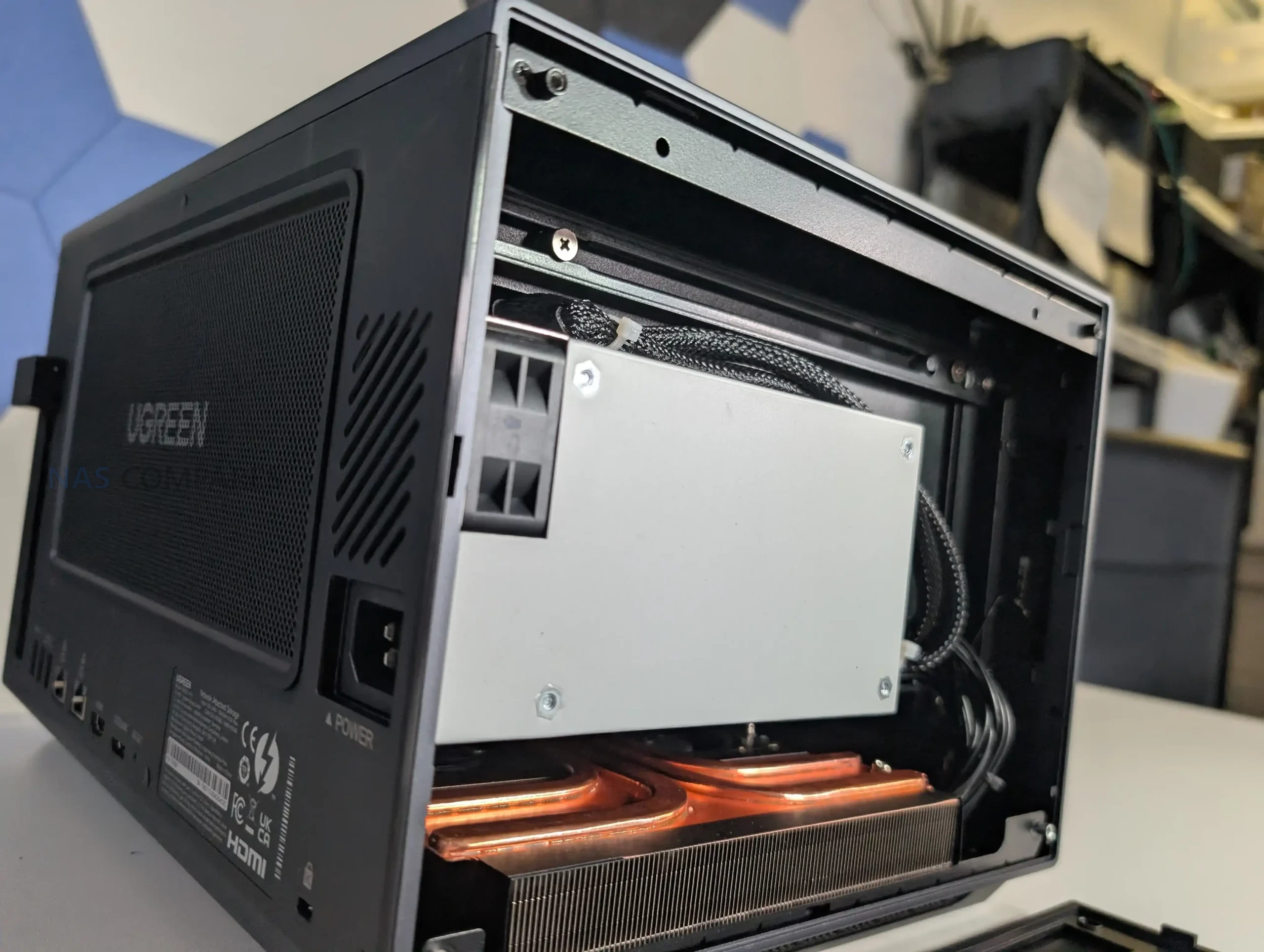
The hardware review unit is described as a pre release prototype, and while the physical build appears close to final, some behaviour, especially around performance tuning and software integration, should be treated as subject to change before shipping. The overall internal hardware direction is clear though: this is not designed around the low power NAS CPU segment, and the component choices indicate UGREEN is targeting users who want workstation class connectivity and compute inside a NAS form factorAM, rather than a minimal file server.
 |
 |
UGREEN iDX6011 Pro Review – Ports and Connections
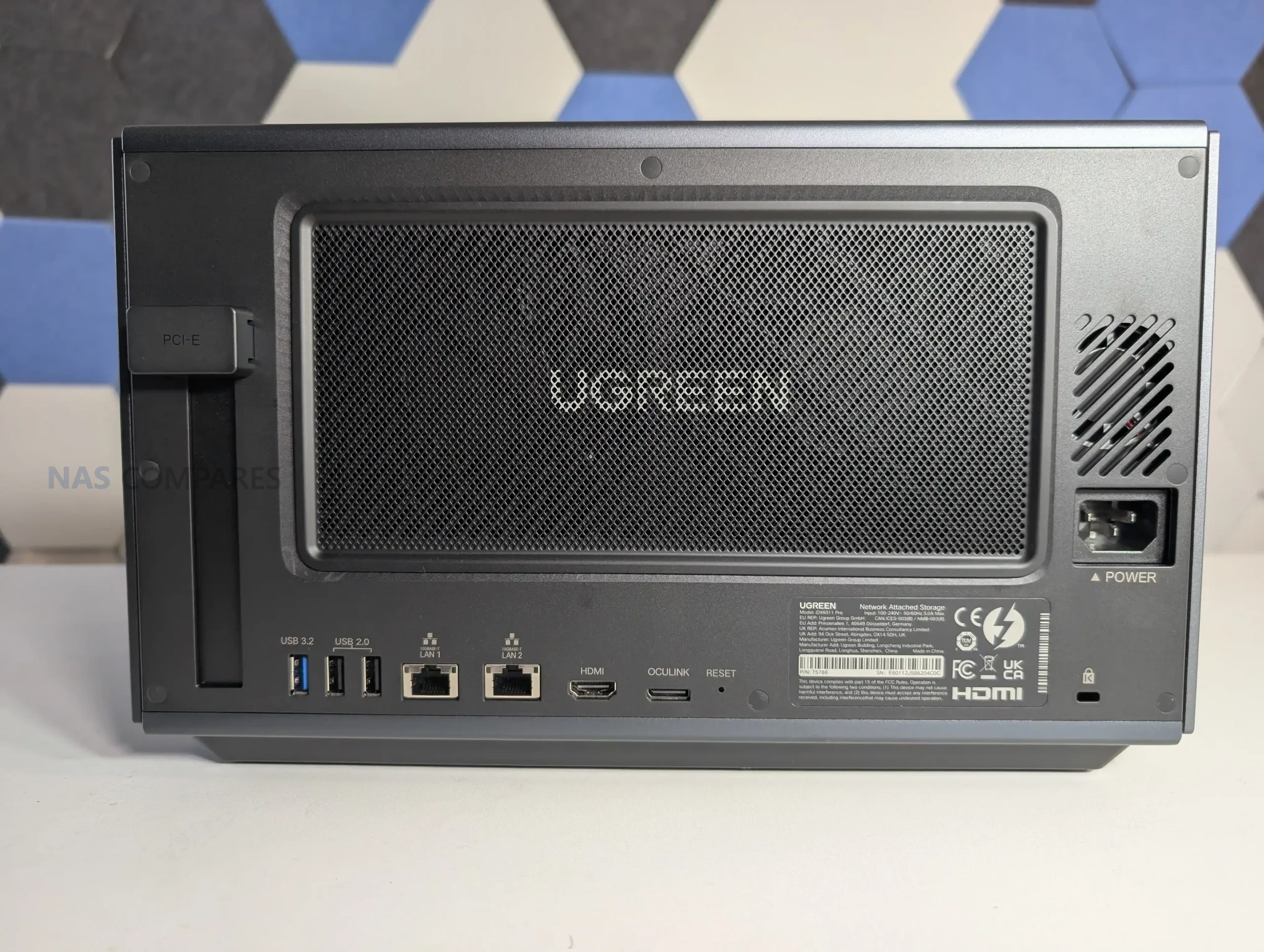
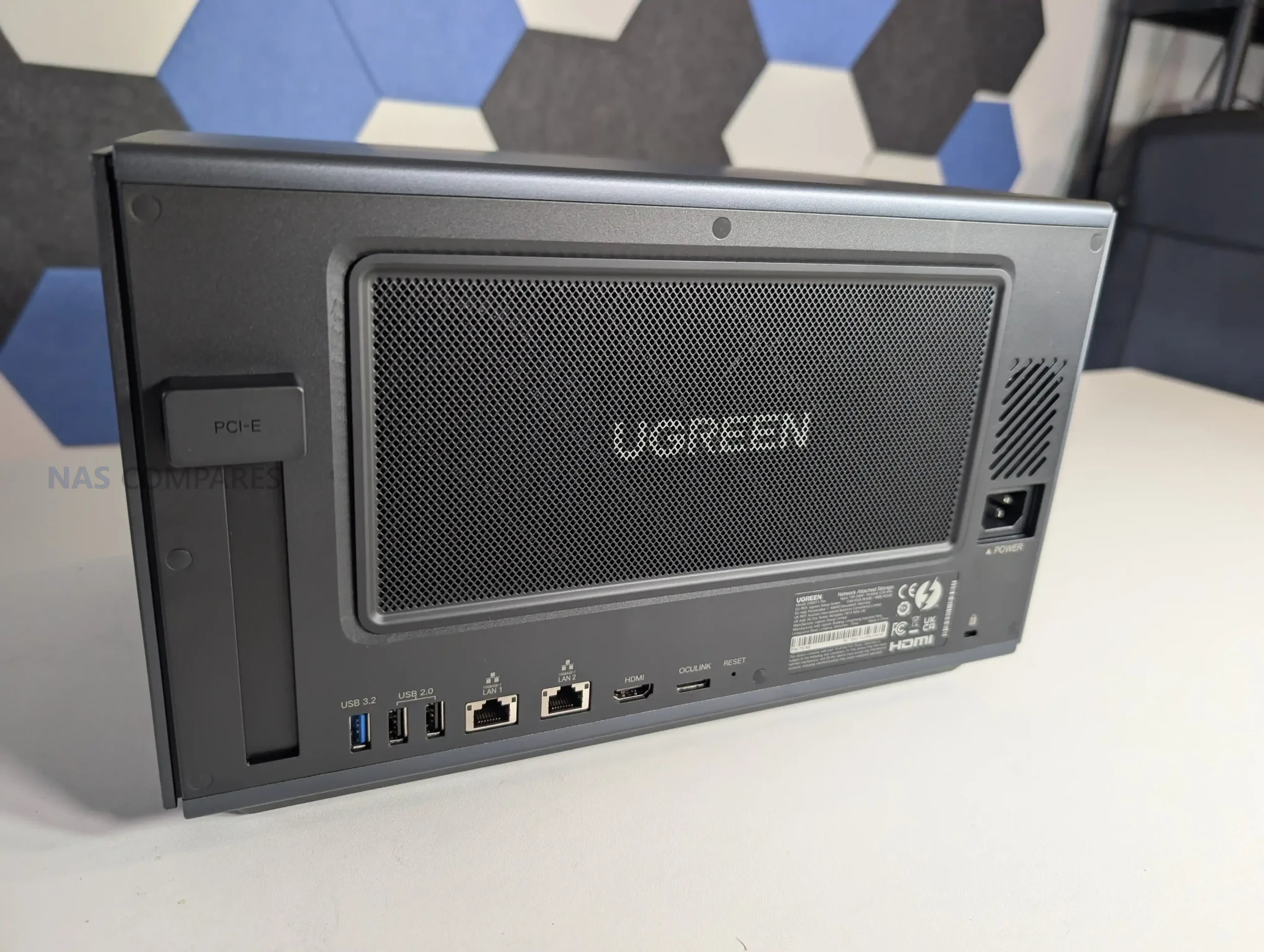
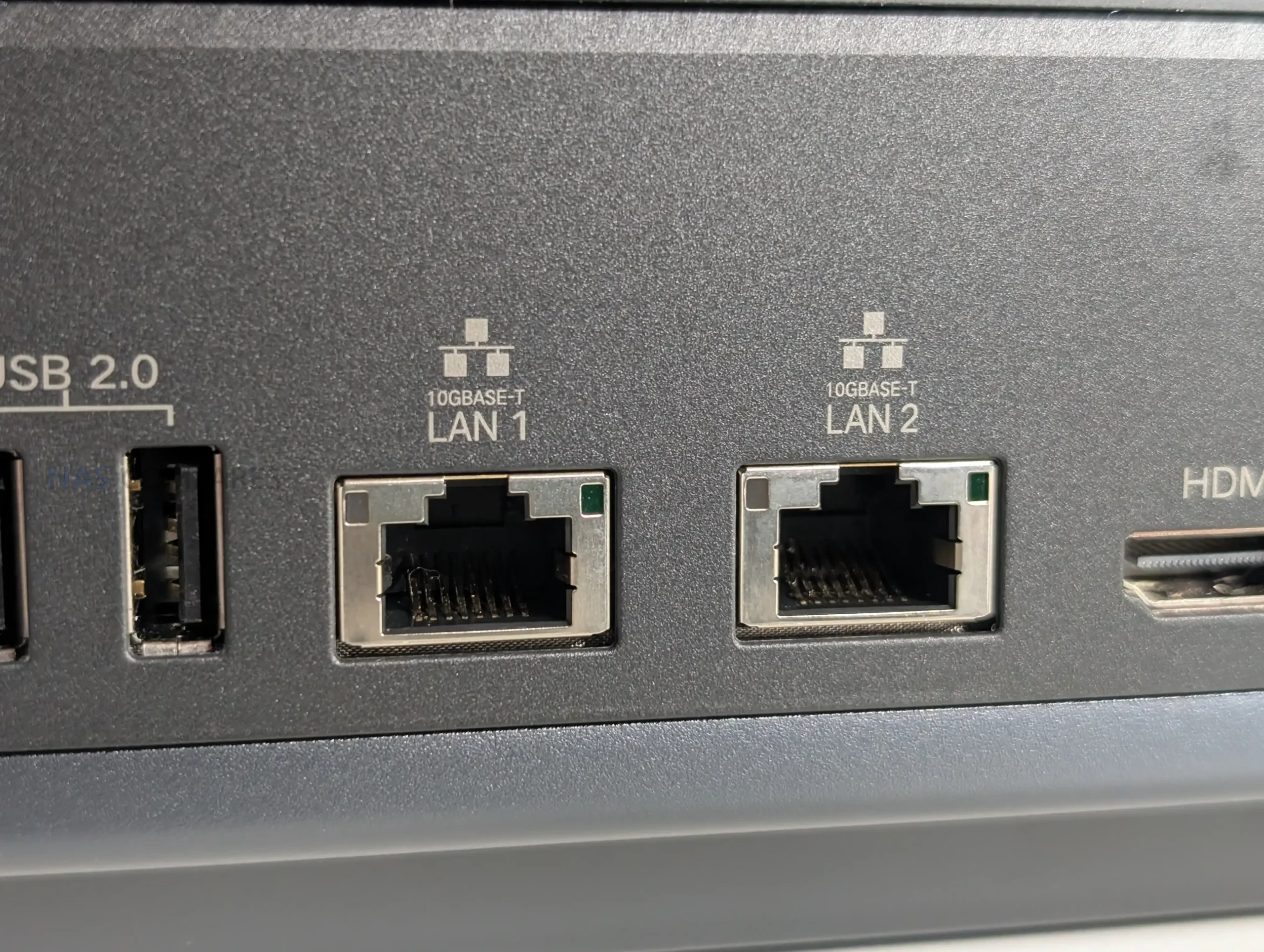
The iDX6011 Pro is configured around higher bandwidth connectivity than most mainstream 6 bay NAS units, and the port layout reflects an intention to sit closer to a workstation or small office backbone rather than being limited to standard home networking. Dual 10GbE is present across all configurations, providing both higher single link throughput and the option for link aggregation or segmented network roles depending on the user’s environment. In practice, dual 10GbE also opens the door to multichannel SMB performance in supported client setups, and the platform is clearly built with large file workflows in mind, where sequential transfer speed and low friction access matter as much as raw storage capacity. Unlike NAS designs that reserve high speed networking for optional add in cards, the iDX6011 platform treats 10GbE as baseline rather than upgrade.
 |
 |
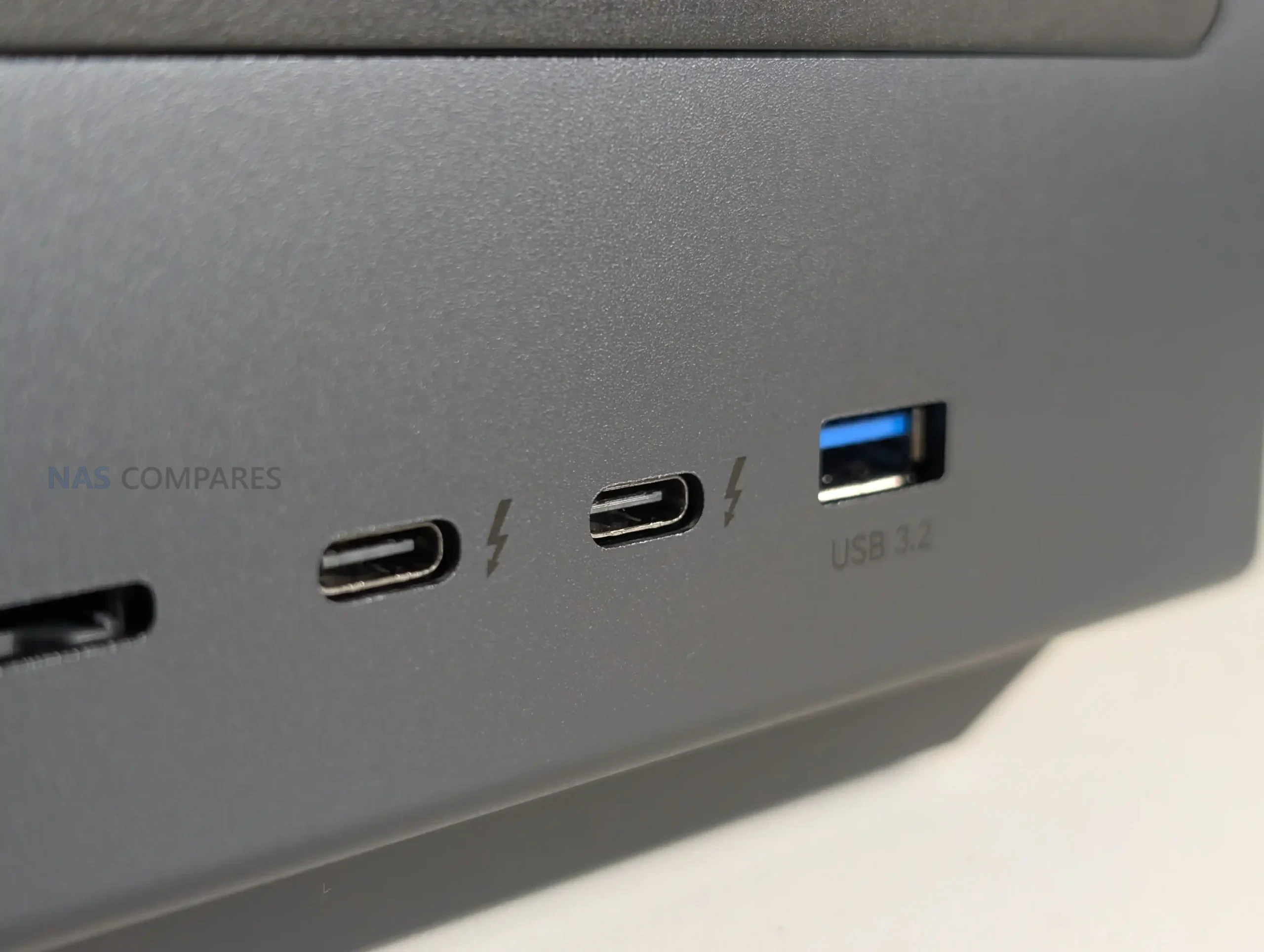
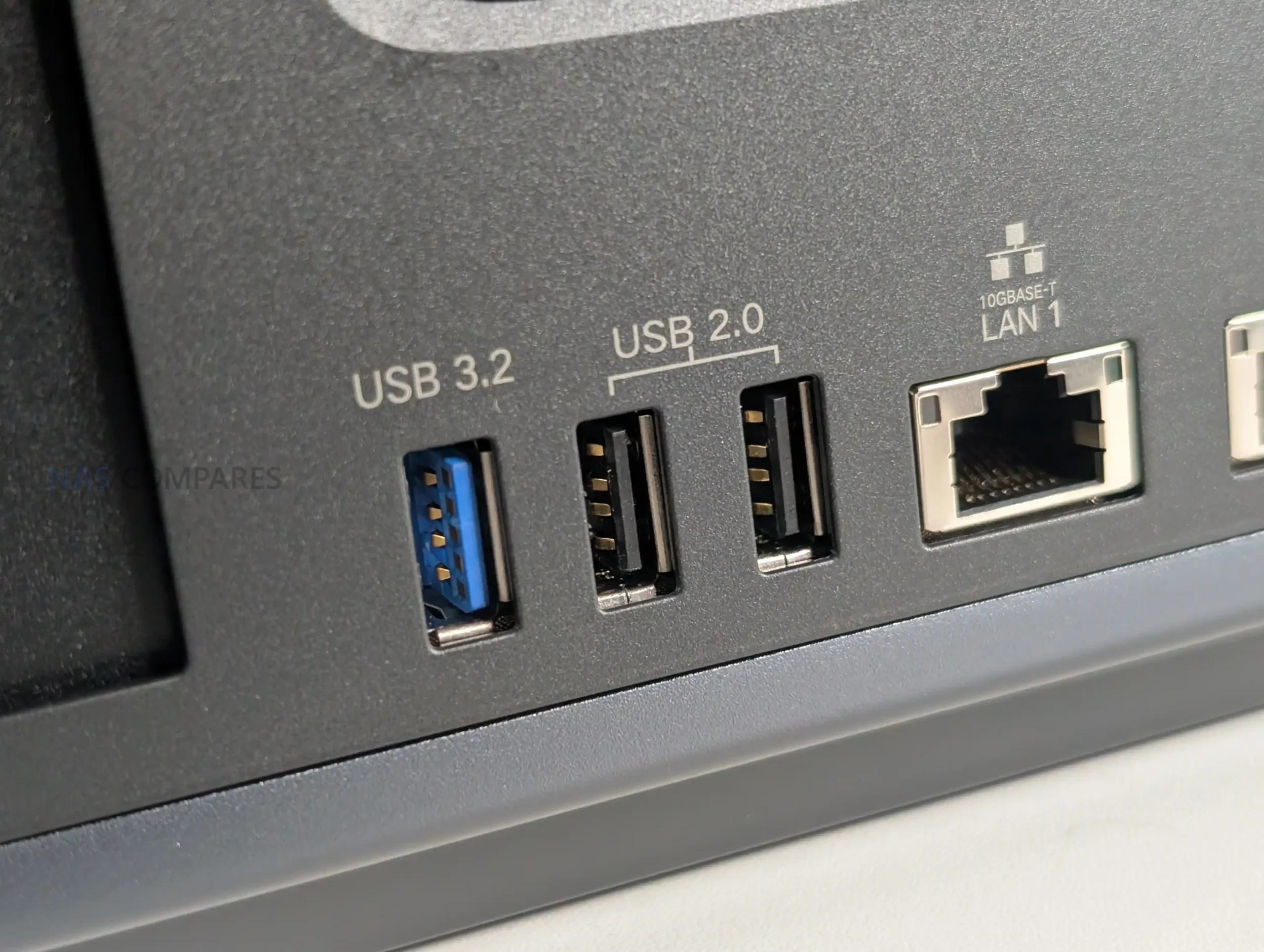
Thunderbolt 4 appears as 2 ports, and in your testing this mattered because it enabled direct high speed attachment use cases and compatibility with external adapters and docks. The most obvious implication is fast ingest and offload for users working from laptops or mobile workstations where Thunderbolt is a primary high speed interface, but it also intersects with the Pro model’s expansion story because external PCIe style docks become viable. The unit also includes USB connectivity split between faster USB 3 class ports and USB 2 ports for lower bandwidth peripherals, plus an SD 4.0 card slot that is front placed for frequent media ingest. That placement is relevant because it avoids reaching behind the unit for daily tasks, which is more aligned with content creation workflows than with the typical NAS assumption of mostly remote file transfer.
 |
 |
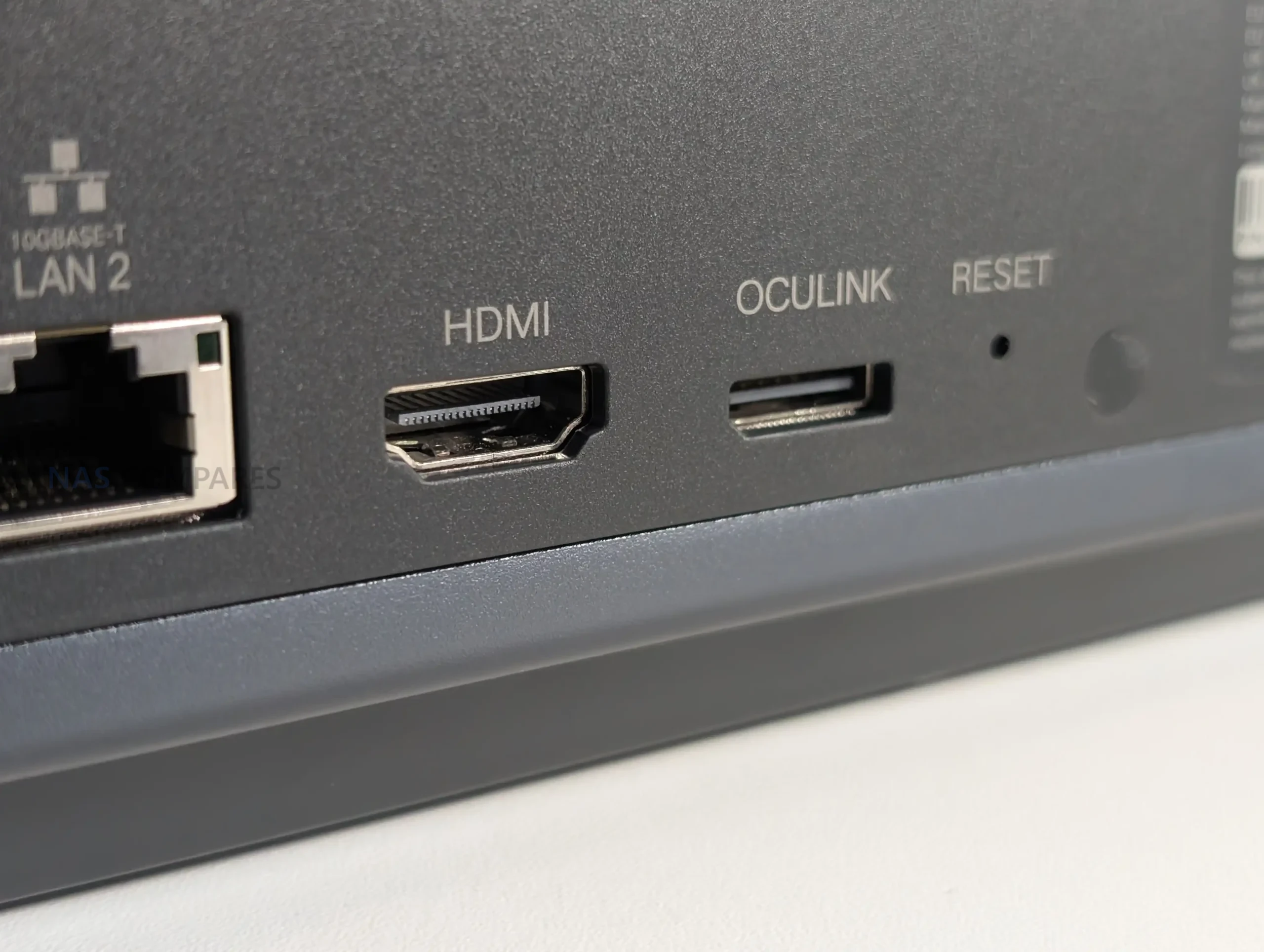
Video output is handled through an 8K capable HDMI port, which supports the idea of using the NAS as a directly attached media endpoint as well as a server, though this is a secondary function compared with network access. The presence of HDMI also ties into the software layer you described, where the system can be used for local playback and controlled through the broader UGOS environment, but it is still a NAS first device rather than a dedicated media box. For users who want the NAS to sit near a display and act as a playback source, the port is present, but the value depends heavily on application availability and the user’s preferred media stack.
 |
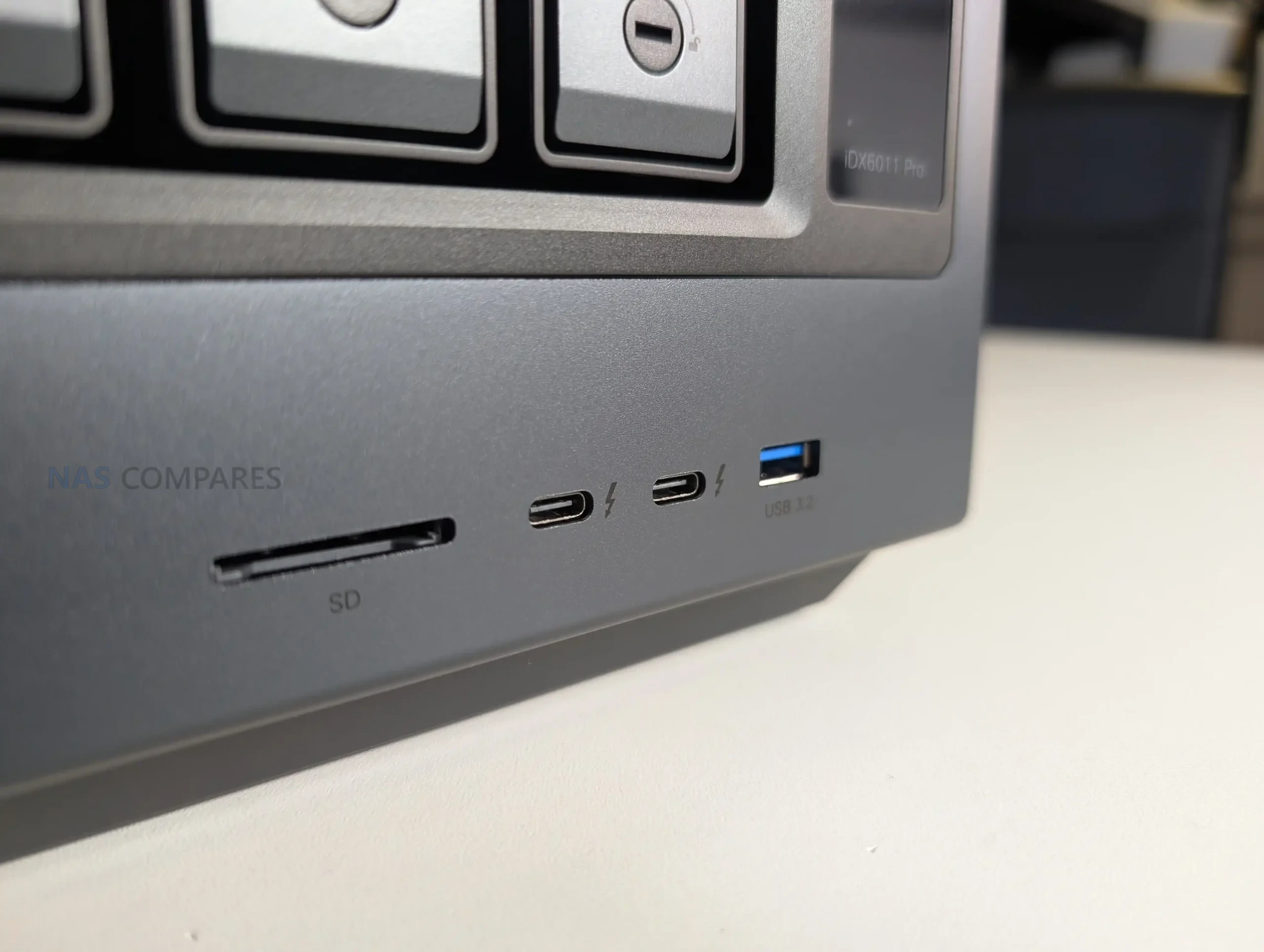 |
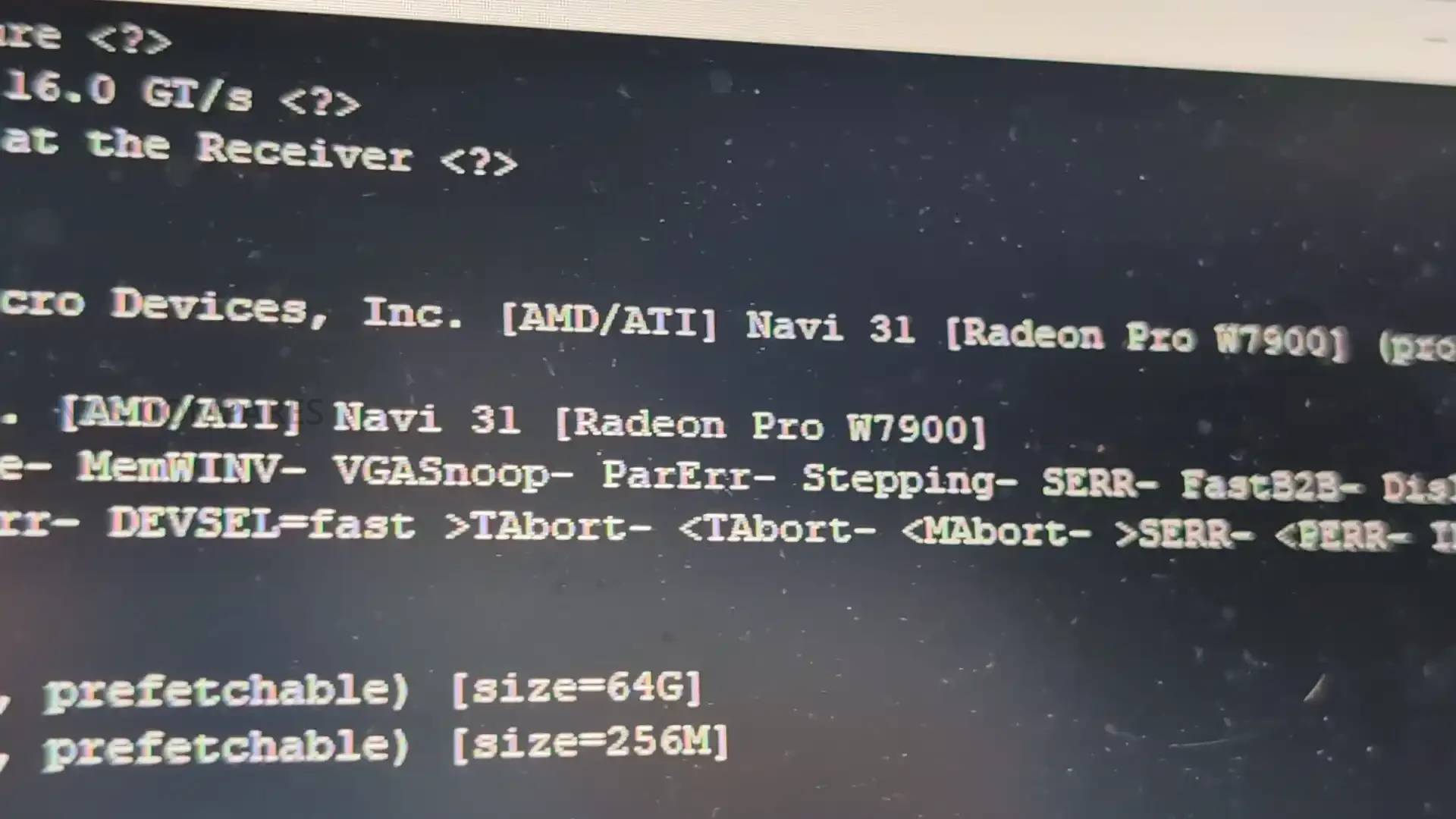
Expansion is where the Pro model separates itself, because it combines an internal PCIe Gen4 x8 slot with an external OCuLink port, while the non Pro models omit OCuLink. In testing, the OCuLink path successfully recognised an attached GPU dock, which indicates that UGREEN is not treating this as a purely decorative specification, even if most of the AI positioning is currently built around CPU and NPU resources rather than discrete GPU acceleration. The PCIe slot provides additional flexibility for add in networking or other cards within the physical constraints of the chassis, and together these interfaces make the iDX6011 Pro less locked to its factory I O than typical turnkey NAS appliances. That said, the practical value of these ports depends on driver support, how UGOS exposes attached hardware, and whether users plan to run third party operating systems where PCIe device support can be more familiar.
 |
|
 |
 |

UGREEN iDX6011 Pro Review – Speed, Temp, Noise and Power Tests
In file transfer testing, the iDX6011 Pro showed performance that aligns with its connectivity and internal storage design, but also revealed at least one area where optimisation may still be needed. With 6 HDDs configured in RAID 5 and SSD caching enabled for read and write, throughput reached roughly 950 MB/s read and 670 MB/s write, which is consistent with a well tuned array benefitting from cache acceleration and a fast network path. The larger point is that the platform can make practical use of 10GbE class throughput without feeling artificially capped by an entry level CPU, and the results suggest the system is capable of handling sustained large file movement without immediately falling behind. The caveat is that this was tested on a pre release unit, and the way UGOS configures caching and network services can materially affect the final numbers.
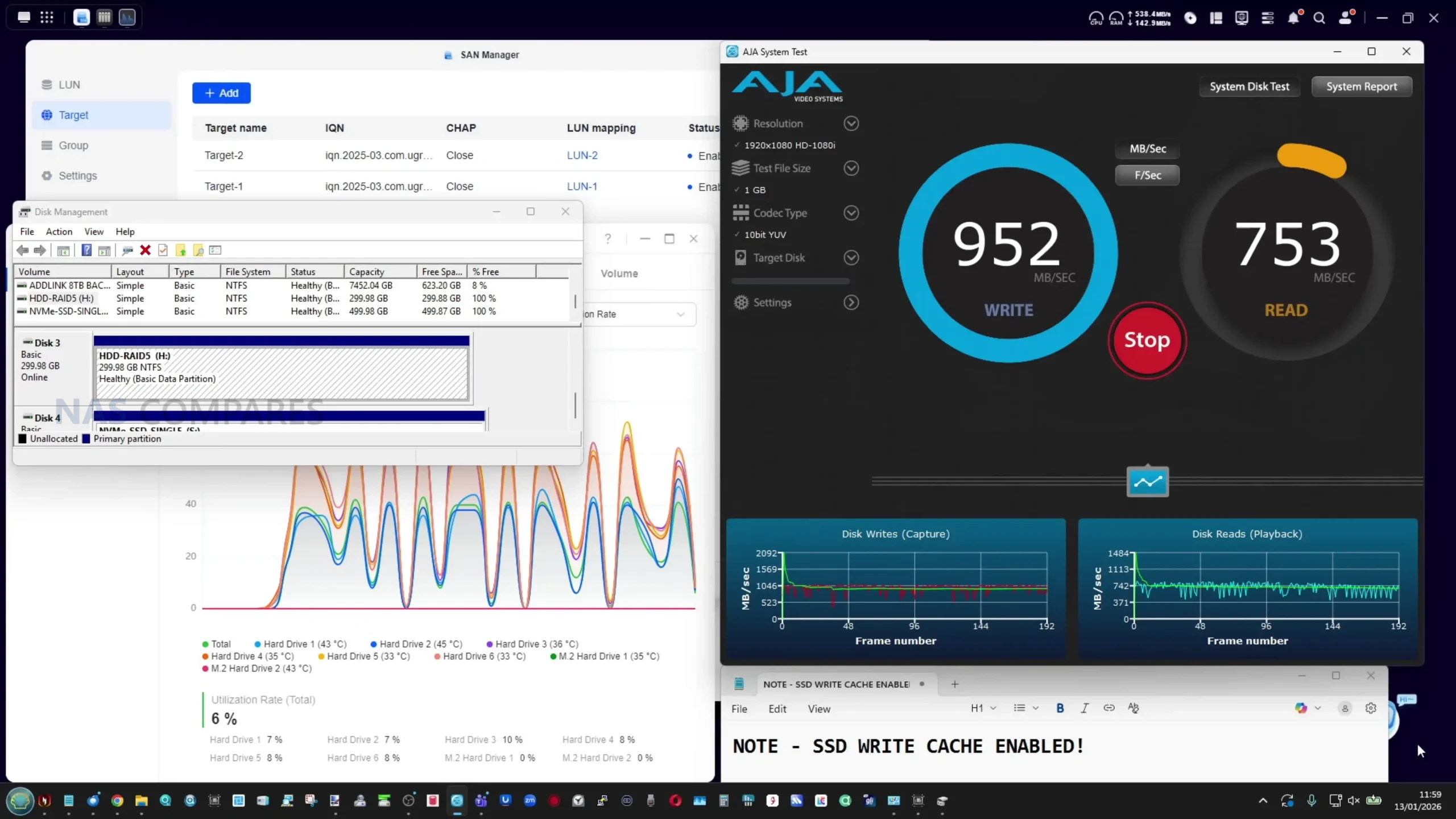 |
 |
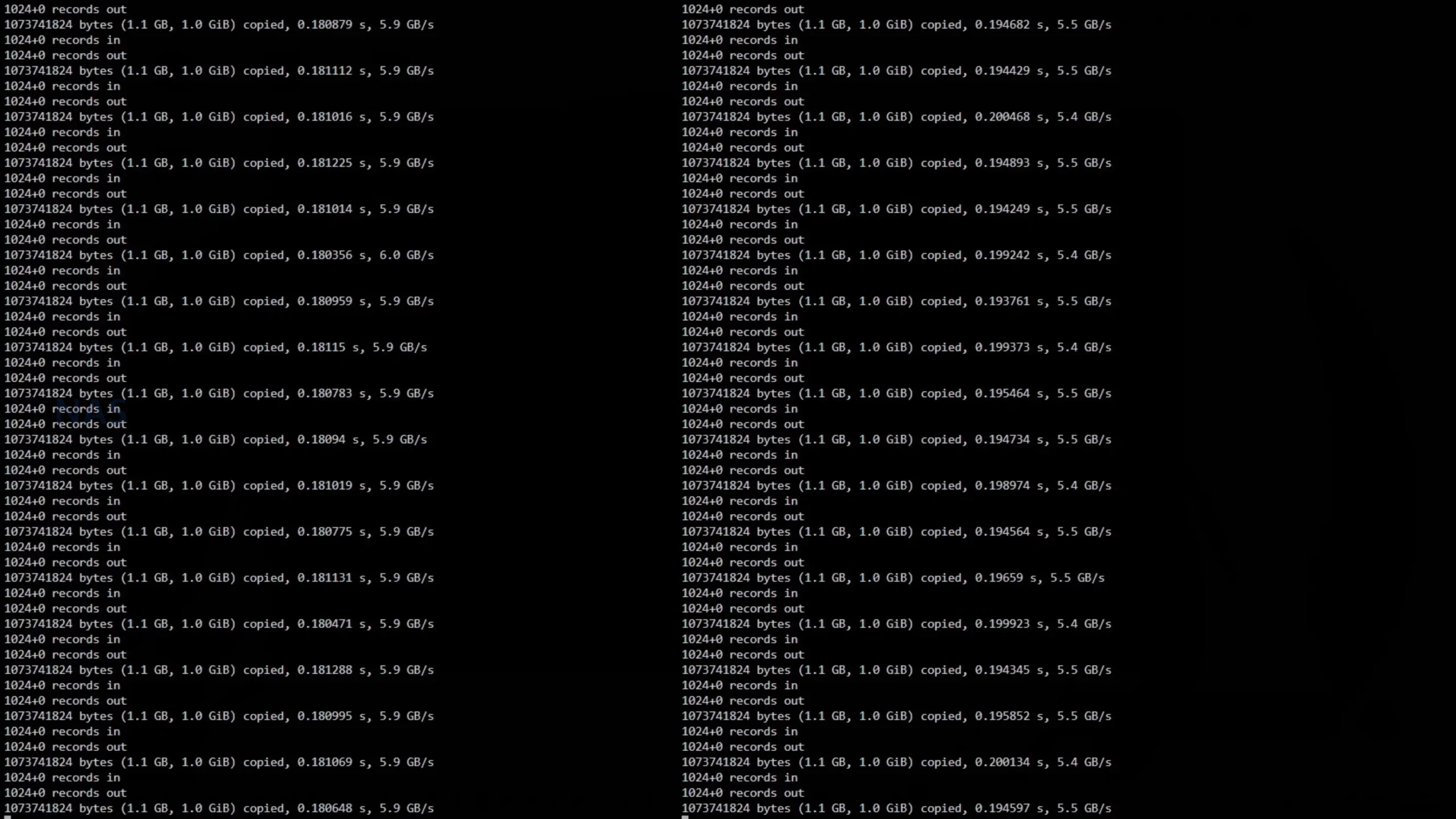
The internal NVMe performance was strong, and importantly it was consistent whether measured through the UGOS interface or via SSH testing. In the built in NVMe benchmark, both drives returned around 6 GB/s reads and writes after repeated testing, and additional 1GB SSH tests also clustered around 5.5 to 6.0 GB/s. Those figures suggest the M.2 implementation is not a token feature and can support either aggressive caching configurations or fast SSD volumes for workloads that benefit from low latency access. This matters in the context of the iDX6011 Pro’s target audience because the NVMe layer is a primary tool for keeping responsiveness high when multiple services are active, when many small files are being indexed, or when a user wants a high performance workspace alongside bulk HDD capacity.
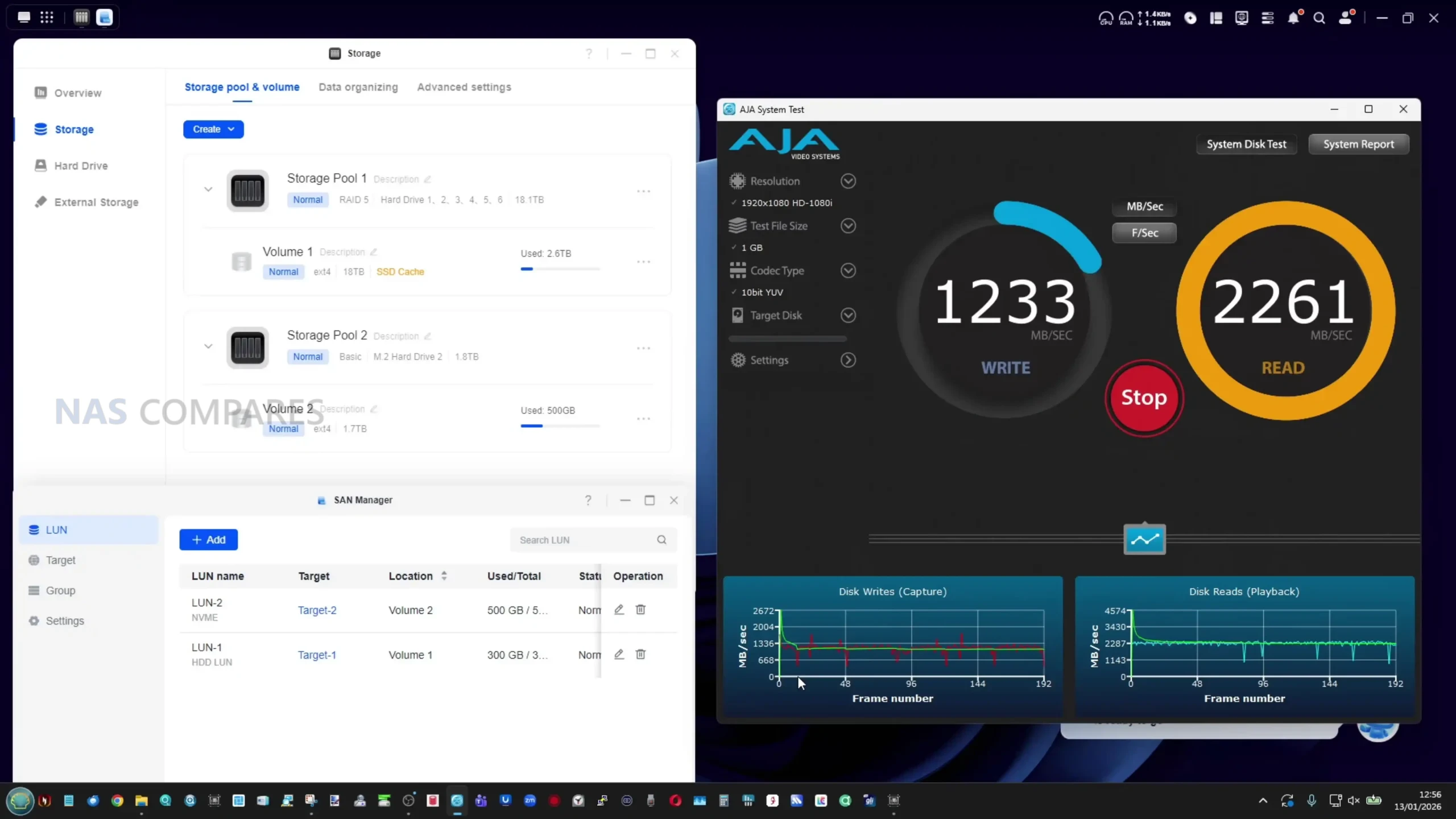
Where results were less ideal was in a dual 10GbE client scenario using SMB multichannel, where reads scaled well but writes did not. Using a USB4 laptop connected through a dual 10GbE to USB4 adapter, 2x 10GbE connections were visible and green-for-go on both ends! So, the system SHOUD saturate more than a single 10GbE link and make real use of multichannel behaviour to use both (with the right media!) – which is exactly what we saw in sequential Read speed tests. Writes, however, sat around 1300 to 1500 MB/s, often behaving closer to a single 10GbE stream, with occasional dips that suggested the second link was not being fully utilised for upstream traffic in that setup. Jumbo frames were enabled with MTU set to 9000, and alternative approaches were tested, so the remaining explanation could be software overhead, SMB tuning, client limitations, or an area of UGOS optimisation that is not yet final in the pre release software build.
 |
 |
 |
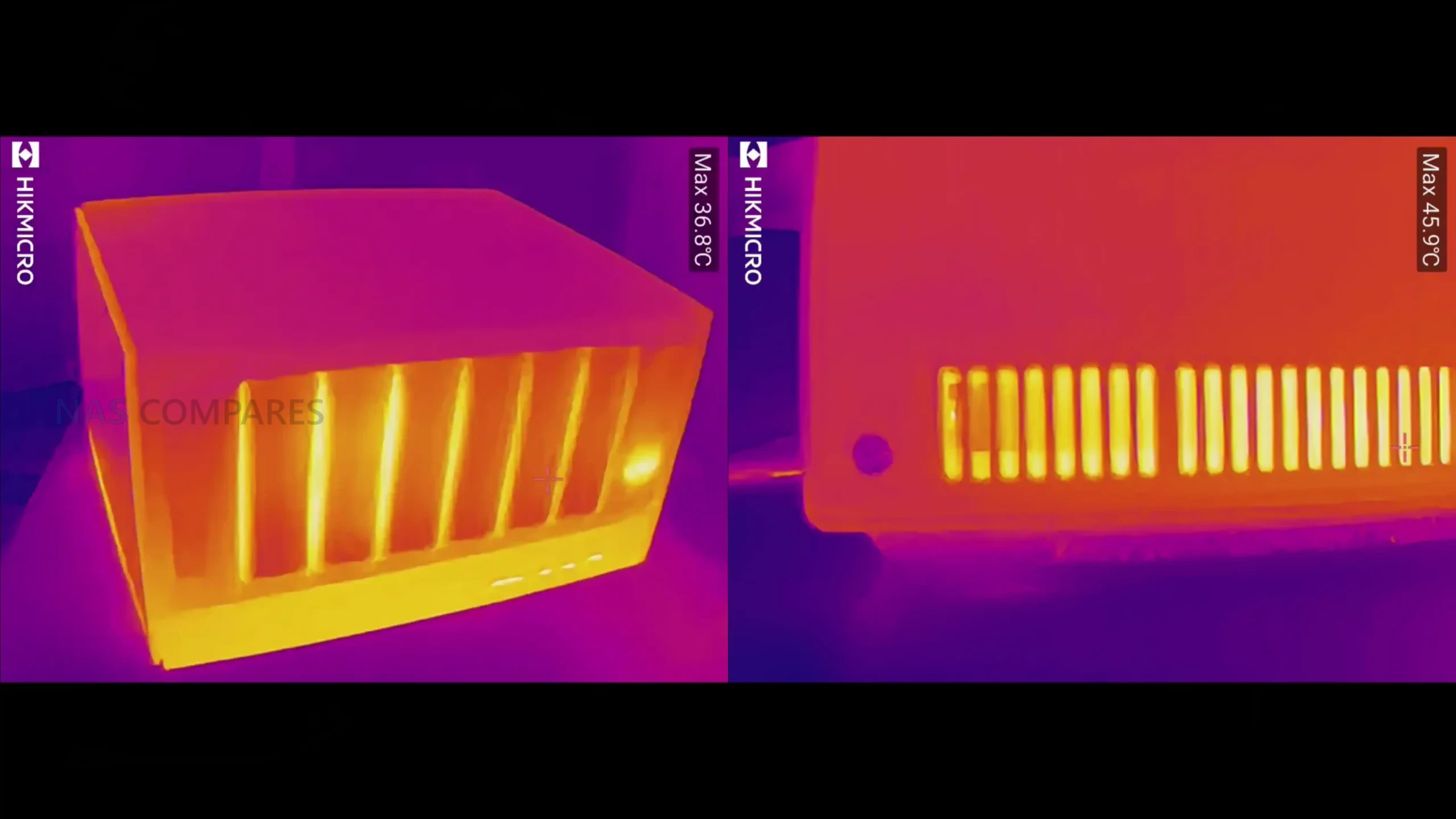 |
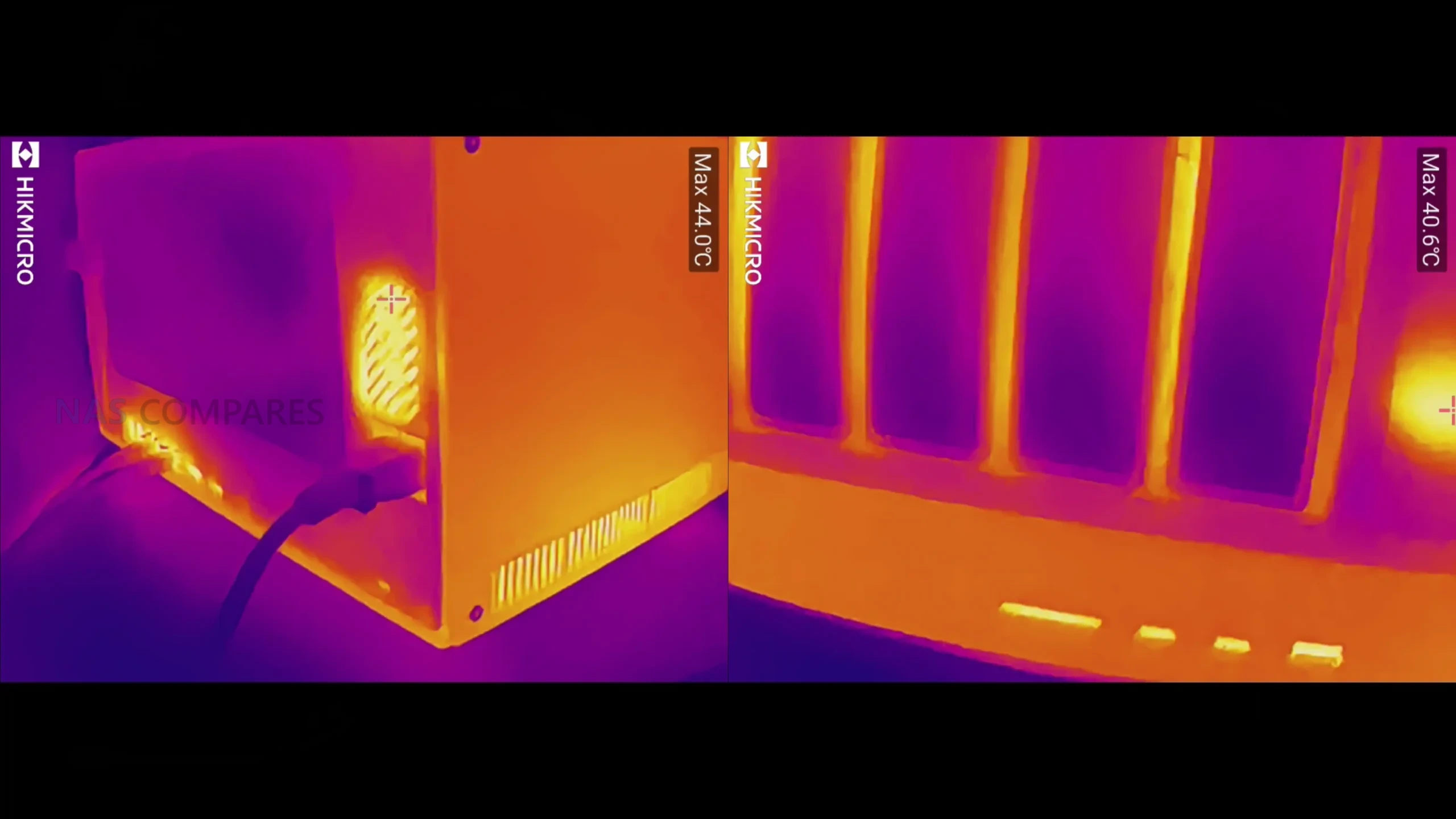
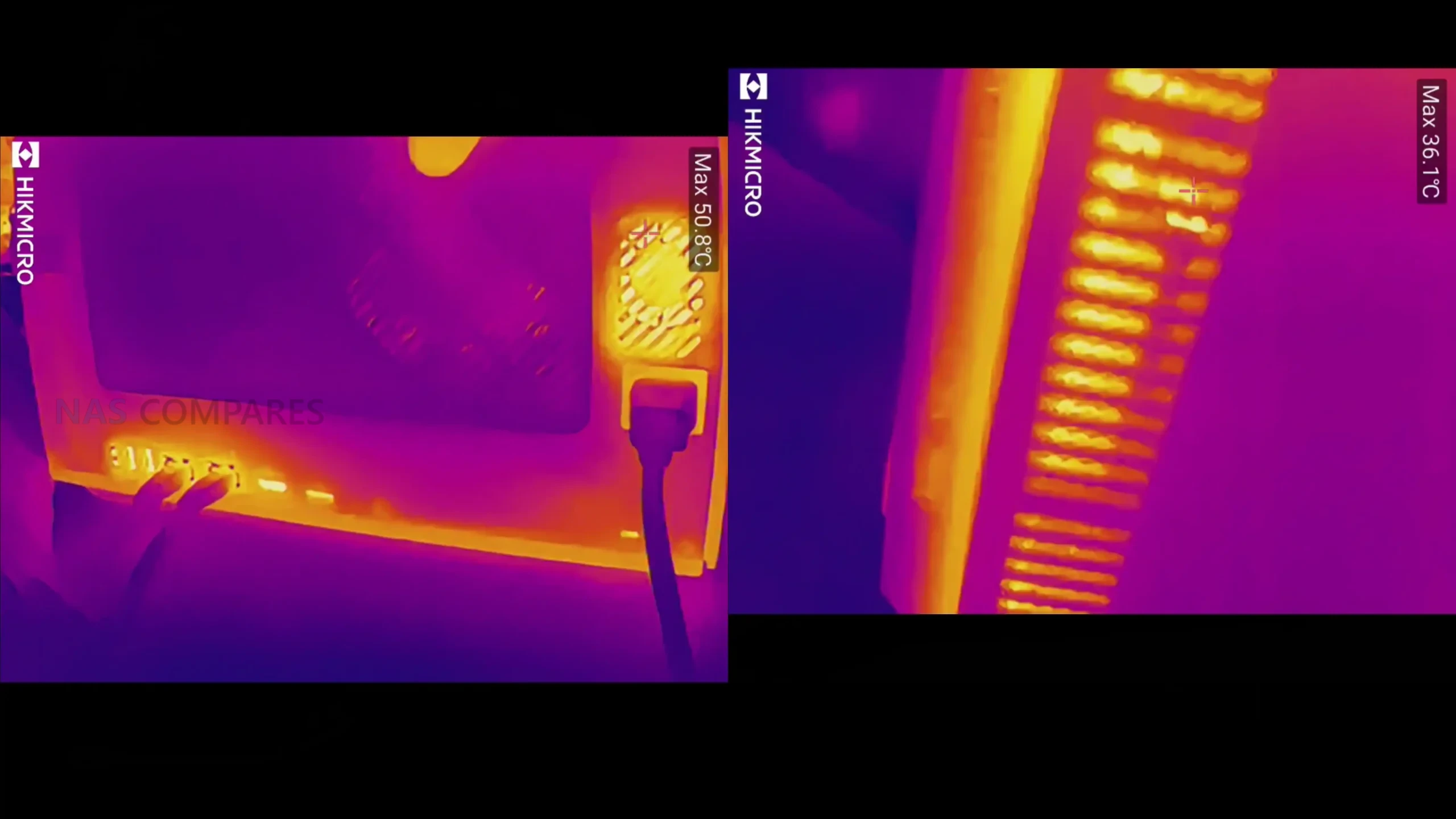
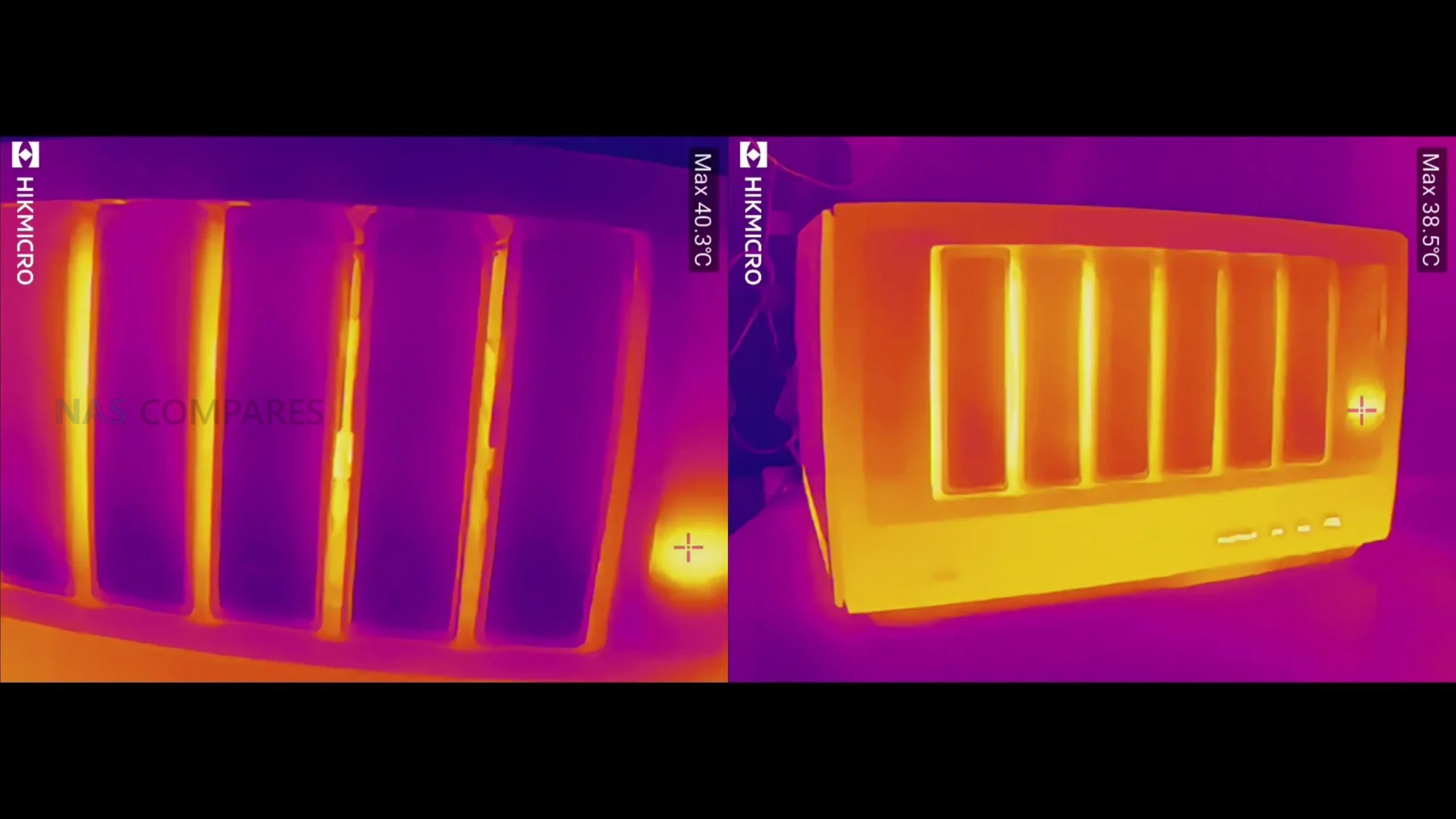
Thermally, the unit behaved within expected bounds for a metal chassis hosting multiple high capacity HDDs and sustained access patterns. After roughly 36 hours of continuous activity, surface readings showed around 35C at the top, roughly 38C around the drive bay area and side ventilation panels, and around 41 to 44C in lower vent channel areas where airflow is concentrated. The rear fan region was around 44 to 45C, the PSU region hovered around 38C, and the LCD area reached around 45C, with most of the base sitting around 35 to 38C. Importantly, internal software did not raise thermal warnings in normal testing, and the only notable heat related stress occurred during repetitive synthetic SSD write loops that are not representative of typical mixed use.
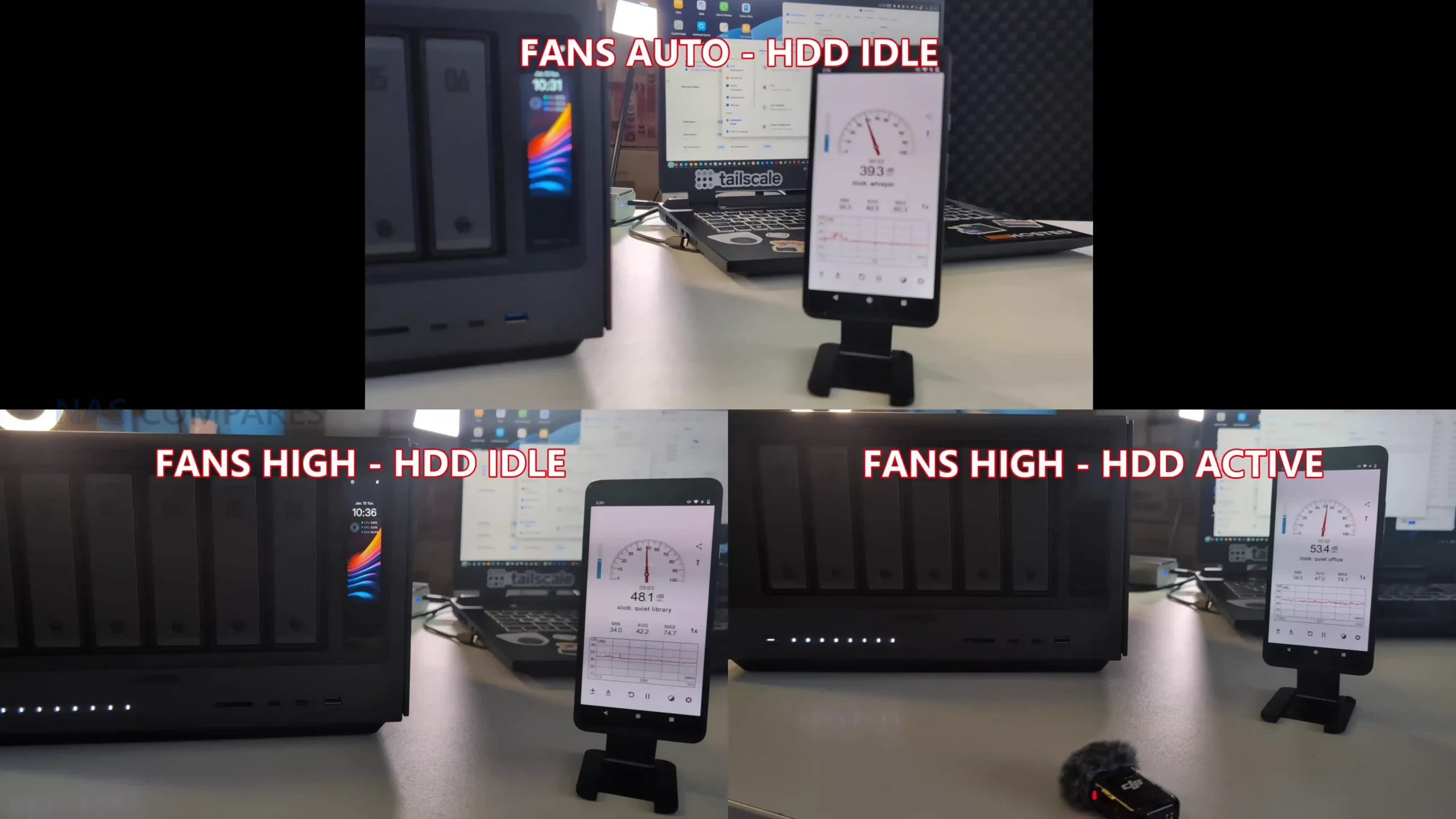
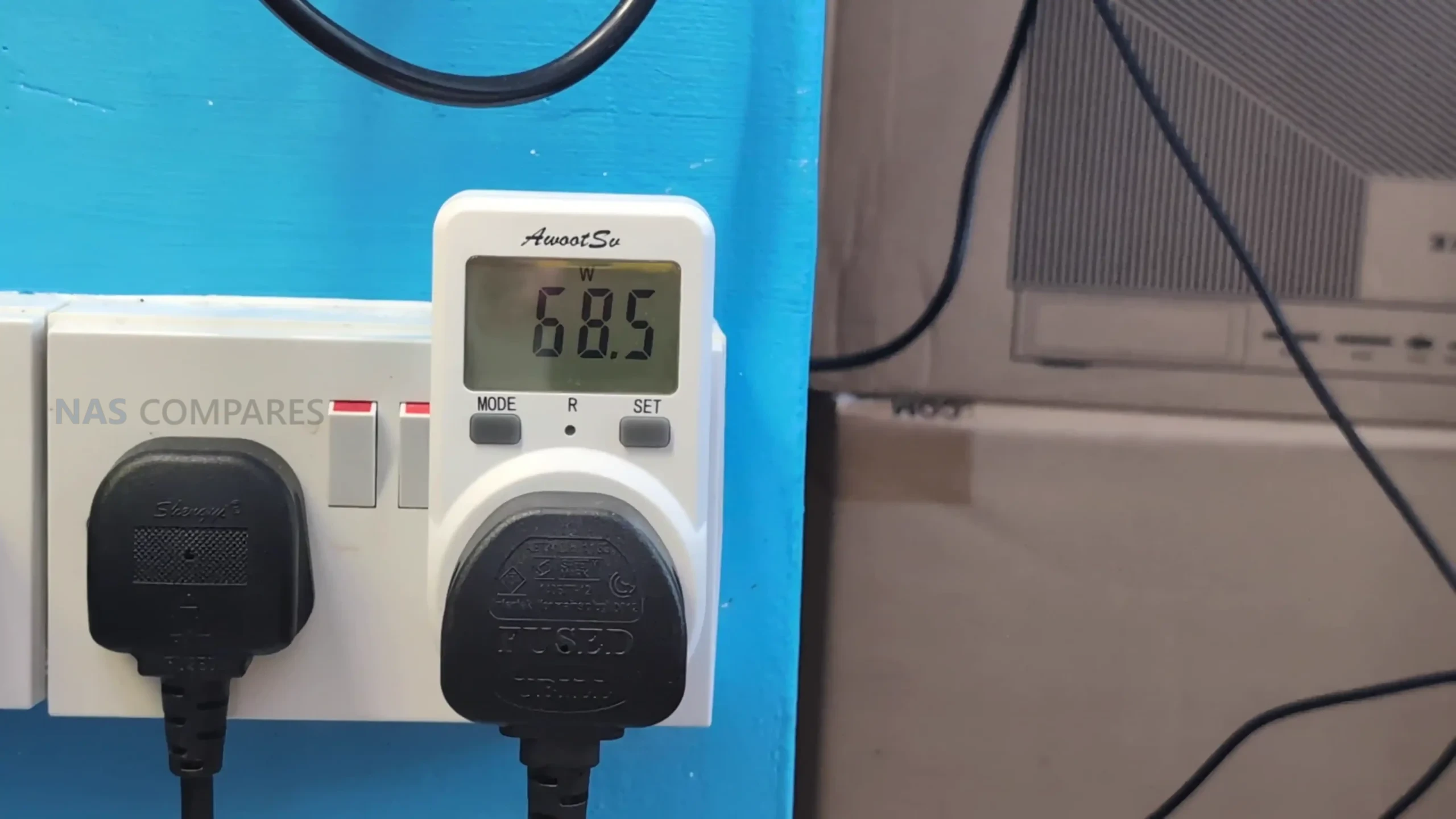
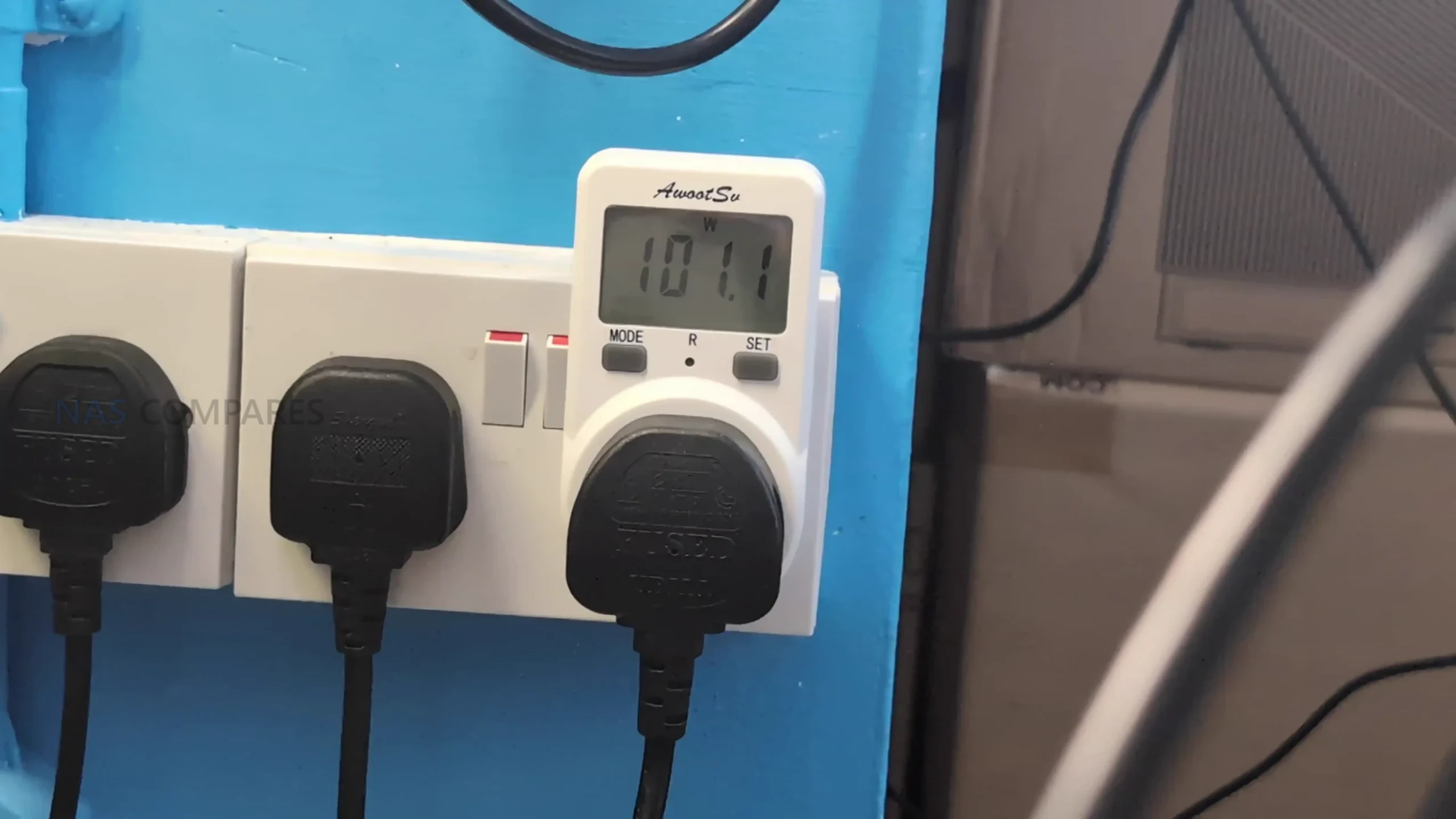
Noise and power draw reflect the fact that this is a higher performance NAS platform with 6 drive density and a stronger CPU class than low power appliances. With fans set to the lowest mode and drives idling after RAID setup and synchronisation, noise landed around 39 to 40 dBA, rising to around 40 to 43 dBA on automatic fan mode. With fans set to maximum, idle noise increased to around 48 dBA, and with active drive access plus high fan mode, measurements were around 50 to 51 dBA using 64TB NAS class HDDs, with the reminder that a metal chassis can transmit drive vibration and seek noise more readily than plastic enclosures. Power draw in a heavily populated configuration with 6 x 64TB drives, 2 x 1TB NVMe, and both 10GbE links active was around 67 to 68W at idle, rising to around 93 to 100W plus under active access, with the expectation that sustained CPU intensive AI tasks and any external GPU usage could push consumption substantially higher than typical home NAS patterns.
 |
 |
Test specification summary
-
RAID and cache test: 6 HDDs in RAID 5, SSD read/write cache enabled
-
RAID 5 throughput: ~950 MB/s read, ~670 MB/s write
-
NVMe internal performance: ~5.5 to 6.0 GB/s read and write (UGOS benchmark and SSH tests)
-
Dual 10GbE SMB multichannel via USB4 adapter: ~2200 to 2300 MB/s read, ~1300 to 1500 MB/s write
-
Noise: ~39 to 40 dBA (low, idle), ~40 to 43 dBA (auto, idle), ~48 dBA (max, idle), ~50 to 51 dBA (high, active)
-
Power: ~67 to 68W (idle with populated drives), ~93 to 100W plus (active access)
-
Thermals after ~36 hours sustained access: top ~35C, bays ~38C, vents ~38C, lower channels ~41 to 44C, rear ~44 to 45C, LCD ~45C
UGREEN iDX6011 Pro Review – UGOS Software and Services
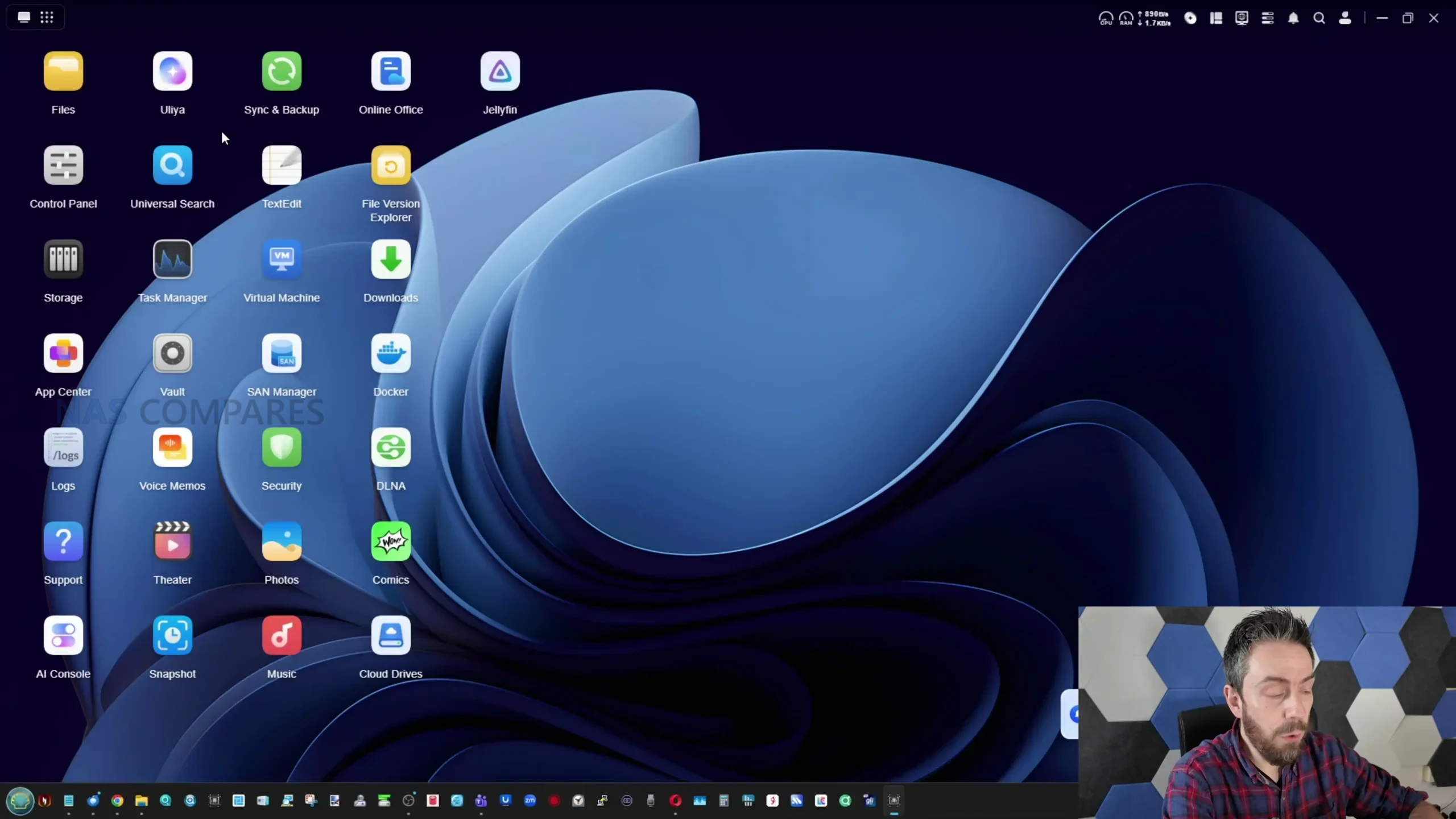
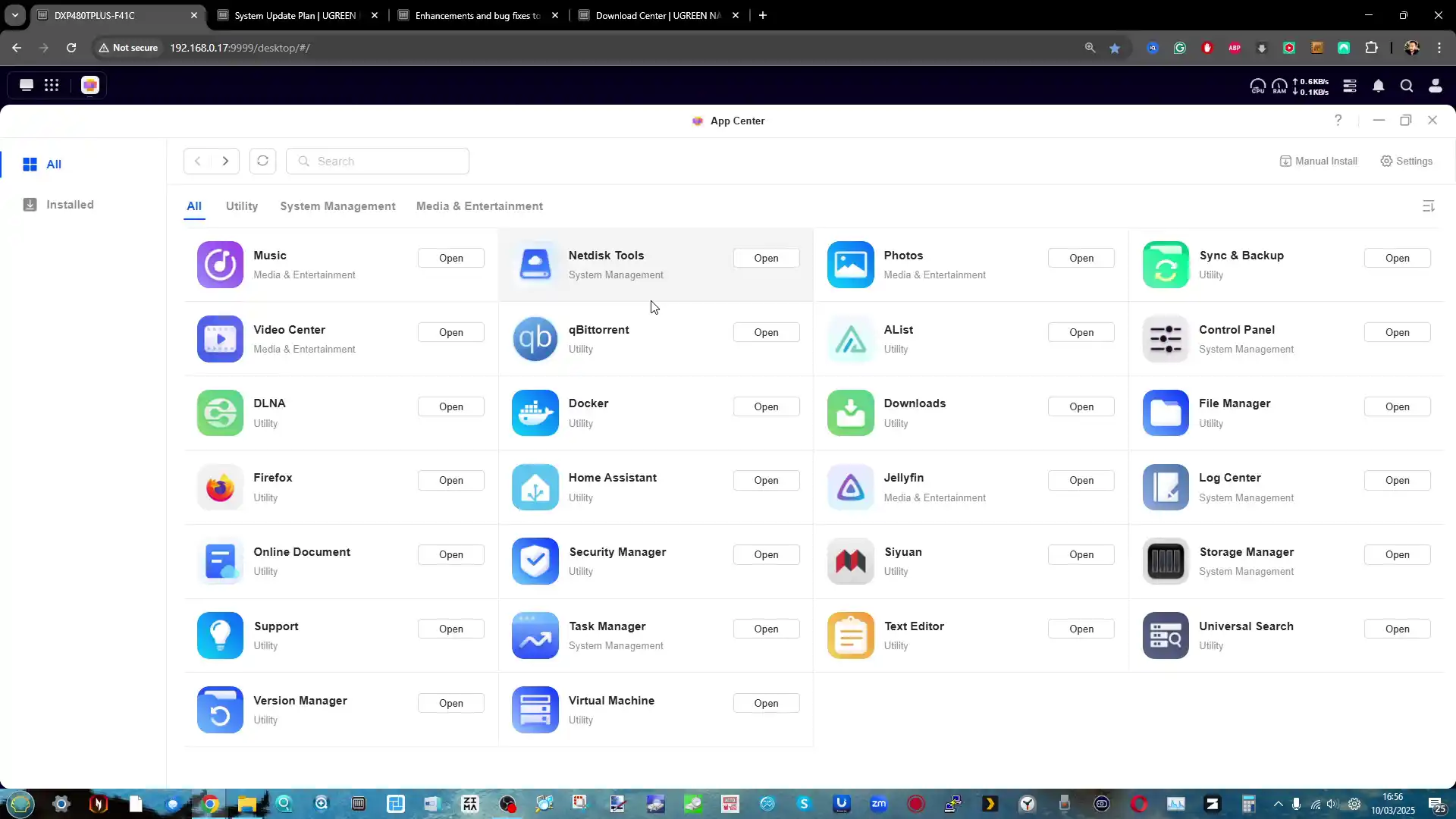
UGOS Pro on the iDX6011 Pro presents a broadly familiar turnkey NAS experience, with the same general design language and application structure used across UGREEN’s recent NAS products, and most of the mainstream services expected in a current platform. Initial setup and day to day navigation are oriented around a unified web interface and companion apps, with storage management, user permissions, and application deployment consolidated into a single environment rather than split across multiple tools. In practical use, this matters because the value of a higher end NAS is not just the hardware, but the ability to configure it quickly and maintain it without constant manual intervention, particularly once you start adding multiple shares, remote access rules, and background services that need to run reliably without ongoing tuning.
 |
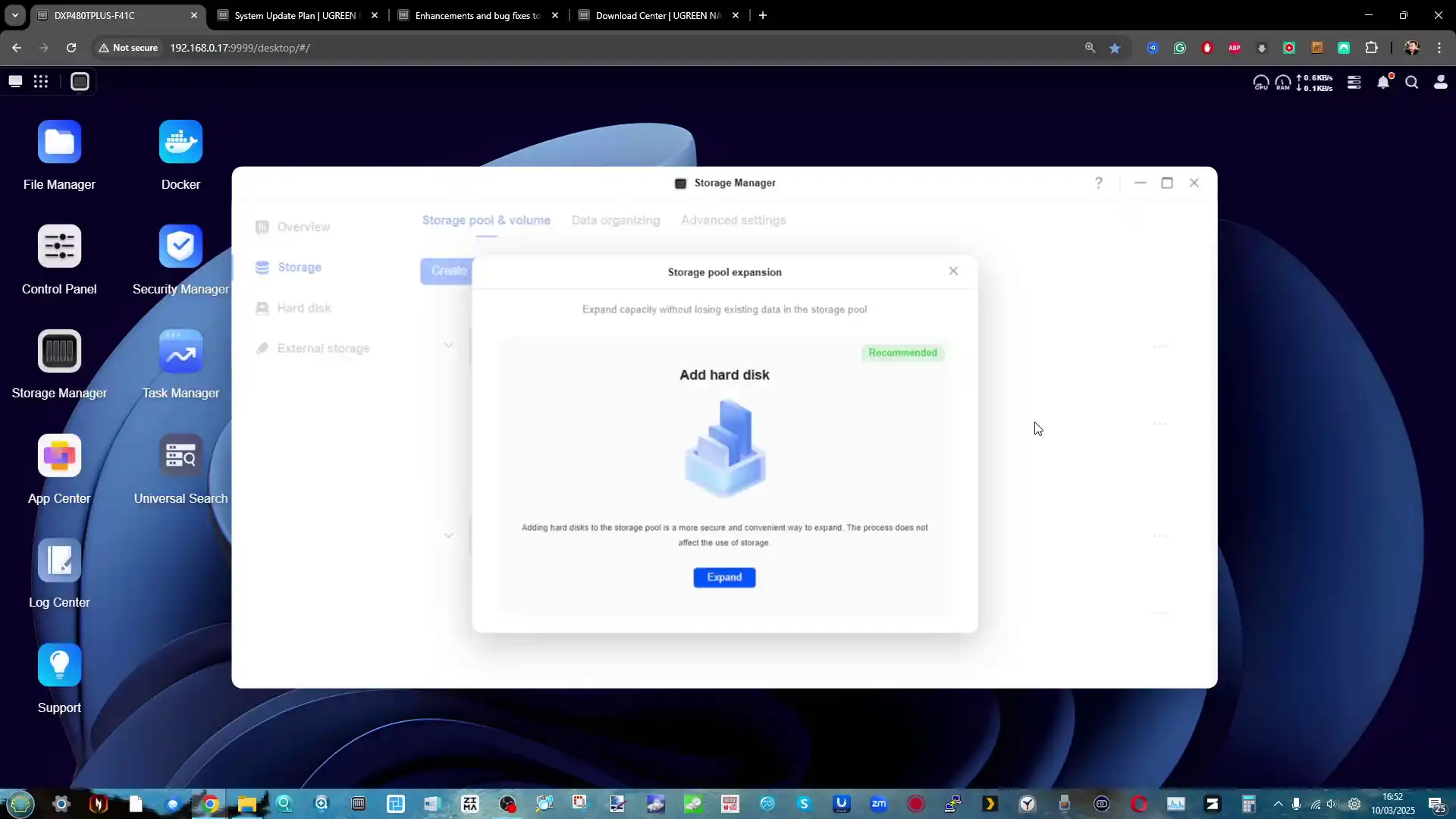 |
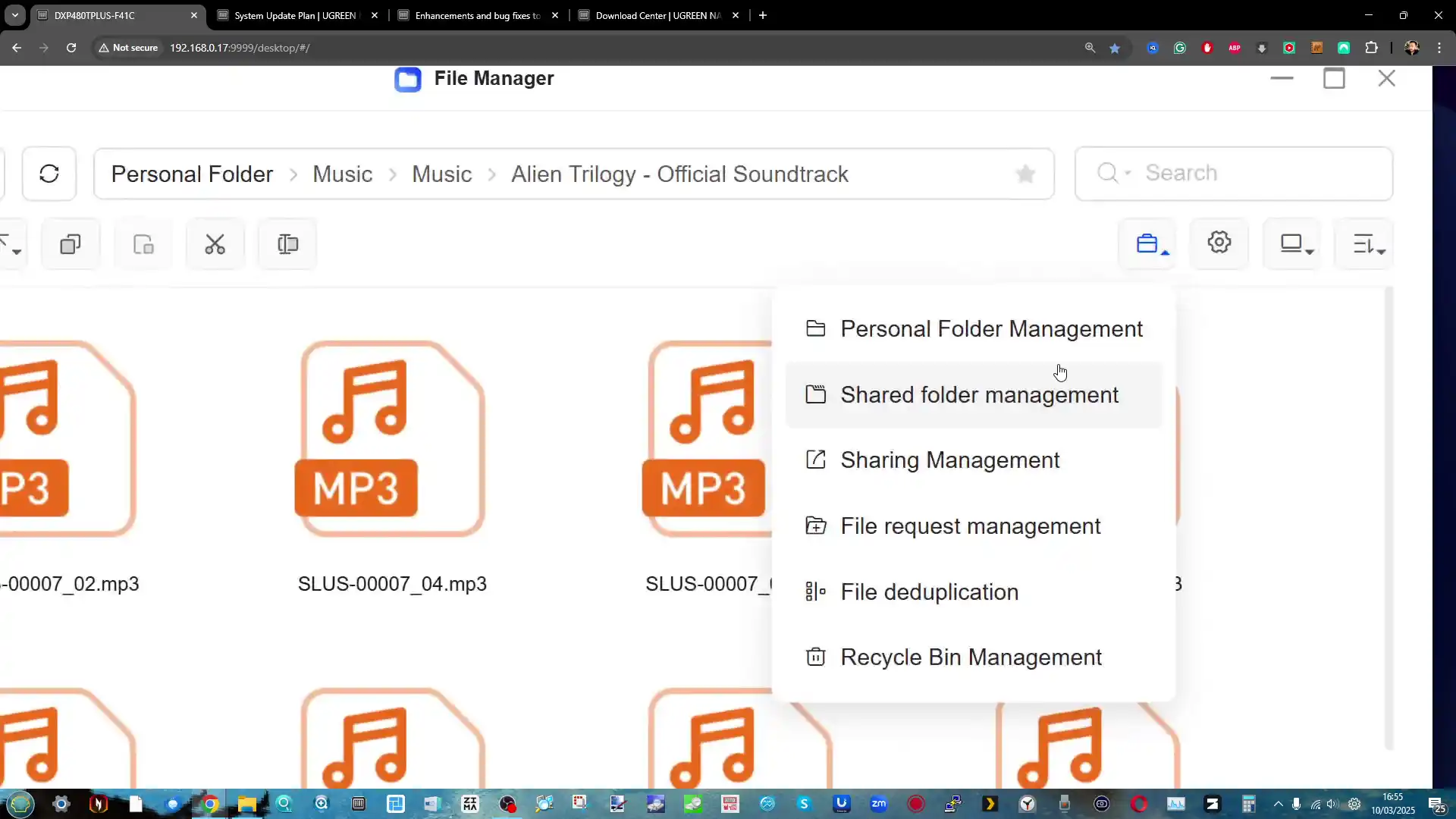
Core storage features cover the standard RAID modes offered by the platform, along with typical NAS file systems used here, and the ability to configure M.2 SSDs either as cache or as separate storage volumes depending on the desired balance between speed and simplicity. Snapshot support and file versioning are included, which is a baseline requirement for protecting against accidental deletion and some ransomware scenarios, and the system also provides a dedicated encrypted vault style storage area for data that needs an additional password protected layer beyond normal share permissions. For users building a general purpose private cloud, the platform includes the expected file sharing and access tools and supports the usual network protocols, reducing the need for third party add ons for basic file serving and multi device access.
 |
 |
On the services side, UGOS Pro supports Docker and virtual machine deployment, which expands the platform beyond file storage into general application hosting and light server roles. The presence of both container support and VM support is relevant in a system with fixed memory configurations, because it encourages buyers to evaluate the 32GB versus 64GB models based on their intent to run multiple services concurrently. In addition, iSCSI support is integrated and in testing could be set up in a straightforward manner, allowing the NAS to present block storage to client machines for workflows where mapped drives are not ideal. Backup and synchronisation features include multi target options, including NAS to NAS, NAS to cloud, and other scheduled operations with filtering and policy controls, which is the foundation most users will rely on rather than the newer AI layer.
 |
 |
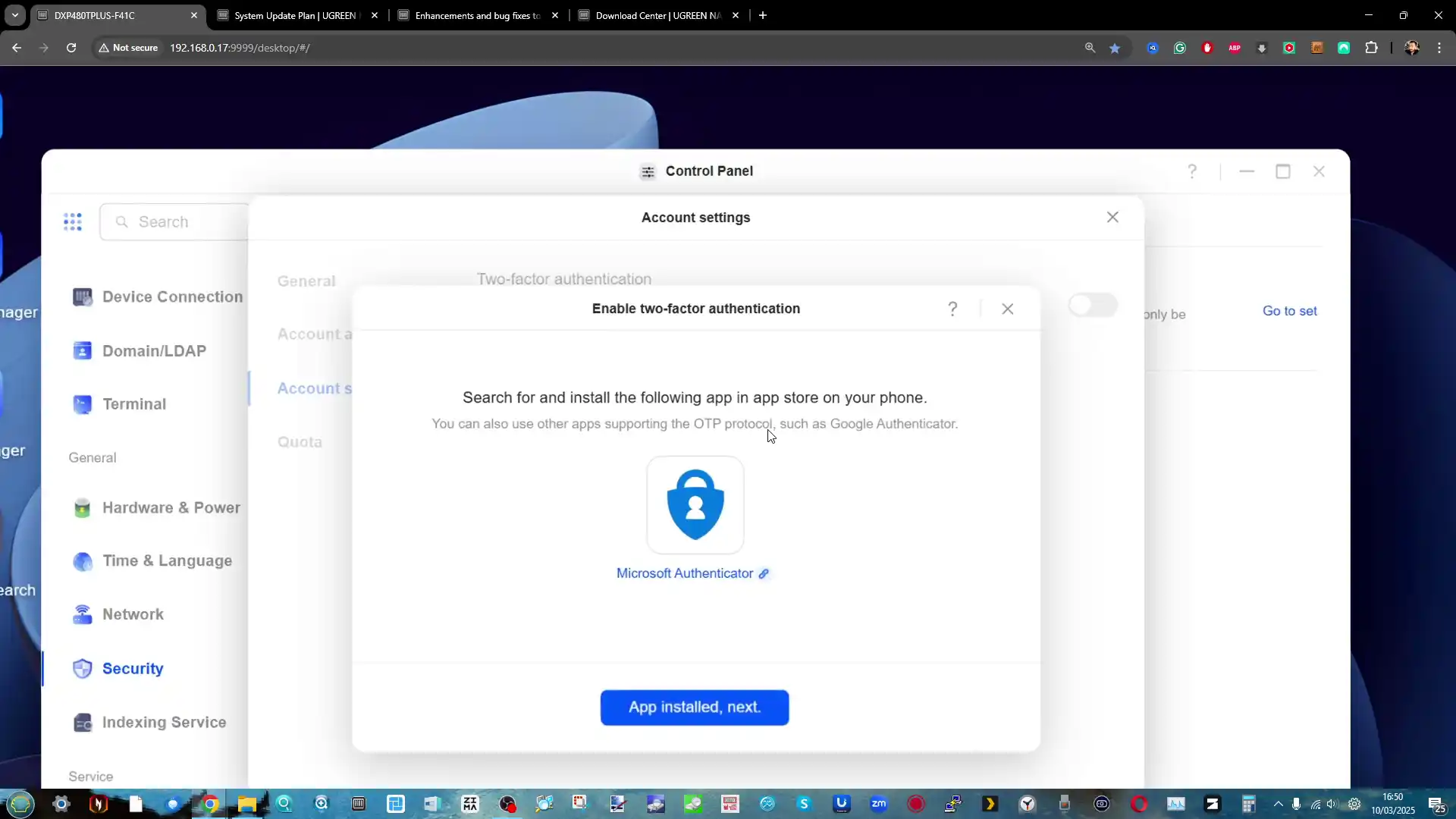
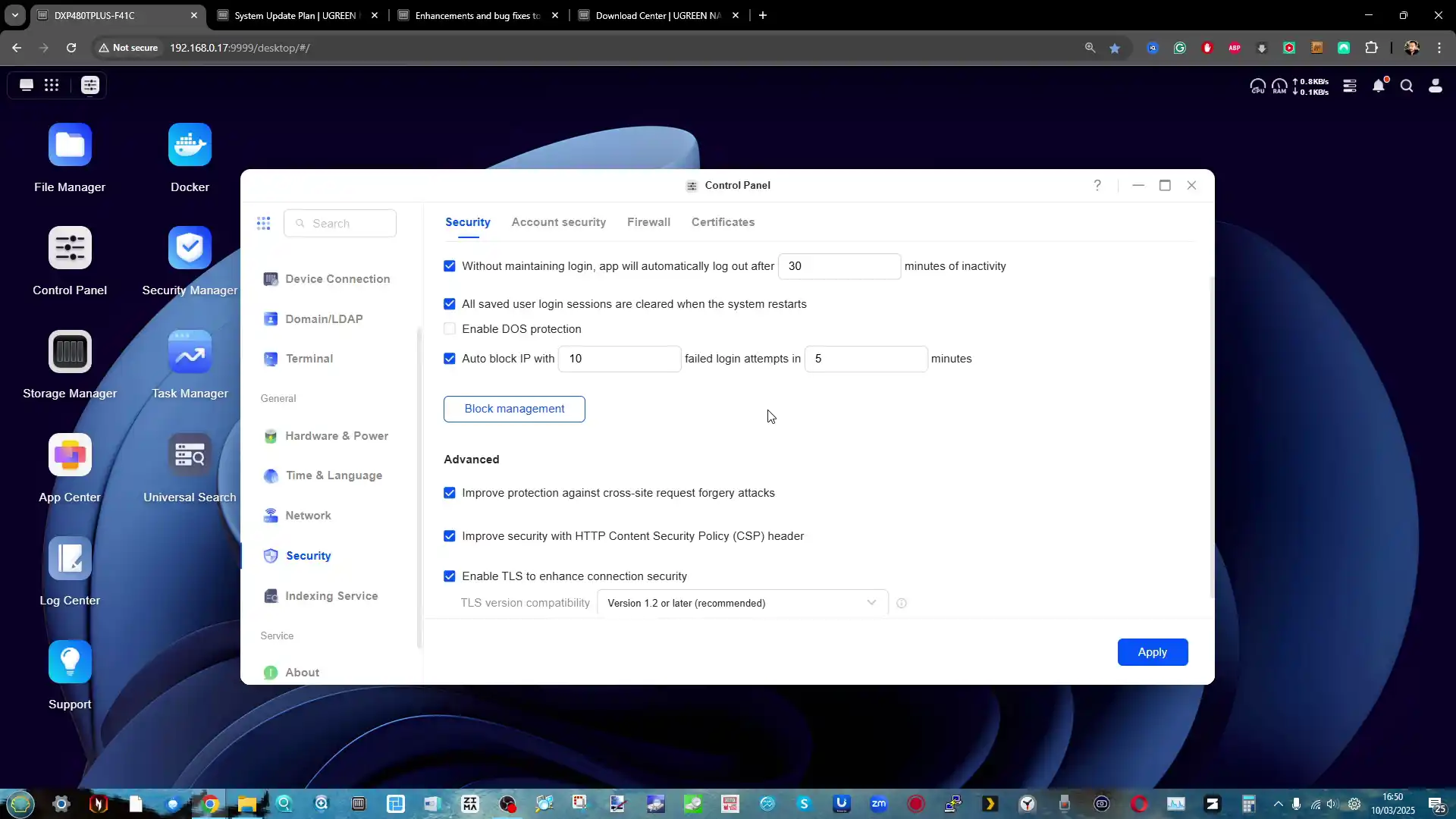
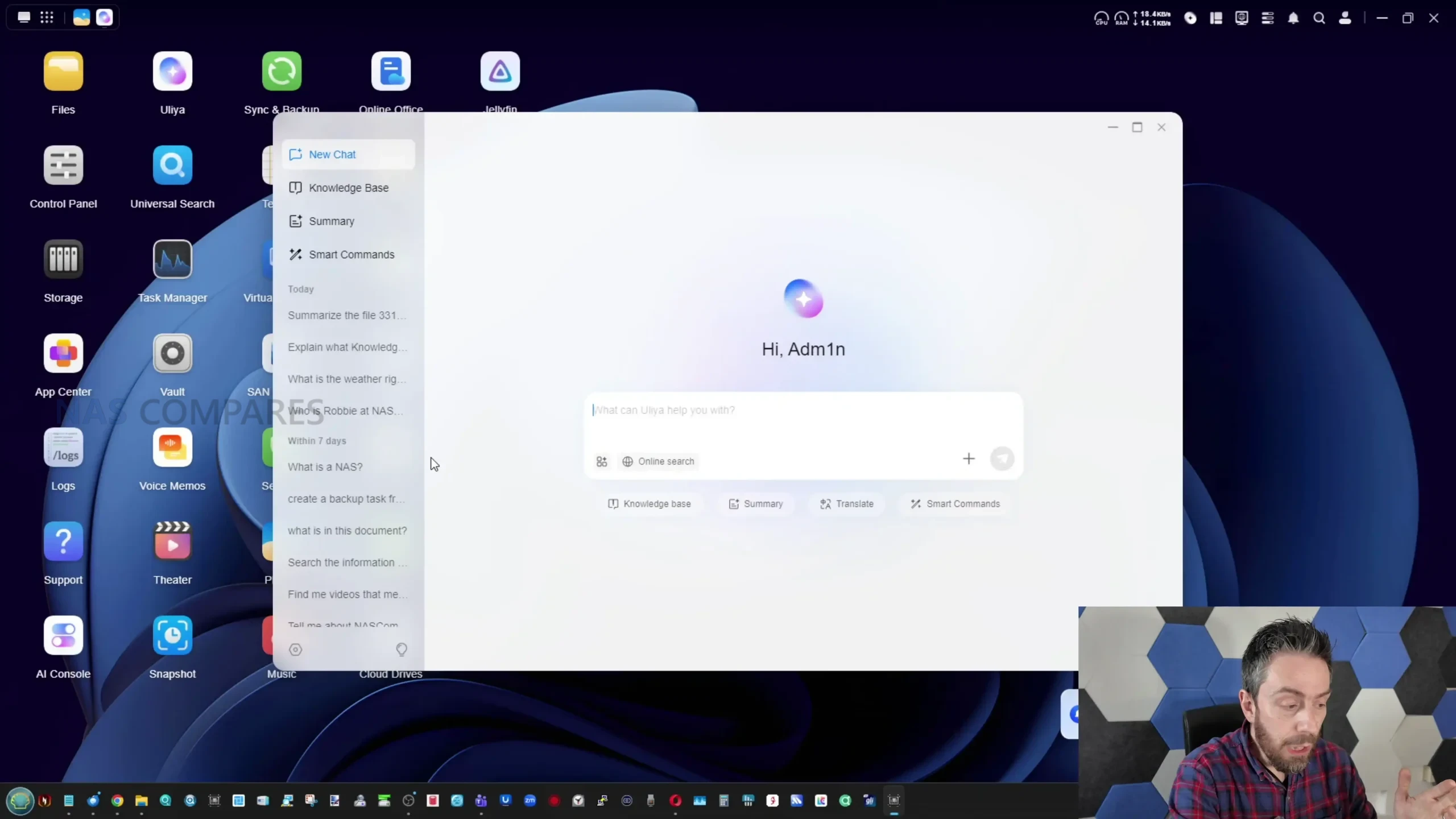
Where UGOS Pro still shows gaps is less about missing basic NAS features and more about the absence of certain mature ecosystem level tools that established competitors provide. There is no ZFS option in the platform’s storage stack, which will matter to users who specifically want ZFS features and workflows, and the application ecosystem still lacks certain expected first party packages, with Plex media server being the most obvious omission in your evaluation despite alternatives like Jellyfin being possible. Security tooling is also mixed, with useful features such as 2FA, firewall controls, and automatic blocking, but without a comprehensive security posture scanner that audits weak passwords, exposed services, open ports, and other common misconfigurations in a way that guides less technical owners. The end result is a software platform that can cover the core NAS job for many users, but may still push power users toward third party operating systems or additional manual administration depending on priorities.
UGREEN iDX6011 Pro Review – What the AI Can and Cannot Do?
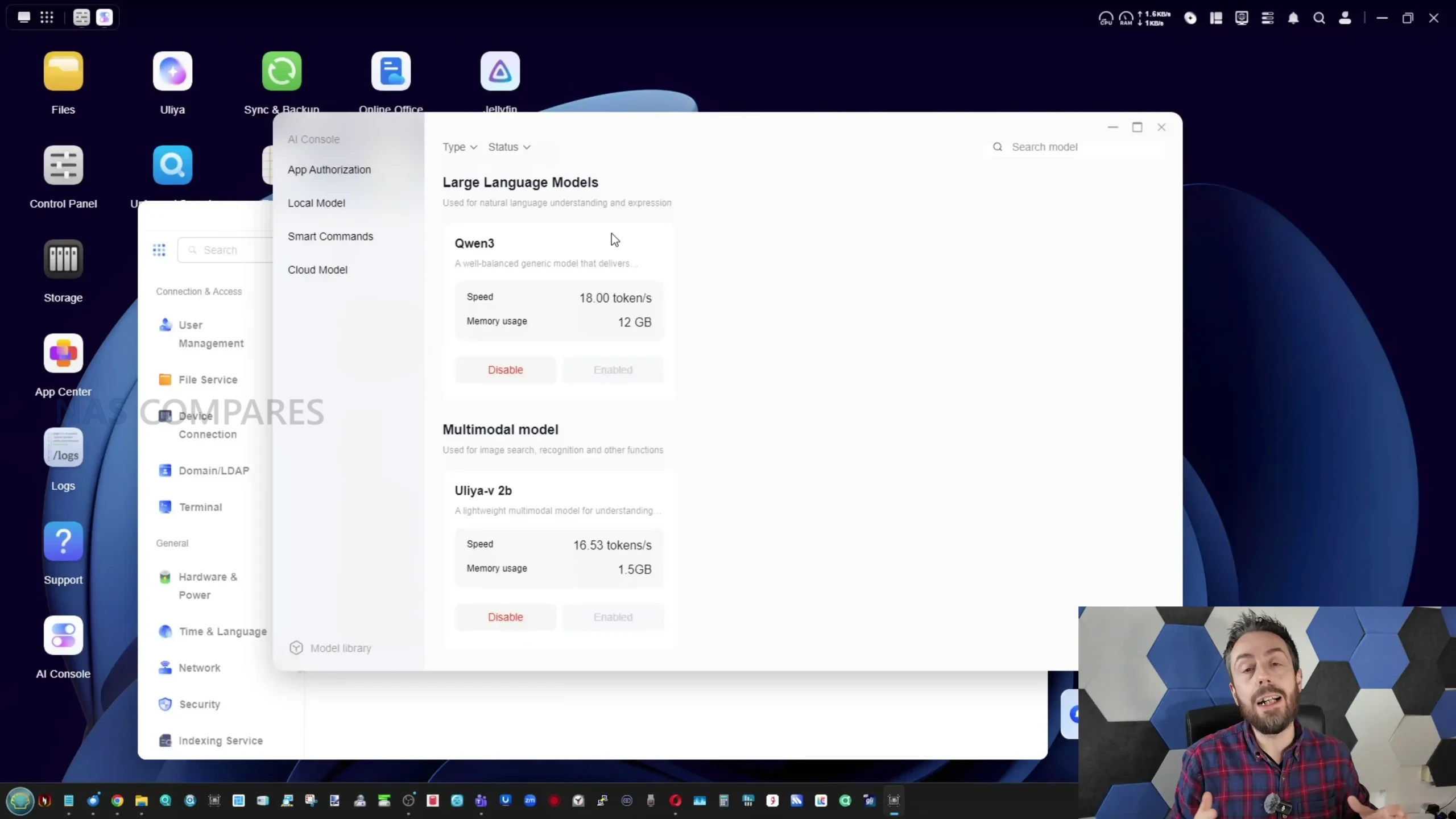
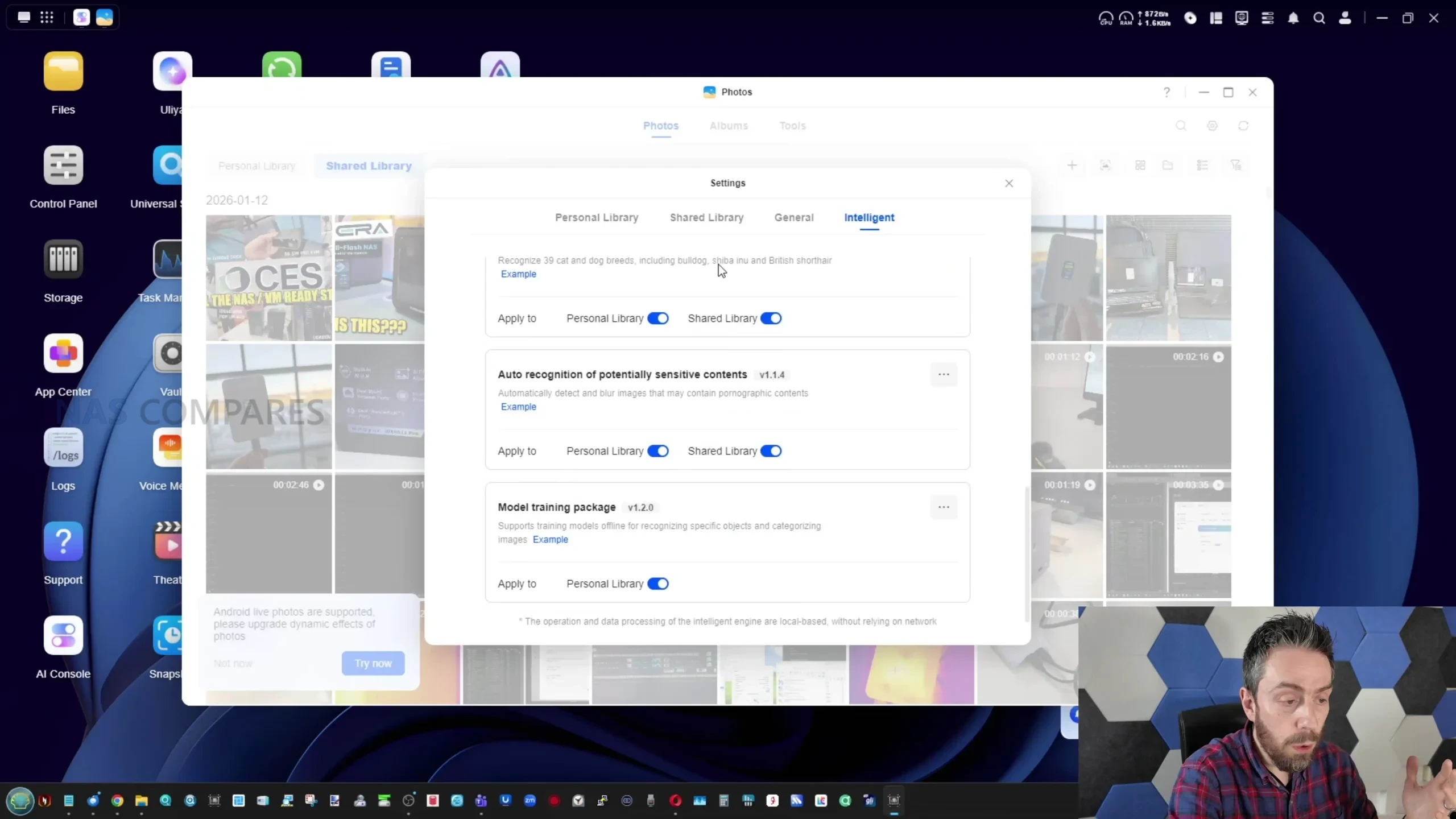
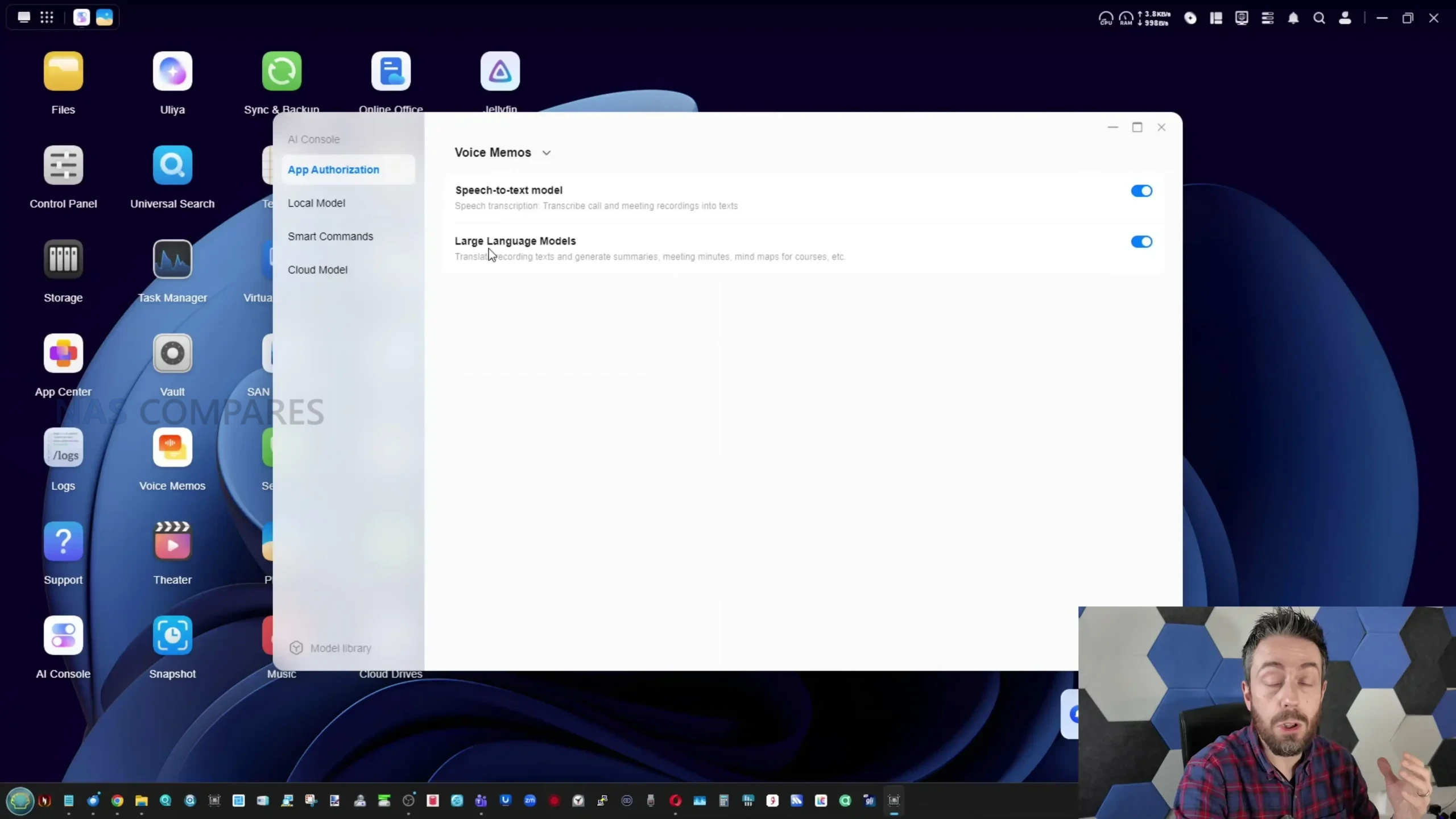
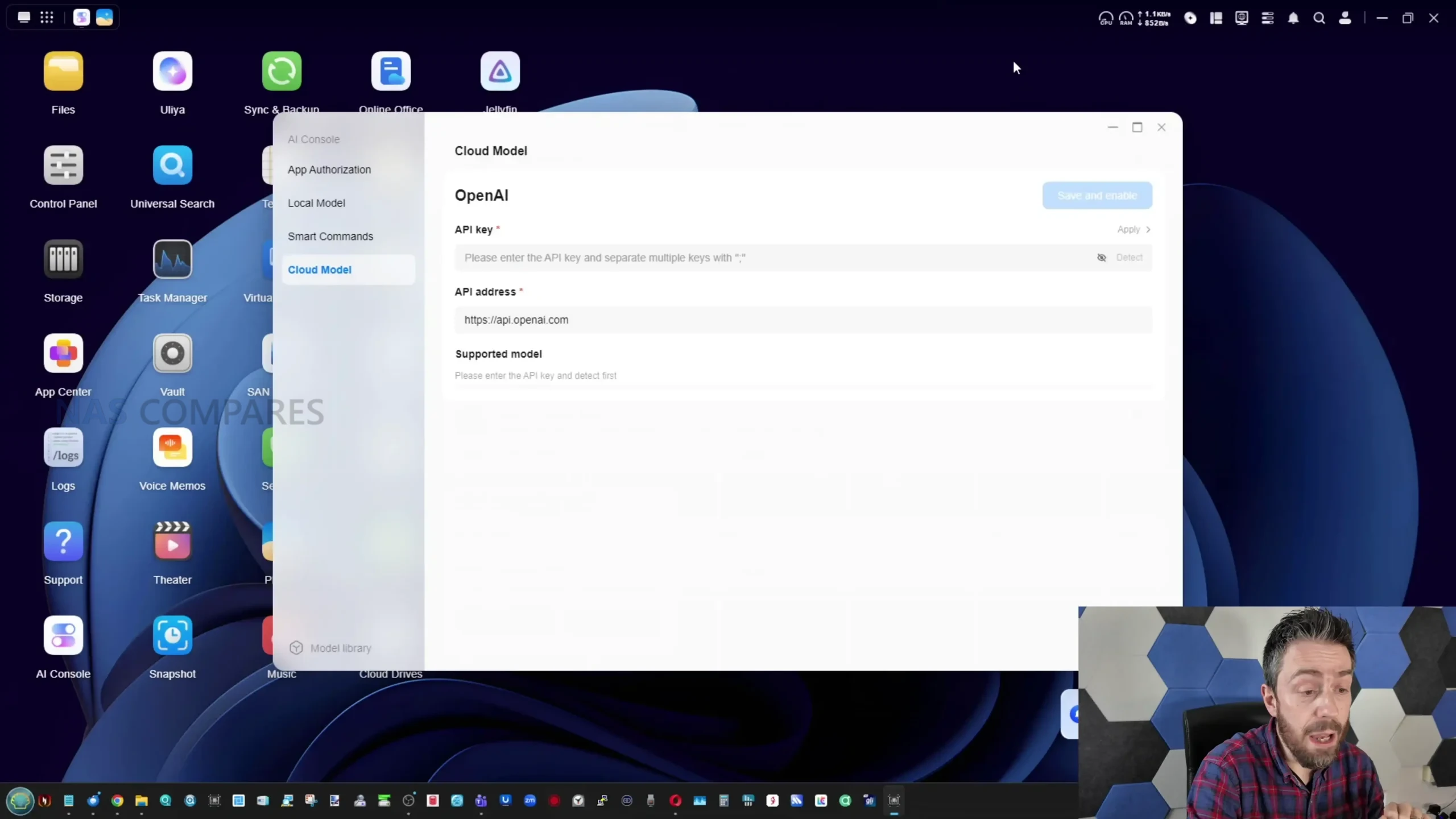
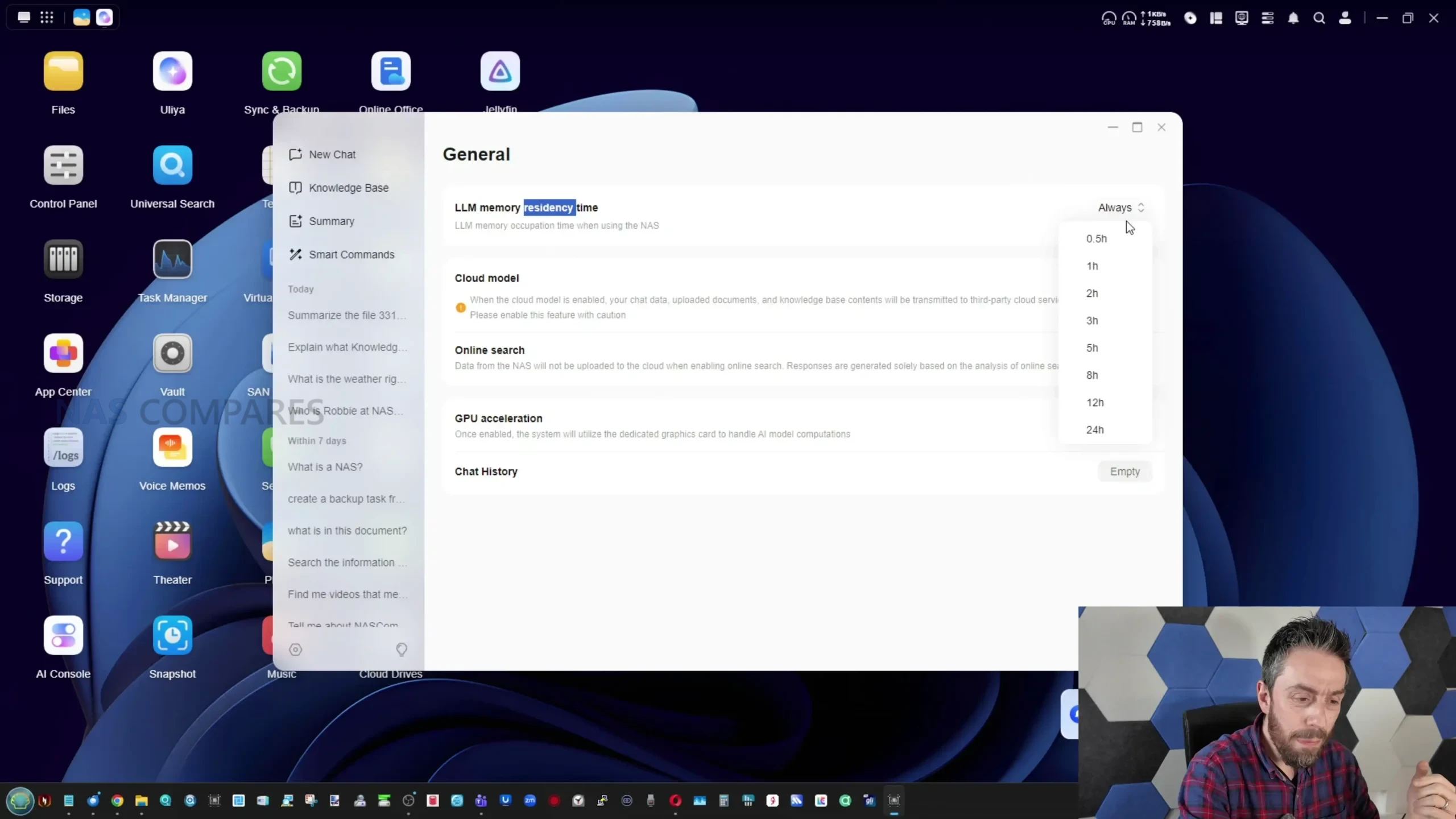
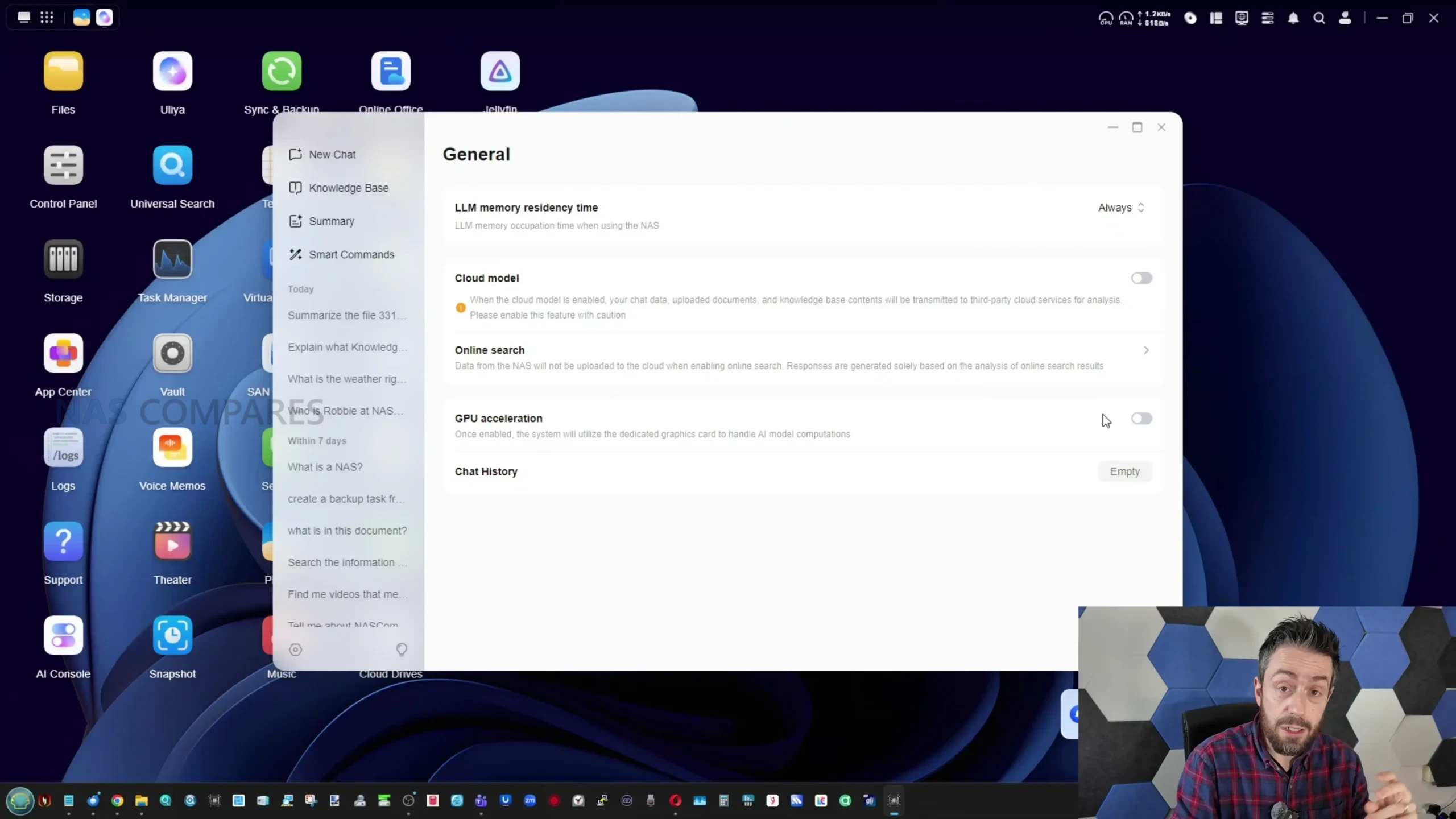
The AI layer on the iDX6011 Pro is built around Uliya, which functions as the interface for local model use and a set of assistant driven tools that sit alongside the normal UGOS experience. AI features are disabled by default on first use, and the local models are not pre installed, which means users must actively opt in and download what they want, rather than having the system continuously analyse data out of the box. Once enabled, the AI console exposes model choices and basic operational details such as estimated resource requirements, and it also includes permission style controls that determine which AI services are active, for example speech to text or large language model usage. There is also an option to connect cloud based AI providers via API key, and a separate option to allow online search as a supplement to responses, but the platform’s primary selling point is that most of its AI functions can run locally without transmitting content to a third party service.
 |
 |
 |
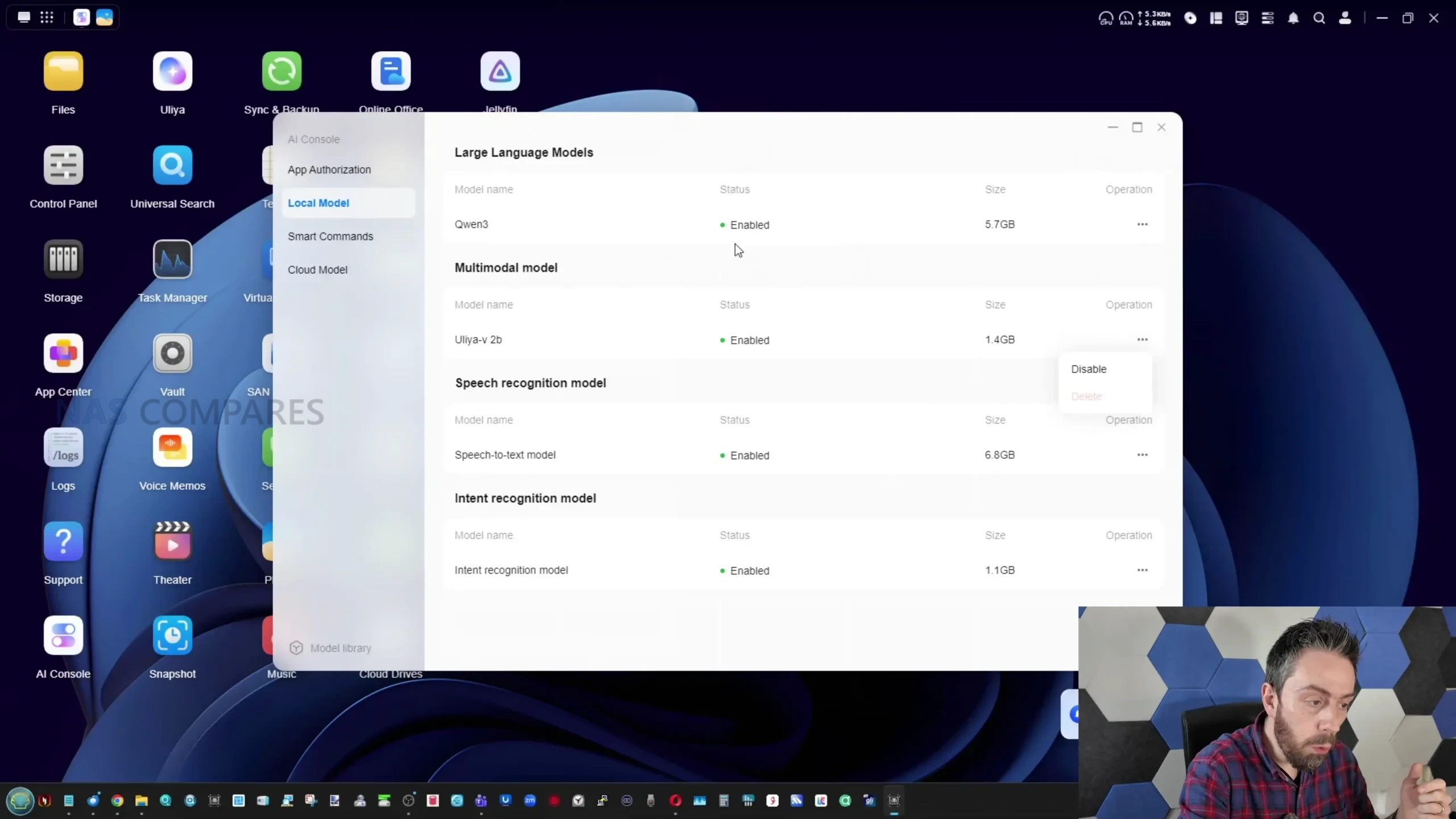 |
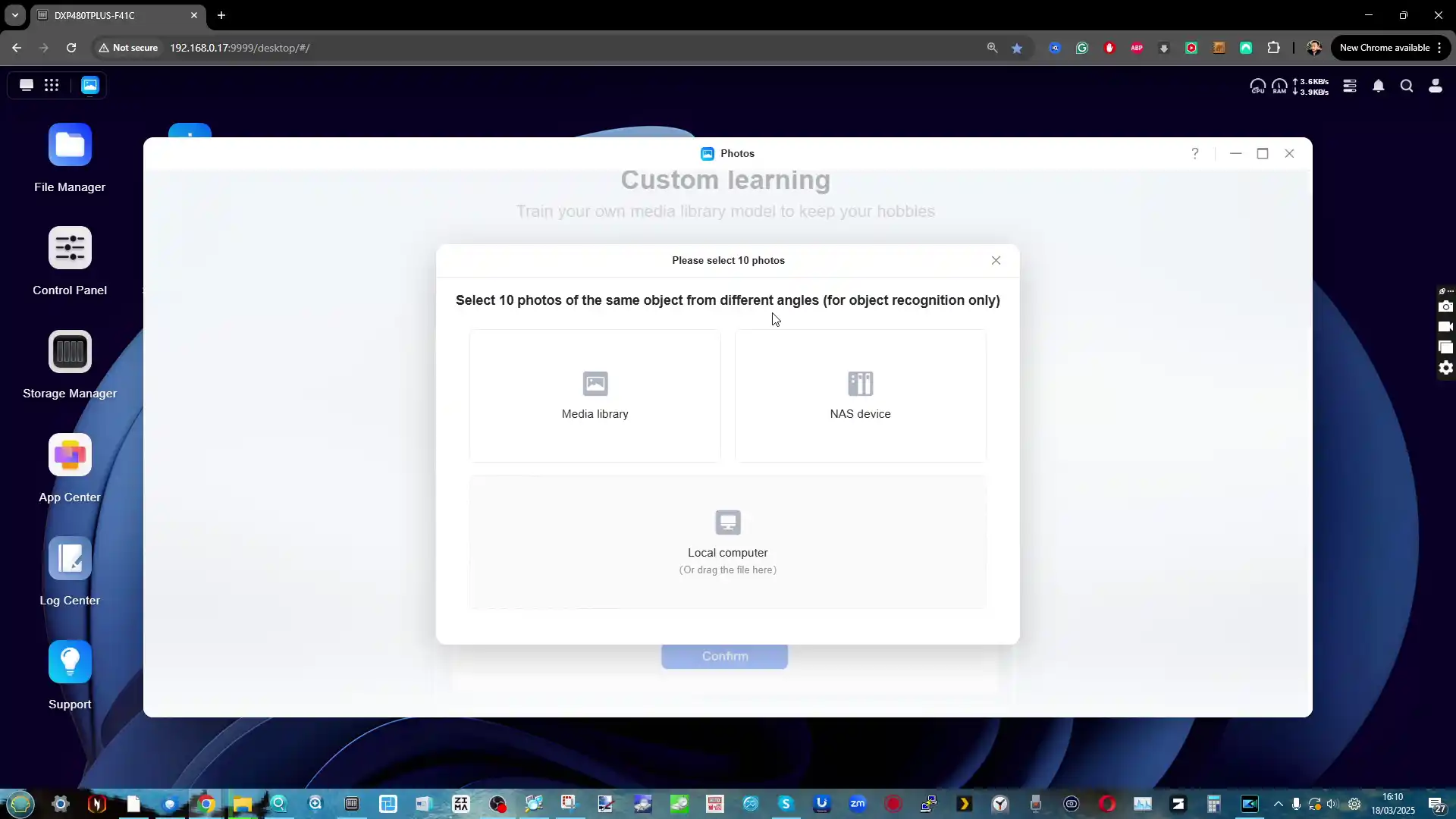
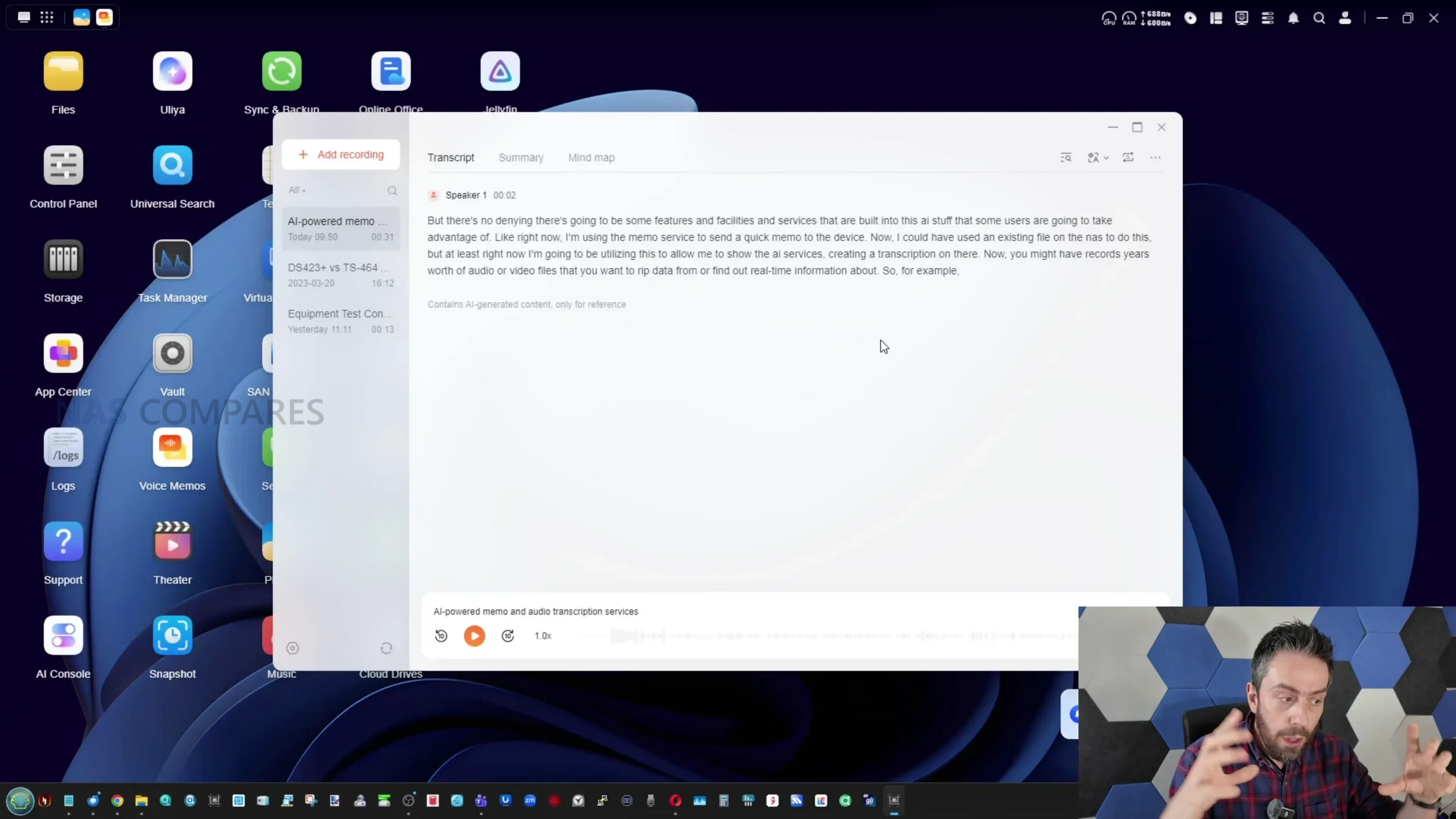
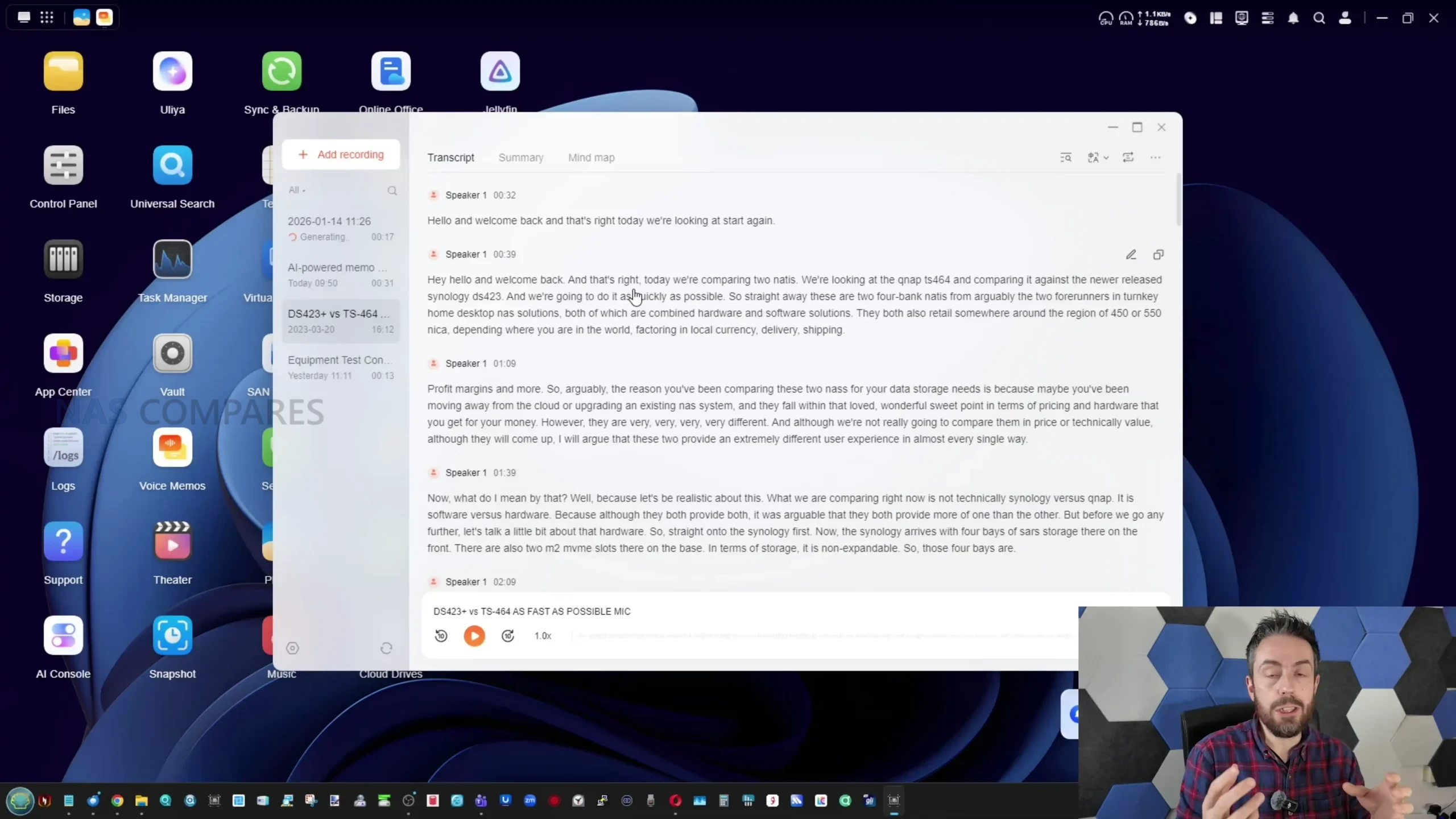
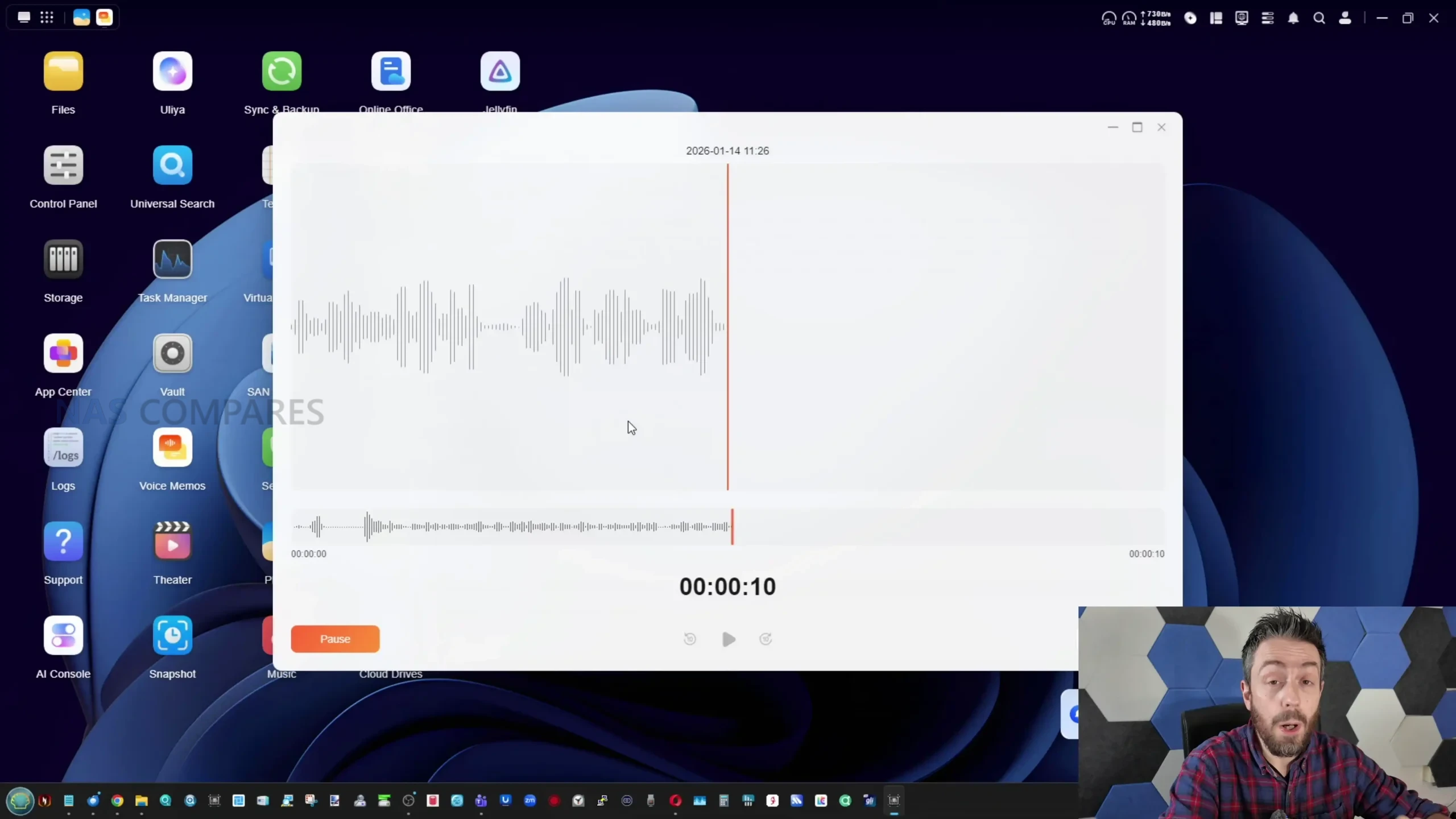
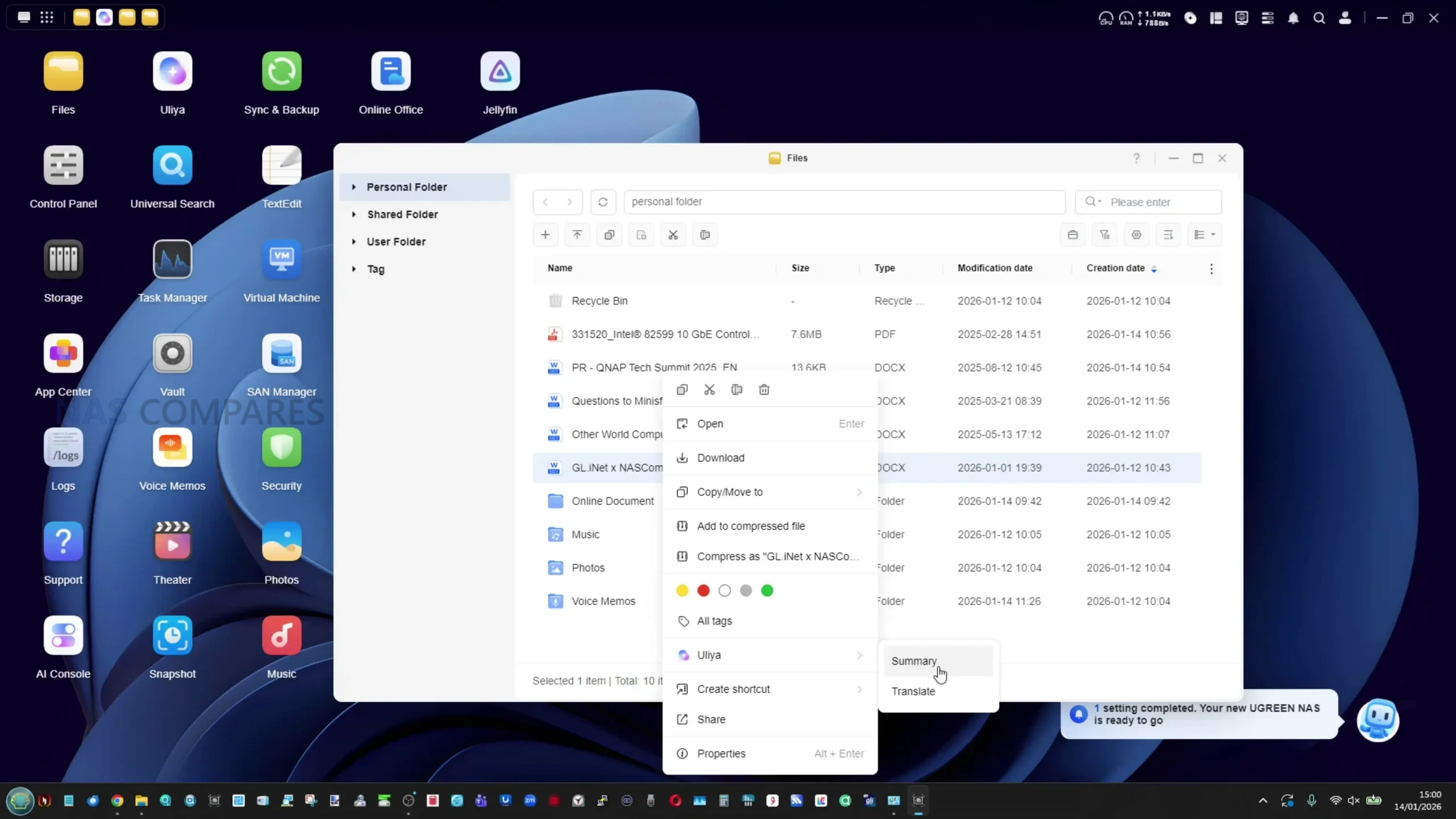
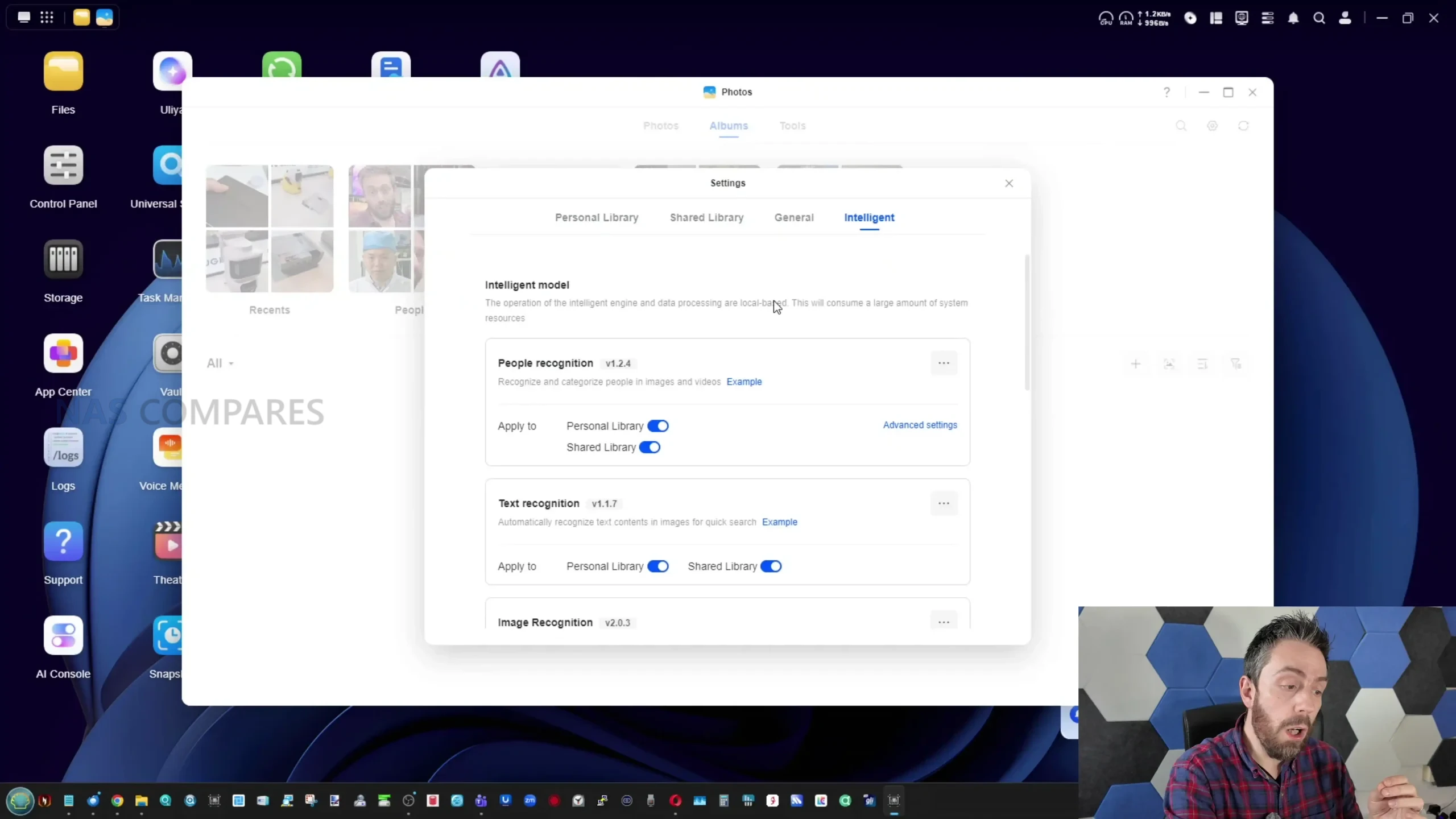
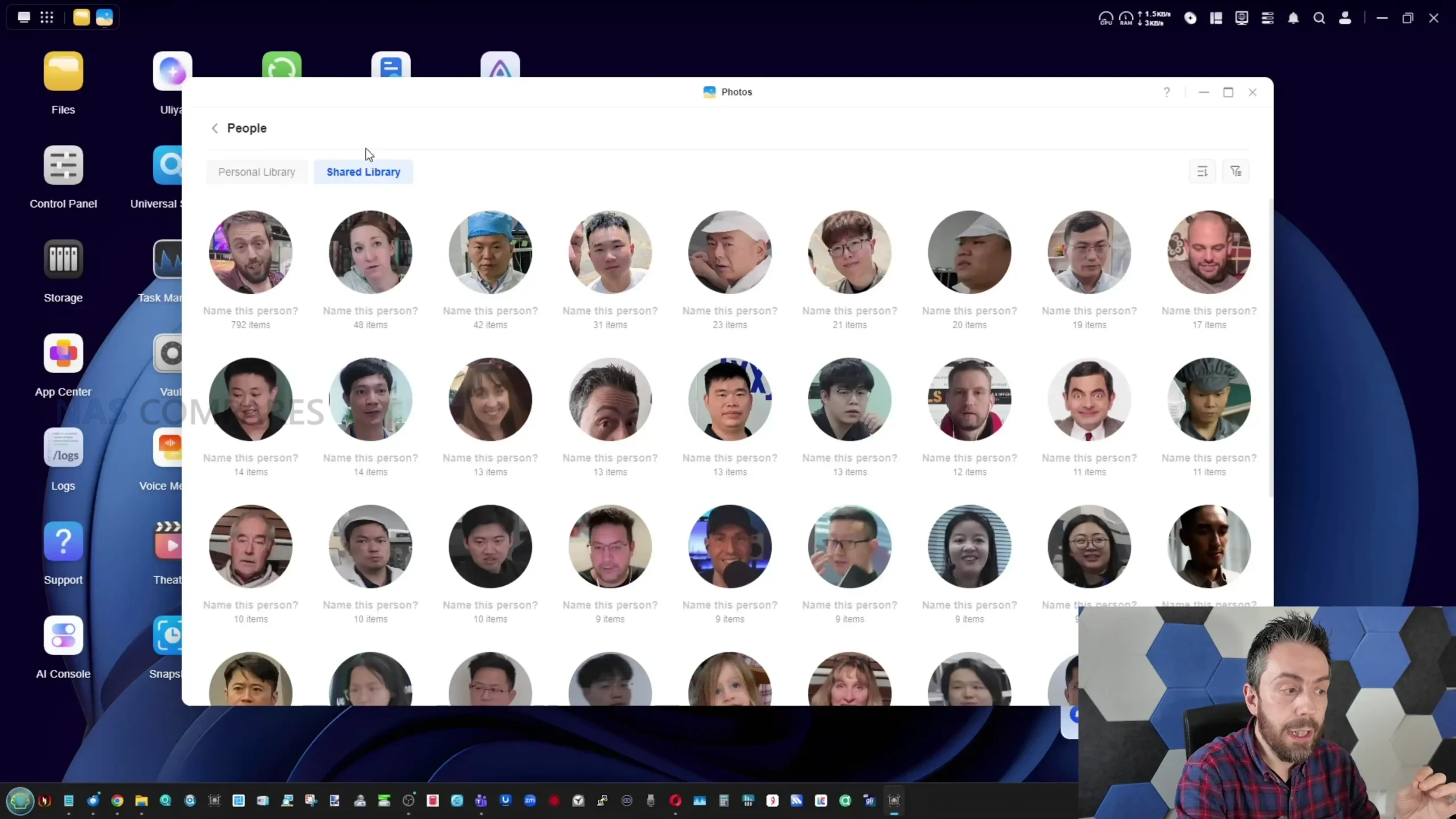
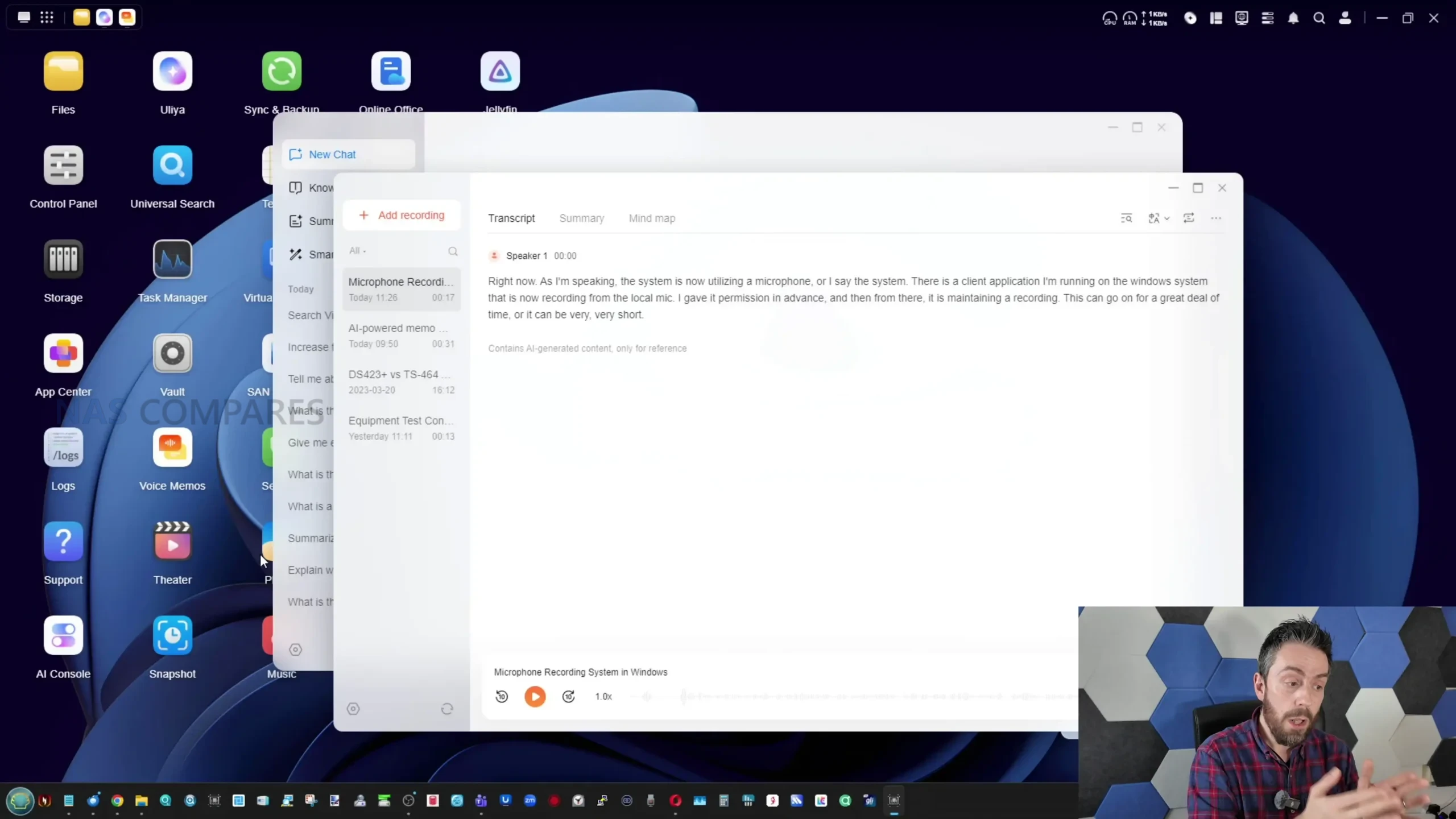
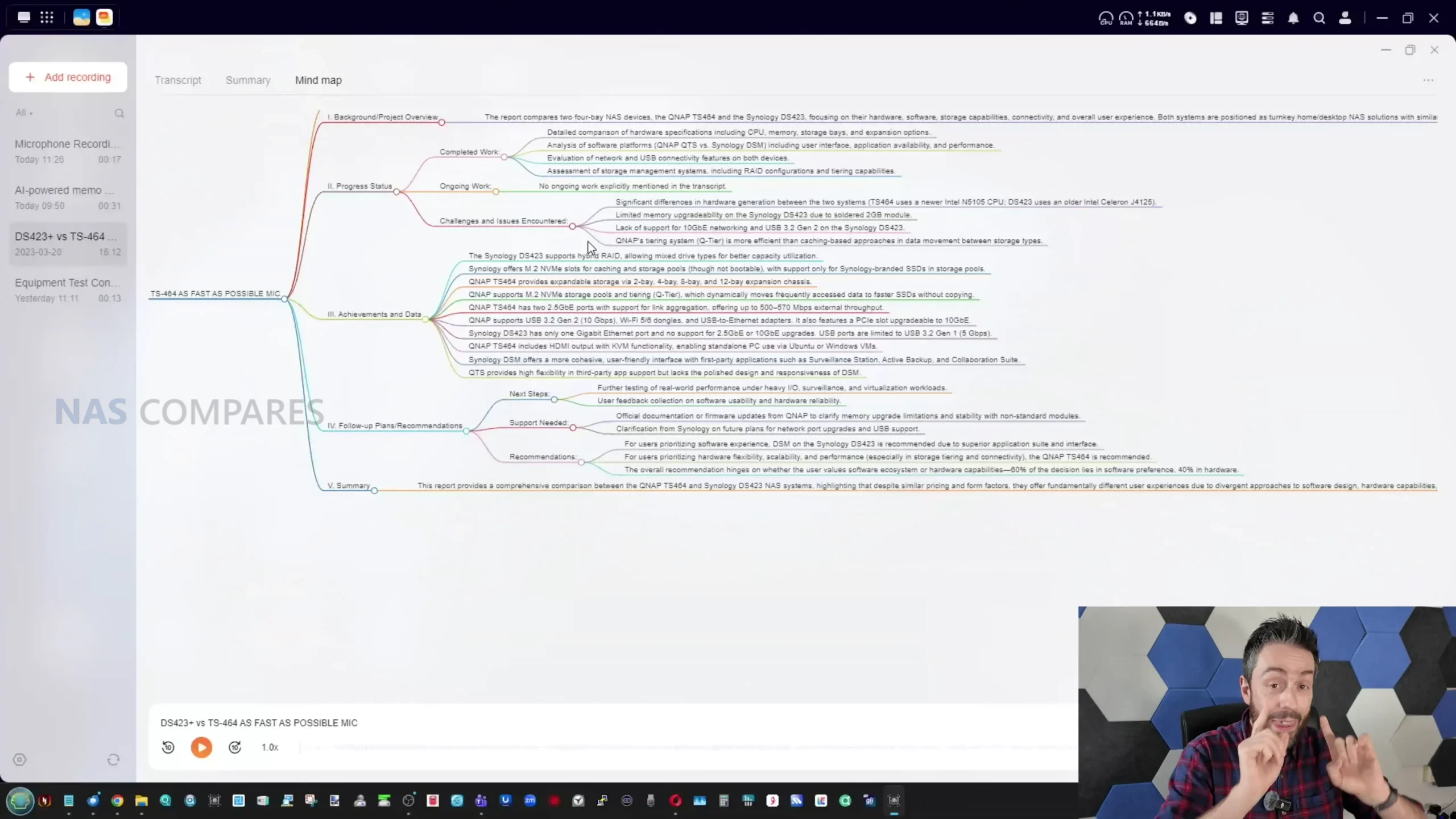
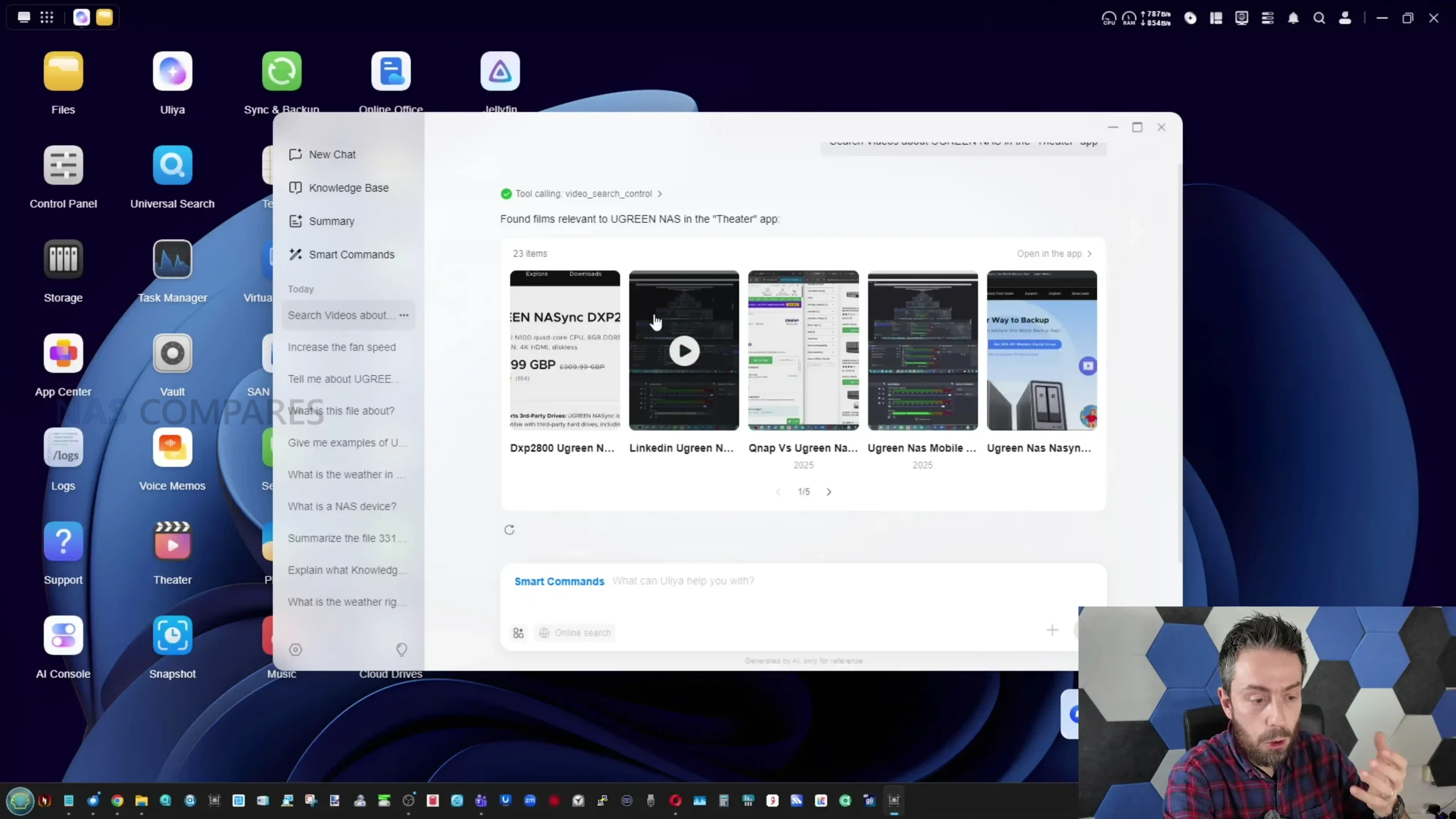
What it can do in its current form is focused on analysis, summarisation, and retrieval rather than creation. Uliya supports conversational queries that can operate offline using local resources, with optional online search when enabled, and it can accept uploaded files for analysis, including images that it can describe at a basic content level. Document handling is one of the more practically useful parts, because the system can summarise documents and PDFs and then allow follow up questions based on that output, and this capability is integrated into the file manager via right click actions for supported file types. The voice memo tool extends this into audio, allowing recordings or imported audio files to be transcribed, summarised, and represented as a basic topic map, with export and translation options available using local processing for supported languages. Separately, UGREEN’s existing photo management features include recognition and categorisation that can identify people and other elements in photo libraries, and this part of the platform appears more mature than the newer assistant workflows.
 |
 |
 |
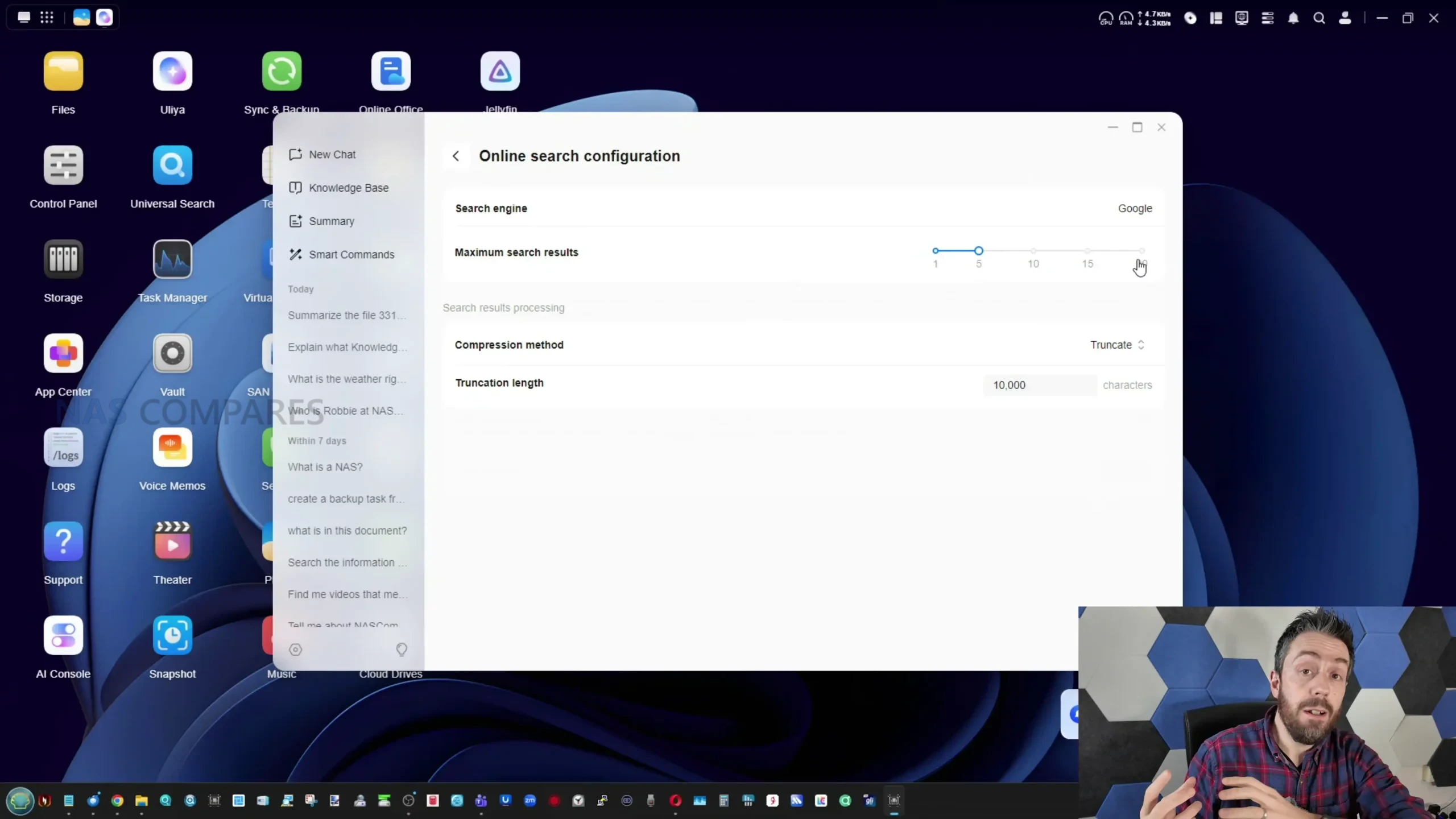 |
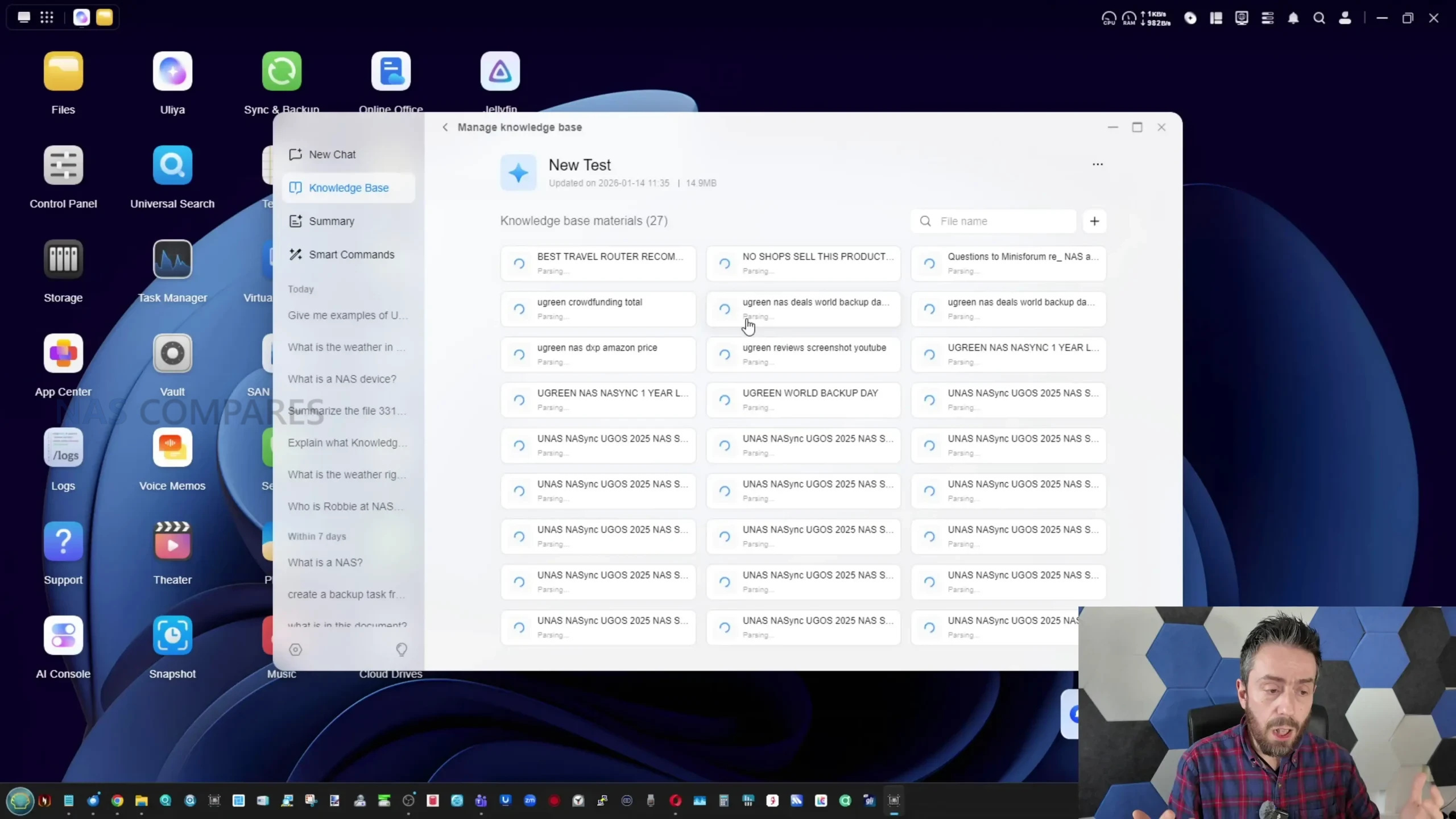
What it cannot do is equally important, because some of the expected behaviours associated with “AI NAS” marketing are either absent or only partially implemented. There is no generative photo or video creation feature set, so the AI functionality is limited to text generation, transcription, and content analysis rather than producing new media. The system also does not currently provide broad pre scraping of user libraries in the way some users might expect, where a chosen directory is crawled in the background so that later conversational queries can pull from an already indexed knowledge store. Instead, several workflows rely on manual file uploads into a knowledge base, and the knowledge base itself feels under explained and inconsistent, sometimes returning incomplete or incorrect results when it cannot find enough relevant material within the data it is allowed to access. There is also limited visibility into how responses are formed, and no clear built in way to observe what portion of an answer is derived from local data versus general model knowledge when online search is disabled.
 |
 |
 |
 |
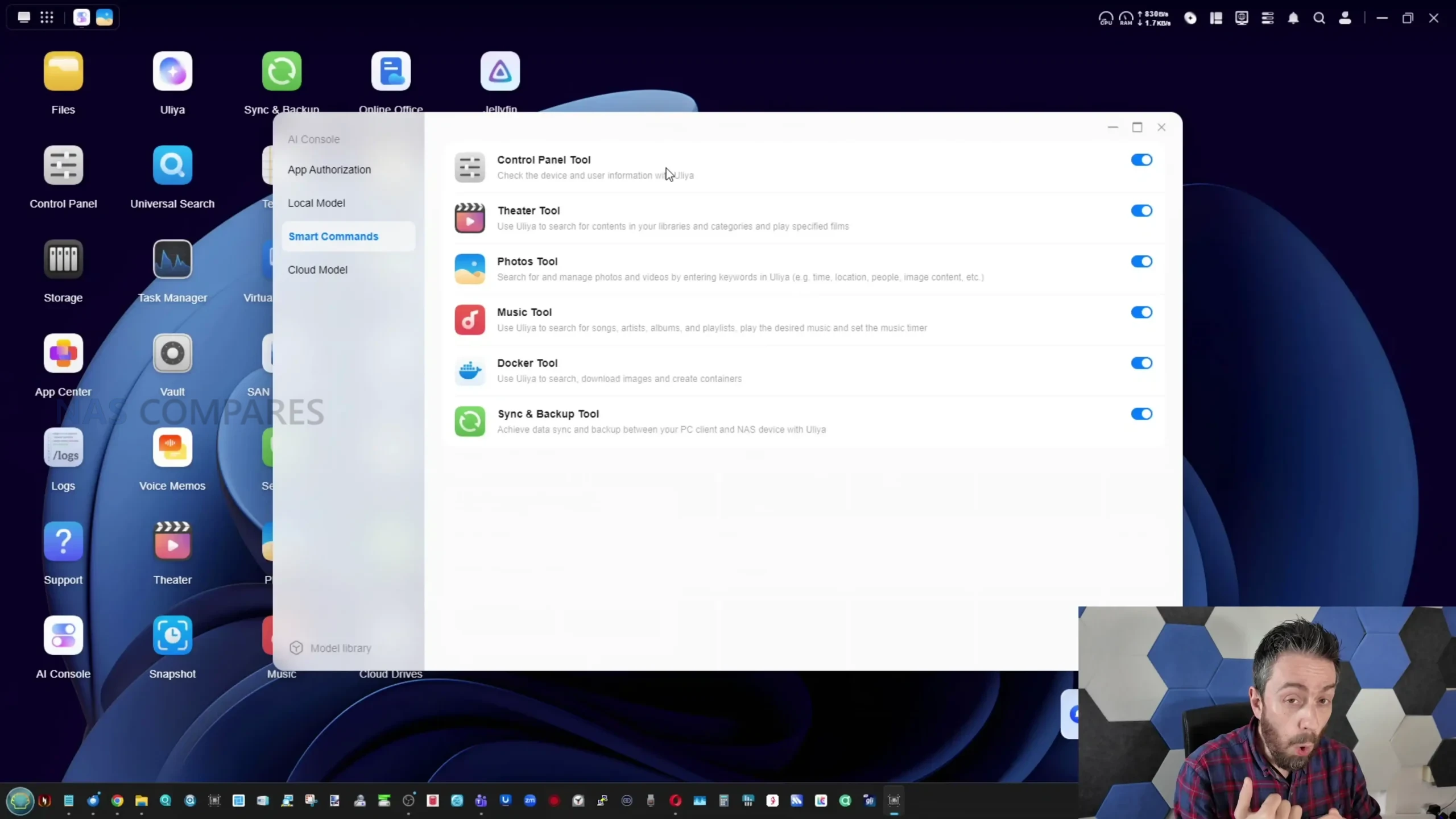
A recurring limitation in testing was the balance between privacy controls and usefulness. Permission settings exist, but they are comparatively rigid, and there is not yet the level of directory by directory or user by user access scoping that would allow an owner to confidently grant the assistant deeper access to some datasets while keeping other areas restricted. In practice, that can lead to cases where the assistant refuses or fails to answer a question because it lacks access, even when the user would prefer to grant broader permissions for a specific folder or project. Smart commands are present and can trigger a small set of device actions, but the command library is limited, and some attempts showed contextual confusion where a request was handled as a conversational prompt rather than an actionable instruction.
 |
 |
 |
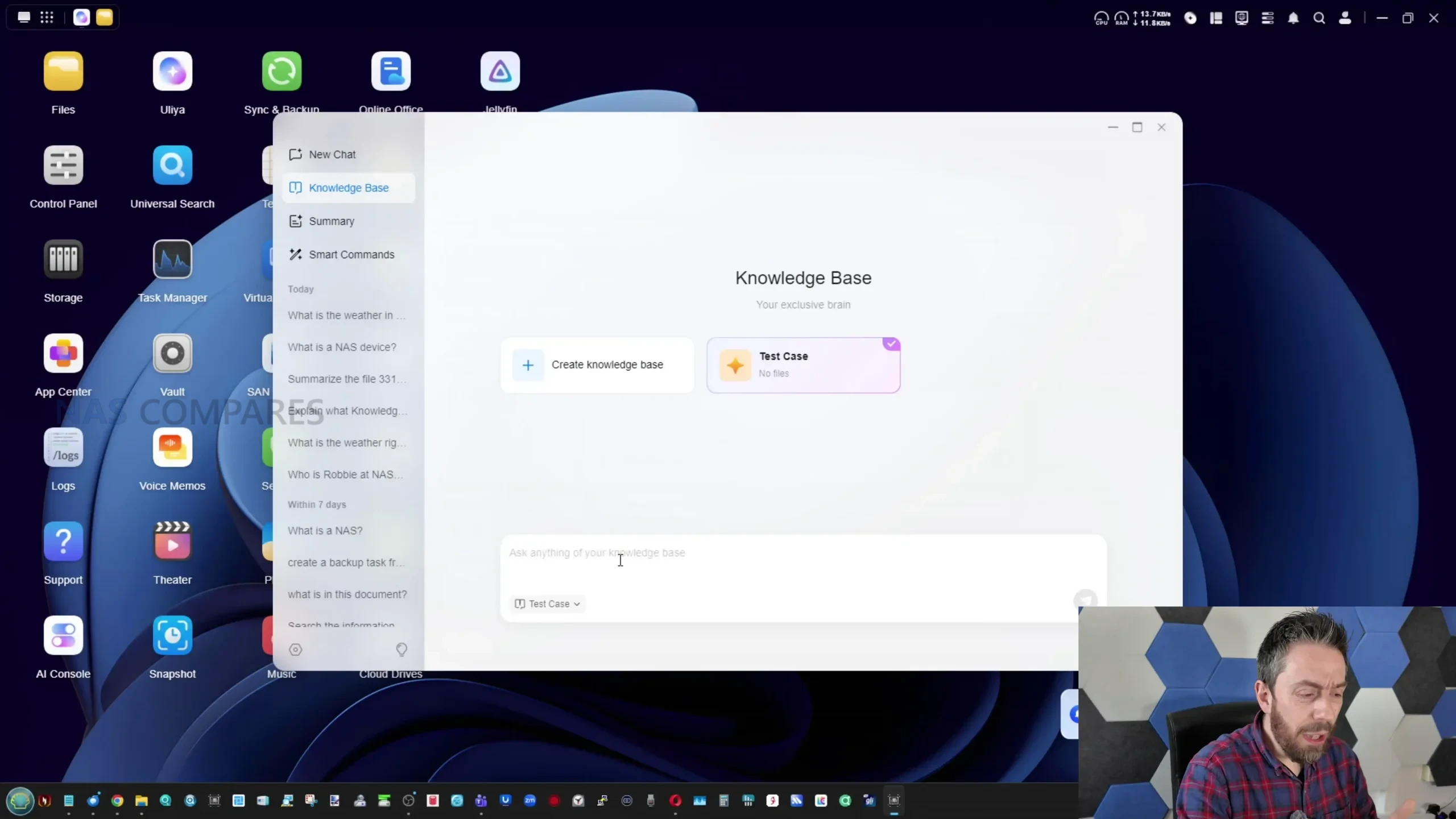 |
Across these areas, the underlying direction is clear, but the current implementation behaves more like an early stage feature set that needs expansion, better background indexing options, and broader integration across file types such as images, video, and spreadsheets before it matches the implied promise of a fully “assistant ready” NAS.
 |
 |
 |
 |

UGREEN iDX6011 Pro Review – Review and Conclusion
As a hardware platform, the iDX6011 Pro presents a clear step up in UGREEN’s NAS range, with a configuration that prioritises high bandwidth I O, expansion options, and enough CPU class performance to avoid feeling constrained in common multi service scenarios. The combination of 6 bays, NVMe support, dual 10GbE, dual Thunderbolt 4, PCIe expansion, and OCuLink creates a NAS that can serve both as large capacity storage and as a faster workspace tier when configured with caching or SSD volumes, and measured results generally reflect that intent. Thermals and acoustics were within expected limits for a dense metal chassis populated with high capacity drives, and while power draw is higher than low power NAS designs, it tracks with the component class and connectivity. In short, the hardware side looks close to finished and competitive on specification and practical performance, with the main open question being how much final tuning will improve edge cases such as multichannel write behaviour.
The AI services are the less settled part of the product, not because the core idea is unclear, but because the current workflows still require too much manual direction and the assistant is not yet integrated deeply enough across data types and system control. The most useful elements today are transcription, document summarisation, and the existing photo recognition features, while the larger “AI NAS” promise is limited by the absence of directory level pre crawling, a knowledge base that can feel incomplete, smart commands that are not yet extensive, and permission controls that do not provide fine grained scoping. For buyers primarily interested in a high spec NAS at early campaign pricing, and who view AI as optional or developing, the platform may be straightforward to justify if crowdfunding risk is acceptable. For buyers whose purchase decision depends on a polished local assistant experience that is ready to analyse and retrieve information from large libraries with minimal setup, the current AI layer suggests waiting to see how the feature set and optimisation mature by the time the campaign software build is final.
| PROs of the UGREEN AI NAS | CONs of the UGREEN AI NAS |
|
|