

Asus Signals the Arrival of WiFi 8, But Should You Care?
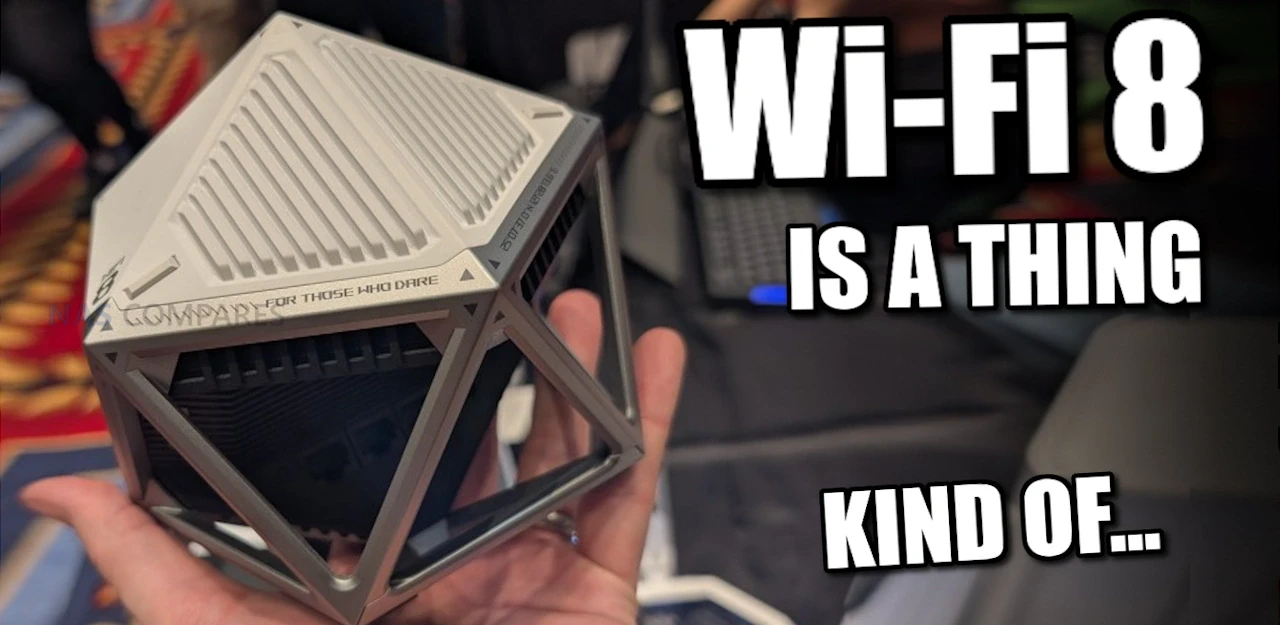
Yep, there is barely any dust on your WiFi 7 devices, and yet now the road is being paved towards the 8th generation of Wi-Fi. WiFi 8 refers to the upcoming IEEE 802.11bn generation, where the stated emphasis is improving reliability in difficult real-world conditions such as congestion, interference from neighboring networks, mobility between access points, and performance at the edges of coverage, rather than raising peak theoretical link rates. At CES 2026, ASUS presented the ROG NeoCore as a WiFi 8 concept router and used it to frame WiFi 8 as a shift toward more predictable everyday behavior, including steadier mid-range throughput, more dependable low power device connectivity, and reduced tail latency. ASUS also characterized the current stage as prototype and draft development, meaning performance figures and feature behavior should be treated as preliminary and dependent on implementation and environment.
| Topic | What is known so far |
|---|---|
| IEEE designation | WiFi 8 is based on IEEE 802.11bn under an “Ultra High Reliability (UHR)” direction |
| Stated design priority | Reliability in challenging conditions (congested, interference-prone, mobile, and edge-coverage scenarios) |
| Quantified UHR targets (scope-level) | Up to 25% higher throughput in challenging signal conditions; up to 25% lower latency at the 95th percentile; up to 25% fewer dropped packets during transitions between access points |
| Key capability areas highlighted | Seamless roaming, improved edge performance, and multi-access-point coordination |
| Early vendor positioning (ASUS) | Draft-based claims versus WiFi 7: up to 2x higher mid-range throughput, 2x wider IoT coverage, up to 6x lower P99 latency via smarter multi-AP and multi-client operation |
| Early vendor test claim (ASUS) | In a described real-world throughput test using a draft-spec WiFi 8 router versus an otherwise comparable WiFi 7 router, ASUS reports more than 10% throughput improvement without loss of data speed |
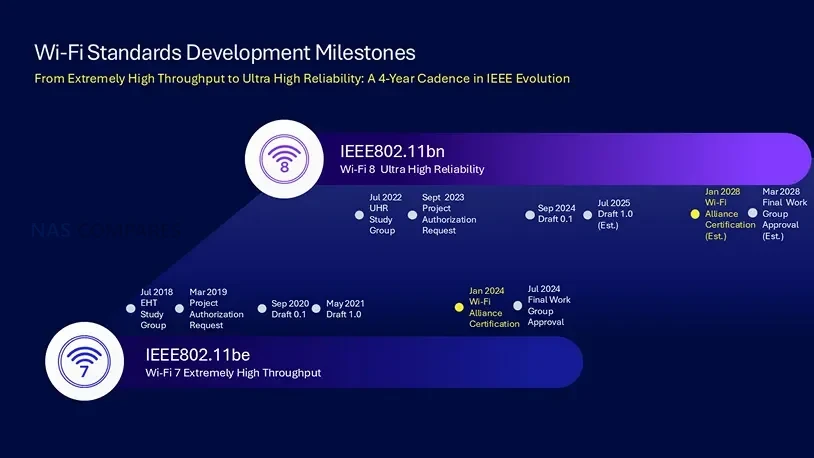
| Standard timing (publicly stated) | WiFi 8 is expected to be finalized in 2028, with multiple references indicating late 2028 |
| Product availability signals | ASUS states it plans its first lineup of WiFi 8 home routers and mesh systems in 2026 (plan, not a finalized standard milestone) |
What is WiFi 8?
WiFi 8 is the next planned generation of WiFi under IEEE 802.11bn, positioned around “Ultra High Reliability” rather than a primary focus on raising maximum theoretical data rates. The intent is to make wireless performance more predictable in the conditions that typically cause instability, including long distances from the access point, heavy contention from many simultaneous devices, and interference from overlapping networks in dense housing or office environments.
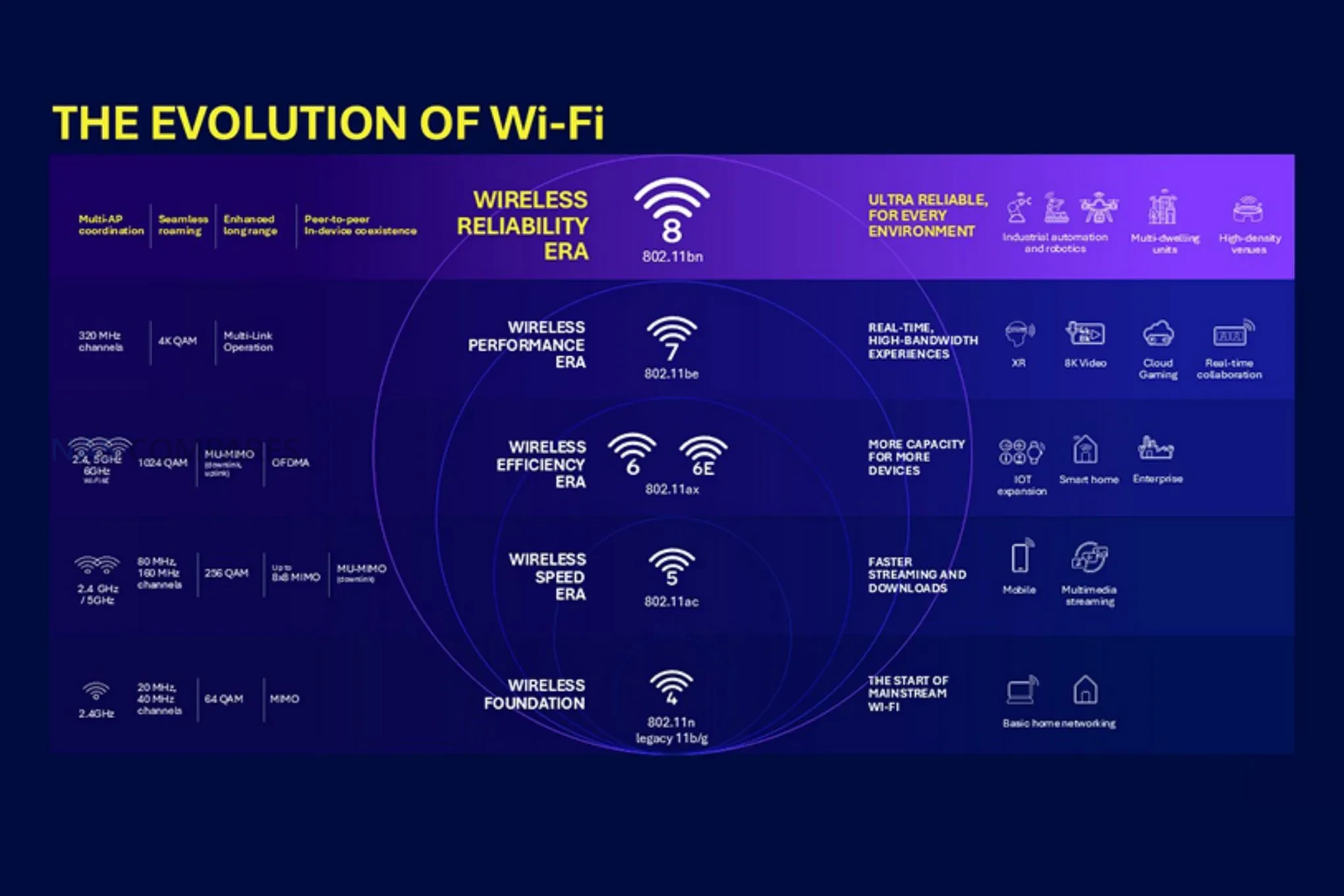
A key theme associated with WiFi 8 is increased coordination across access points and connected clients. Instead of treating each access point as an isolated transmitter competing for airtime, WiFi 8 is described as enabling access points to cooperate more directly on scheduling and interference management. In practical terms, this is meant to reduce latency spikes, improve consistency when multiple devices are active at the same time, and reduce disruptions during roaming events as clients move between access points.
WiFi 8 is also discussed as addressing weaknesses that show up with low power or edge devices, where the uplink from device to router is often the limiting factor for stability. By improving how devices use available spectrum and how the network allocates airtime, WiFi 8 is framed as improving steady connectivity for IoT-class devices and “always on” endpoints in difficult placements. Vendor messaging also links this reliability profile to AI-driven environments, where repeated small delays, packet loss, or brief disconnects can be more disruptive than a lower peak throughput number.
WiFi 8 vs WiFi 7 vs WiFi 6/6E – What Has Changed?
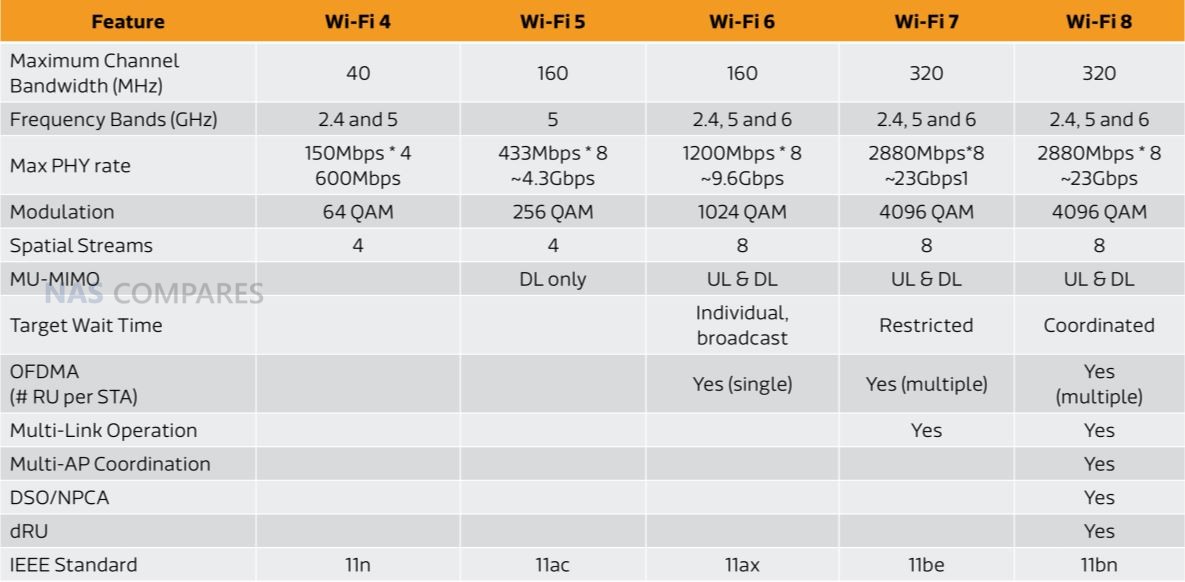
WiFi 6 and WiFi 6E are generally associated with capacity and efficiency improvements over earlier generations through features like OFDMA and expanded MU-MIMO, with WiFi 6E adding access to the 6 GHz band in supported regions. WiFi 7 shifted attention toward higher throughput and lower latency potential through wider channels (up to 320 MHz) and Multi-Link Operation (MLO), aiming to increase peak performance and improve responsiveness when devices and access points can use multiple links effectively. WiFi 8 keeps many of WiFi 7’s headline building blocks, but the stated emphasis changes toward more deterministic behavior under load, in dense radio environments, and during multi-access-point operation. In the provided material, WiFi 8 is positioned as adding coordination features that are not part of WiFi 7, with the goal of improving mid-range performance consistency and reducing tail latency metrics (for example, high-percentile latency behavior) rather than changing maximum theoretical data rates.
| Category | WiFi 8 | WiFi 7 | WiFi 6 / 6E |
|---|---|---|---|
| IEEE standard | 802.11bn | 802.11be | 802.11ax |
| Max theoretical data rate | 46 Gbps | 46 Gbps | 9.6 Gbps |
| Bands | 2.4 GHz, 5 GHz, 6 GHz | 2.4 GHz, 5 GHz, 6 GHz | 2.4 GHz, 5 GHz (6 GHz in 6E) |
| Channel bandwidth | Up to 320 MHz | Up to 320 MHz | Up to 160 MHz (plus 80+80 MHz support) |
| Modulation | 4096-QAM | 4096-QAM | 1024-QAM |
| MU-MIMO | 16×16 | 16×16 | 8×8 |
| Resource units | Multi-RUs | Multi-RUs | Single RU |
| Multi-Link Operation (MLO) | Yes | Yes | No |
| Multi-AP coordination | Yes | No | No |
| DSO / NPCA | Yes | No | No |
| DRU | Yes | No | No |
| Security | WPA3 | WPA3 | WPA3 |
From an upgrade standpoint, the most direct “spec” differences between WiFi 8 and WiFi 7 are not listed as new bands or higher top-line channel width, but additional coordination and scheduling mechanisms that are intended to improve real-world outcomes in multi-router, multi-client environments. WiFi 6 and WiFi 6E remain relevant for environments that primarily need better capacity and efficiency for mixed-device networks, while WiFi 7 targets higher performance for compatible devices, and WiFi 8 is framed as refining how that performance holds up across tougher conditions.
What is the Asus ROG NeoCore Router?
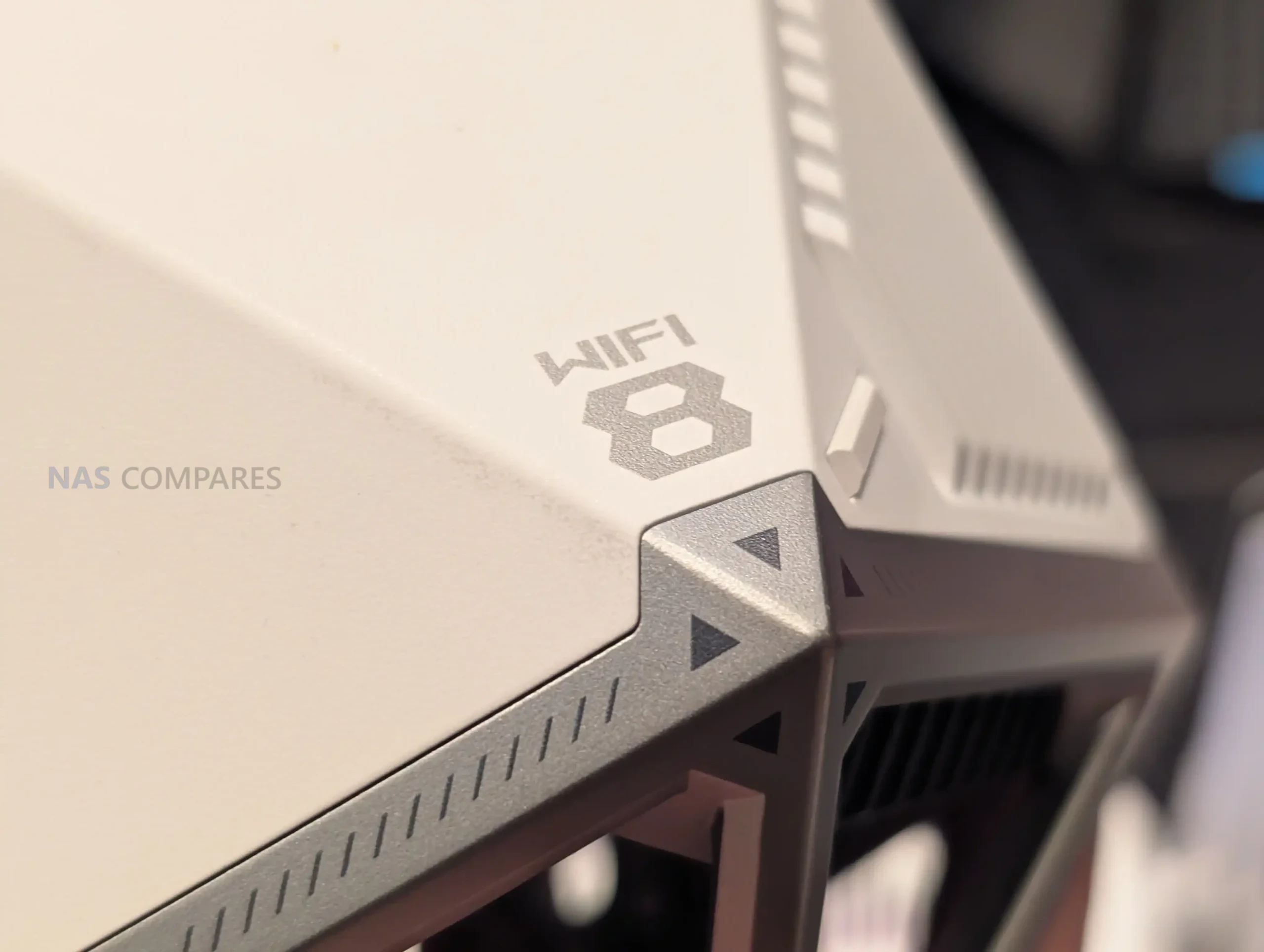
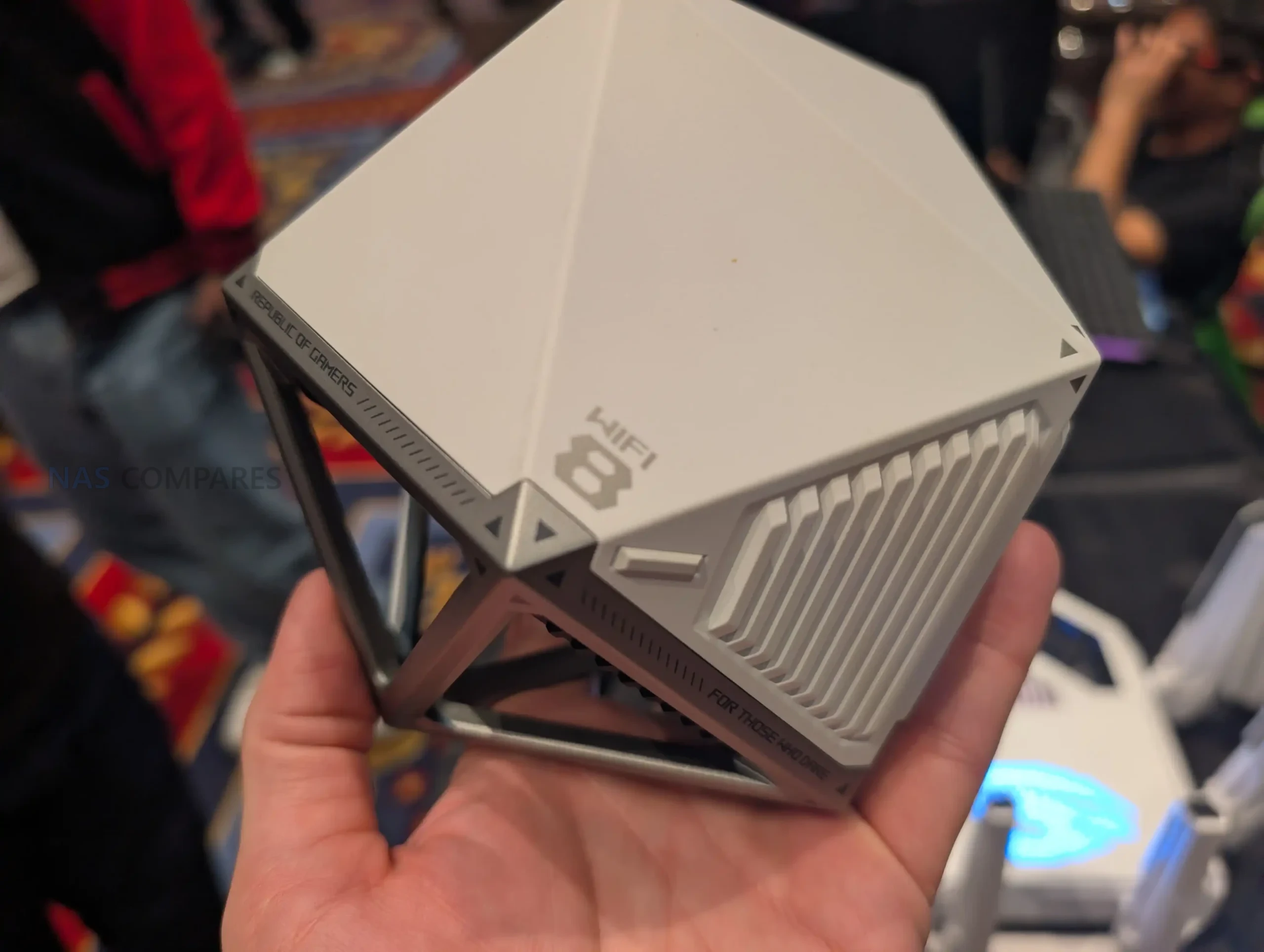
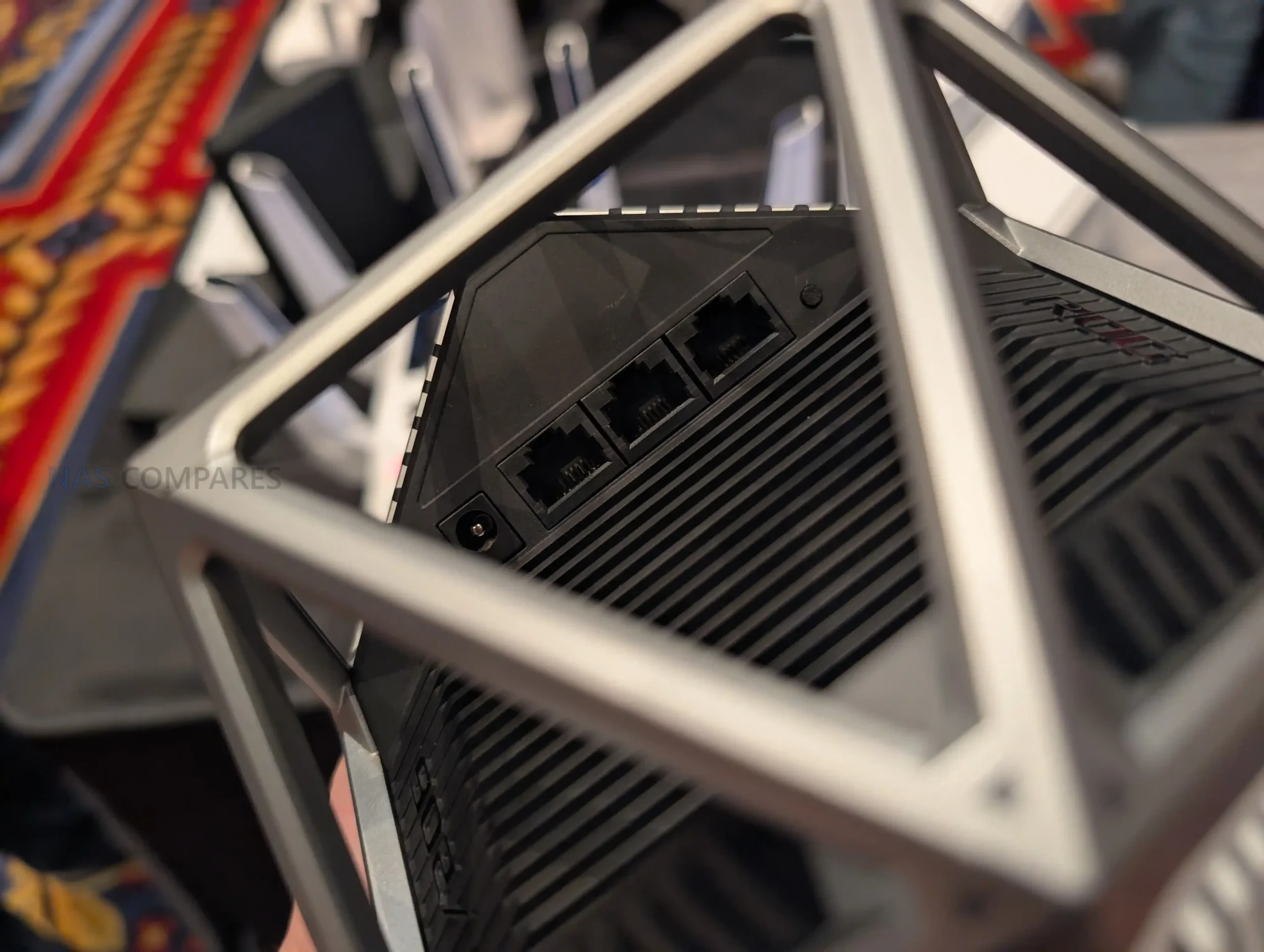
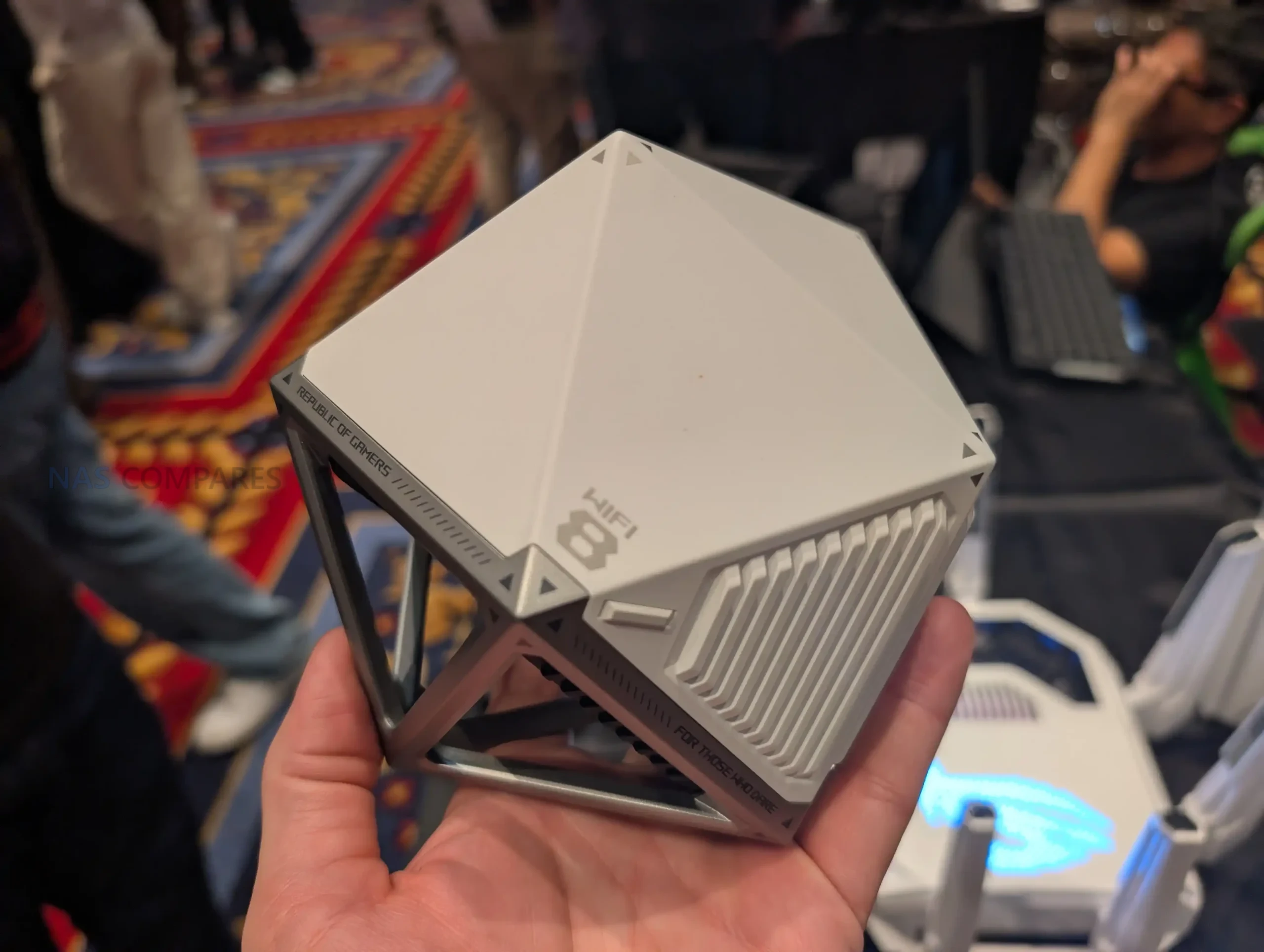
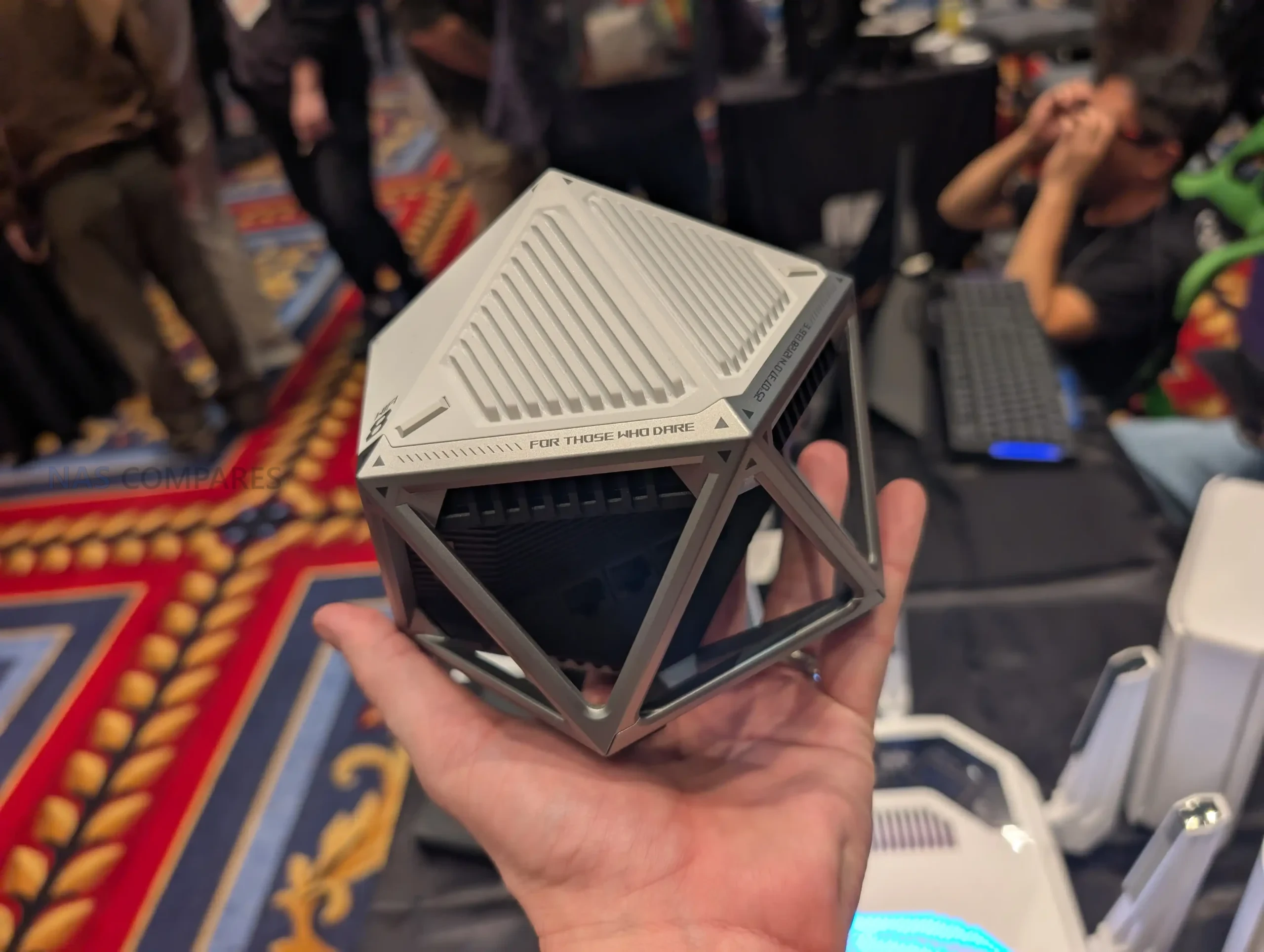
The ASUS ROG NeoCore is a WiFi 8 concept router shown publicly as a prototype demonstration unit. ASUS positions it as an early platform for demonstrating draft WiFi 8 capabilities in a real environment, rather than a finalized consumer product with locked specifications. In the video discussion, ASUS staff described NeoCore as a prototype name for the concept device and noted that detailed hardware specifications and confirmed configurations were not available at the time.
 |
 |
The concept is presented as part of the broader ASUS mesh and optimization stack. ASUS ties NeoCore to AiMesh, which is its approach to linking multiple access points into a coordinated system, and to an “AI Network Engine” described as monitoring traffic and adjusting resource allocation to manage throughput and latency. In this framing, the router is less about a single access point’s peak output and more about how multiple access points and clients can coordinate to reduce interference and contention.
 |
 |
NeoCore is also used to illustrate the practical motivation for WiFi 8 in dense and mixed-device environments. The device was discussed in the context of apartment-style “noisy” wireless conditions, long-distance or edge-of-property placement, and smart home endpoints that may have weaker uplink capability than the router itself. In the accompanying CES material, ASUS connects the concept device to early throughput testing and to draft-based claims about improved mid-range performance and reduced high-percentile latency, while stating that results and features depend on draft specifications and implementation details.
When is WiFi 8 Launching?
WiFi 8 (IEEE 802.11bn) is still in development, with public materials commonly pointing to standard finalization in 2028, often described as late 2028. Until ratification, feature definitions and mandatory versus optional elements can change, so any current demonstrations should be treated as draft implementations rather than a finalized reference for the standard. On the product side, ASUS has stated plans to introduce its first WiFi 8 home routers and mesh systems in 2026, and it has already shown prototype demo hardware at CES 2026. If WiFi 8 consumer products ship ahead of standard finalization, they are expected to rely on draft specifications, meaning real-world behavior can vary by vendor design, firmware maturity, and the availability of WiFi 8 client devices needed to access the full feature set.
-
What is WiFi 8, and when will it be available?
WiFi 8 (IEEE 802.11bn) is new-generation wireless technology focused on Ultra-High Reliability (UHR) for better performance, smoother roaming, and smarter router and client coordination. WiFi 8 is still in development. ASUS is demonstrating prototypes and conducting real-world tests to validate the new technology.
-
What’s the difference between WiFi 8, WiFi 7, and WiFi 6/6E?
The primary difference lies in the core focus of each wireless standard. WiFi 8 represents a strategic shift toward Ultra High Reliability (UHR) and deterministic low latency. In contrast, WiFi 7 prioritizes raw speed and throughput via technologies like MLO and 320MHz channels. WiFi 6/6E focused on efficiency and capacity improvements through OFDMA and MU-MIMO.
-
Is WiFi 8 faster than WiFi 7?
Peak theoretical speeds are comparable. The essential difference is that WiFi 8 significantly improves real-world performance by focusing on Ultra High Reliability. It prioritizes stability and smarter spectrum use for advanced router and client coordination, making it a strategic evolution beyond previous standards like WiFi 7.
-
Will WiFi 8 be backward compatible? Can older devices benefit from WiFi 8?
Yes, WiFi 8 will be fully backward compatible with all previous standards. While full features require WiFi 8 support on both the router and the devices that connect to it, older devices can still benefit from the network’s improved coordination and interference mitigation. WiFi 8 users will get more stable connections and fewer drops on legacy devices facing congestion and signal-strength issues.
-
Does WiFi 8 change the bands or add new bands?
WiFi 8 continues to use the 2.4GHz, 5GHz, and 6GHz bands with up to 320MHz channels, focusing on smarter coordination and spectrum use.
-
What WiFi 8 features help in crowded Homes and Businesses?
Multi-AP coordination, including Co-BF, Co-SR, Co-TDMA, NPCA, and improved seamless roaming, reduces interference and contention between overlapping networks.
📧 SUBSCRIBE TO OUR NEWSLETTER 🔔
🔒 Join Inner Circle
Get an alert every time something gets added to this specific article!
This description contains links to Amazon. These links will take you to some of the products mentioned in today's content. As an Amazon Associate, I earn from qualifying purchases. Visit the NASCompares Deal Finder to find the best place to buy this device in your region, based on Service, Support and Reputation - Just Search for your NAS Drive in the Box Below
Need Advice on Data Storage from an Expert?
Finally, for free advice about your setup, just leave a message in the comments below here at NASCompares.com and we will get back to you. Need Help?
Where possible (and where appropriate) please provide as much information about your requirements, as then I can arrange the best answer and solution to your needs. Do not worry about your e-mail address being required, it will NOT be used in a mailing list and will NOT be used in any way other than to respond to your enquiry.
Need Help?
Where possible (and where appropriate) please provide as much information about your requirements, as then I can arrange the best answer and solution to your needs. Do not worry about your e-mail address being required, it will NOT be used in a mailing list and will NOT be used in any way other than to respond to your enquiry.
 TRY CHAT
Terms and Conditions
TRY CHAT
Terms and Conditions





|
 |
| Where to Buy a Product | |||
 |
    
|
  
|
VISIT RETAILER ➤ |
 |
|
|
VISIT RETAILER ➤ |
We use affiliate links on the blog allowing NAScompares information and advice service to be free of charge to you. Anything you purchase on the day you click on our links will generate a small commission which is used to run the website. Here is a link for Amazon and B&H. You can also get me a ☕ Ko-fi or old school Paypal. Thanks! To find out more about how to support this advice service check HERE


WHERE IS SYNOLOGY DSM 8? and DO YOU CARE? (RAID Room)
UniFi Routers vs OpenWRT DIY Routers - Which Should You Choose?
WHY IS PLEX A BIT S#!t NOW? IS 2026 JELLYFIN TIME? (RAID Room)
Synology FS200T NAS is STILL COMING... But... WHY?
Gl.iNet vs UniFi Travel Routers - Which Should You Buy?
UnifyDrive UP6 Mobile NAS Review
Access content via Patreon or KO-FI
Discover more from NAS Compares
Subscribe to get the latest posts sent to your email.
At this point people should know better …
ASUS better stick to anything BUT routers
REPLY ON YOUTUBE
No more headcrabs ,????
REPLY ON YOUTUBE
you should have asked Asus if they can first make a router that does not randomly disconnect your devices especially IOT ones before wifi 8 ????
REPLY ON YOUTUBE
I use a wifi 6 router for my wifi 5 phone lol.
REPLY ON YOUTUBE
1:10 the woman in the black top is gorgeous
REPLY ON YOUTUBE
for Home routers they are better when they are Download-leaning, mainly WiFi use, smart load balancer for multiple devices at the same time, mesh support, and 2.5 GbE.
WiFi is primary here and important.
but for Content Creation & Streaming Routers they are better when they are Upload-leaning, mainly wired with internal NAS transfers support, and have remote management support.
5 GbE for internet use.
and 10G for internal NAS transfers only.
that kinda makes sense.
as for Gaming routers they are better when they are tuned for Low latency and consistency, mainly wired with symmetrical speeds (download and upload), direct fiber/APC connectors on the router, has a geo-filter, Private Gaming Network support, fast hardware processing specs with low overheads and 10GbE internet use.
for both of these WiFi is secondary.
nonetheless, cool stuff.
best of luck ❤.
REPLY ON YOUTUBE
Won’t make difference.
REPLY ON YOUTUBE
This “noise” feature is not new. They have that in current Wi-Fi .
REPLY ON YOUTUBE
I’m stopping at my 6e. This is just stupid and not sustainable to change every 2 days. Next week we will hear of WiFi 20
REPLY ON YOUTUBE
That is utterly absurd. The Wi‑Fi 8 standard has not even been officially ratified yet, and a manufacturer like ASUS already thinks they have to bring Wi‑Fi 8 router to market.
REPLY ON YOUTUBE
Ну круто… еще WiFi N у 40% пользователей, а тут уже WiFi 8… где только клиентские устройства с этим стандартом.
REPLY ON YOUTUBE
Probably costs around $10,000 knowing state of the art techs
If i had my way, i would not have any wifi, i hate the thing
All these variations thankfully pass me by.
REPLY ON YOUTUBE
Please ref this is not finalized draft or spec.
REPLY ON YOUTUBE
I’ll wait for Ubiquiti to release Wifi 8 access points.
I have Wifi 6 and 7 mix
REPLY ON YOUTUBE
Waiting for mmWave technology and 25g wifi routers haha
REPLY ON YOUTUBE
So basically WIFI 8 is a scam.
REPLY ON YOUTUBE
bro sounds like an office worker explaining wifi. they should have sent their network guy for this
REPLY ON YOUTUBE
I wish someone would offer a 2 bay nas with dual network ports, like 2.5 and 5.0. ????
REPLY ON YOUTUBE
My WiFi is the only one WiFi 6 in my neighborhood (because of wireless connection of my Quest 3 to PC, otherwise I’d still use 5). All others are 5 and 4. Am I alone?
REPLY ON YOUTUBE
I love that Asus has taken the Prime Radiant from Foundation and made it into a WiFi router. I don’t really care about WiFi 8, but I really hope they make the dodecahedron router into a real product as I’d definitely buy it.
REPLY ON YOUTUBE
say whaaaaa
REPLY ON YOUTUBE
This comment is coming from 5 years in the future.
I really enjoy my D&D WiFi 8 cube.
My 100 GHz network was bottlenecked at 40 GHz. ????
REPLY ON YOUTUBE
OK, so pitching this for smart devices in an apartment building. Say ASUS, how much is this going to cost? Something someone living in an apartment can afford? haha, I doubt it.
REPLY ON YOUTUBE
Maybe instead of wi-fi interference it’s time to thicken our devices back up, stick an ethernet port in them, and normalise the benches in shopping centres (which also means they have to give spouses more benches to sit on while waiting for their other half to shop, or while eating their lunch) having ethernet ports. Trains and buses too. This would take care of 99% of the use case for wi-fi that requires high bandwidth. Job done. 😉
REPLY ON YOUTUBE
WIFI 8 Sounds like a skip gen then, WIFI 7 or 9!
REPLY ON YOUTUBE
Complete bullshit. Not a product, no internals and when they are created it won’t be by ASUS. Salesman Tosser is hyping an empty box. IEEE themselves have said as recently as last April that the standard (let alone products) is projected to be finalised in September 2028. You read that right.
REPLY ON YOUTUBE
Would be nice to add an lower frequency for IoT devices like sensors for extended range. Most frends had the need for an additional access point (mesh point) cause of the 2,4 GHz Frequency are to weak at an place in there area where an sensor or an other IoT device was. It’s to many in the air with 2,4 like Bluetooth, Thread, WLAN, Zigbee…. Thread integrated in the WiFi standard with an lower frequency like LoRaWAN 433 MHz would be nice and the break througt for Thread. Most IoT devices dont’t need high data rates, it would also save energy in the devices für longer runtime.
REPLY ON YOUTUBE
My wifi 5 router. I’m tired boss….
REPLY ON YOUTUBE
Well, they mentioned Wifi8 would be about stability, not about speed thus not about port saturation. 2,5Gbe has just been established as a consumer standard. 10Gbe on consumer now would be sweet indeed.
REPLY ON YOUTUBE