


Is the Sipeed NanoKVM Safe? On-board Microphone Identified
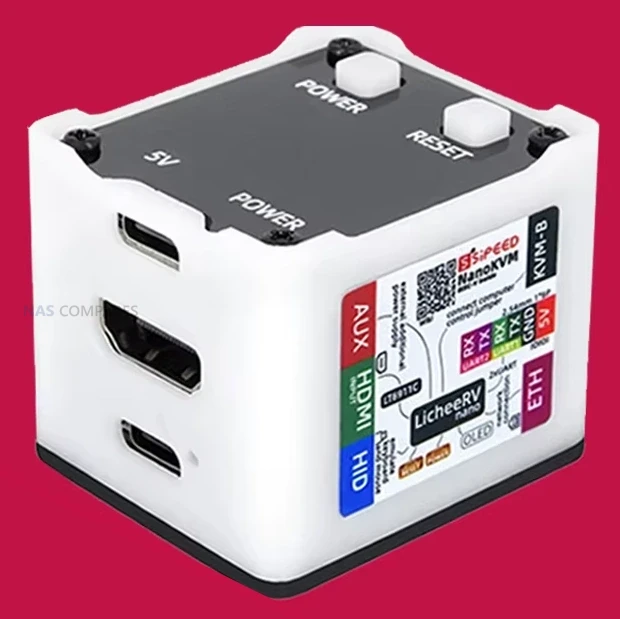
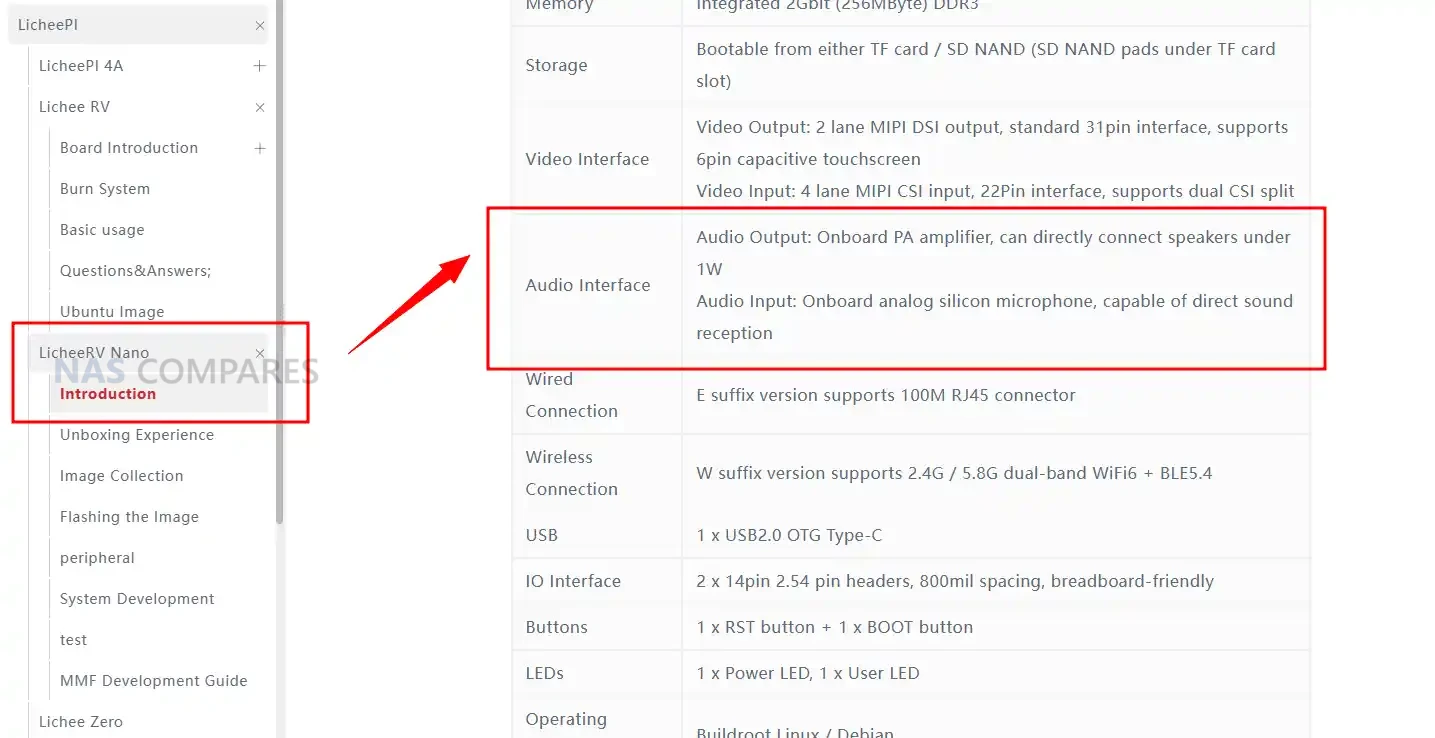
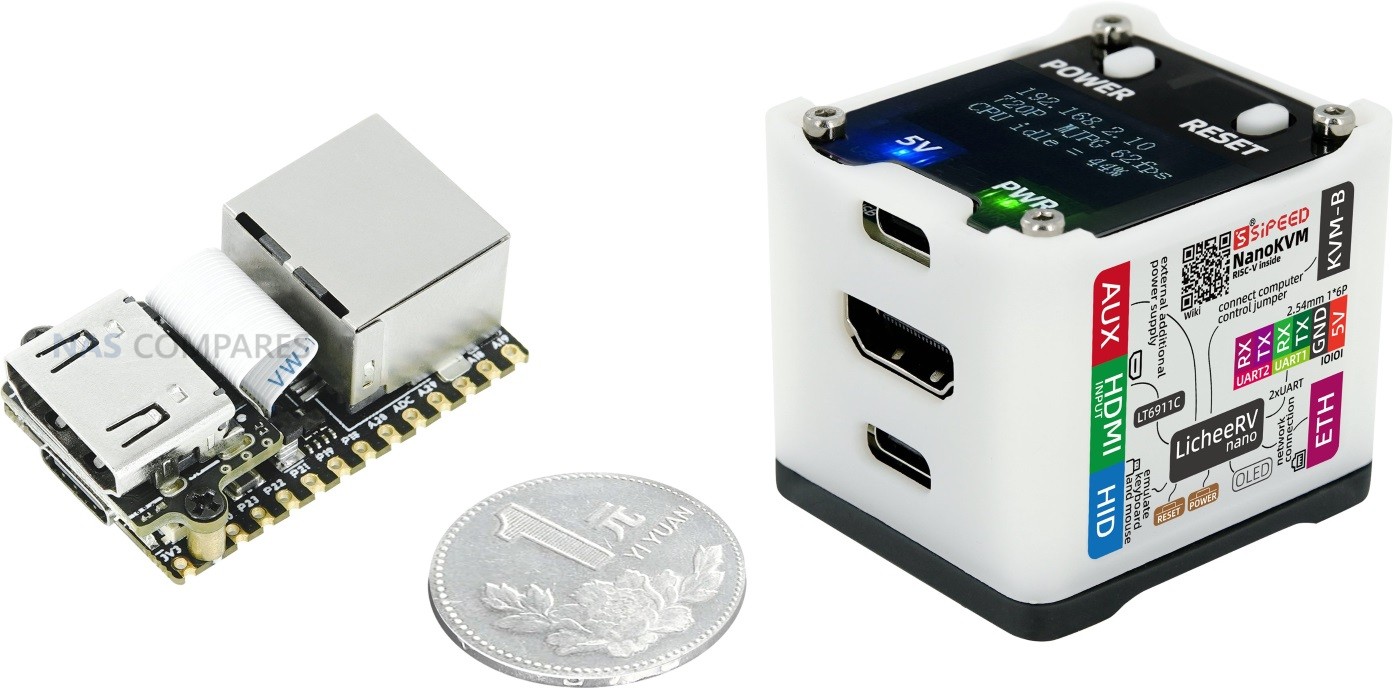
The Sipeed NanoKVM Cube is a low cost, network connected KVM built around the LicheeRV Nano RISC-V module, and recent reporting has drawn attention to the fact that this first generation hardware quietly inherited an onboard analog microphone from that core board. While the LicheeRV Nano documentation clearly lists audio input and output capabilities, the NanoKVM product materials initially focused on its KVM role and did not prominently call out the presence of a microphone on the internal PCB. That gap in presentation, combined with the device’s origin in China and its role as an always-on, remotely accessible appliance, has led to questions about transparency and potential privacy impact. This article reviews what is actually on the hardware, how Sipeed has responded, which issues have been addressed in software, and what residual risk remains for users who already have the NanoKVM Cube deployed.

The NanoKVM Cube and That Microphone – What We Learned?
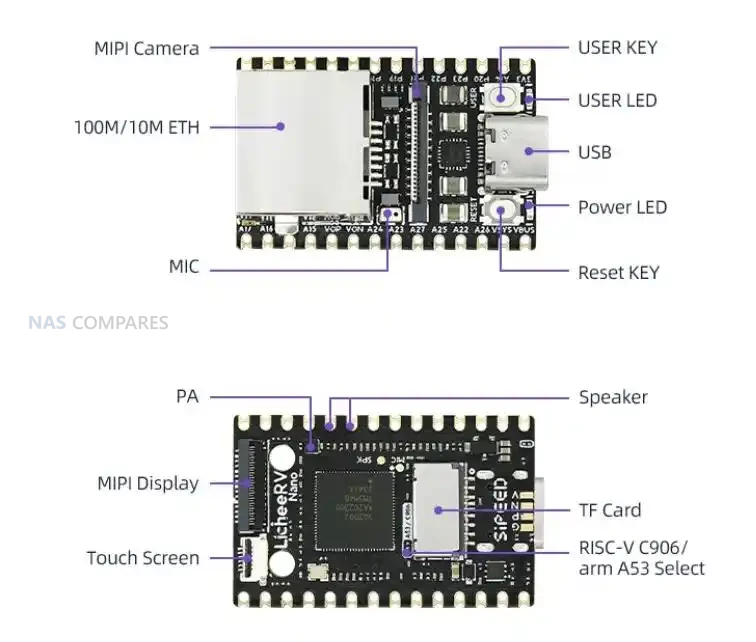
The initial detailed public discussion of the NanoKVM Cube microphone came from a Telefoncek.si research article, which documented security testing of early units and highlighted the presence of a small, operational microphone on the device’s PCB. The NanoKVM Cube is built on the LicheeRV Nano platform, and that design decision is the origin of the audio hardware. The LicheeRV Nano specification explicitly lists an onboard analog silicon microphone for audio input and a PA amplifier for driving a small speaker, because the module is intended as a general purpose SBC for a range of embedded applications. When Sipeed used this module as the core of a consumer facing KVM, the Cube inherited that audio circuitry intact, including the tiny surface mount MEMS microphone, even though typical KVM usage does not require audio capture capabilities.
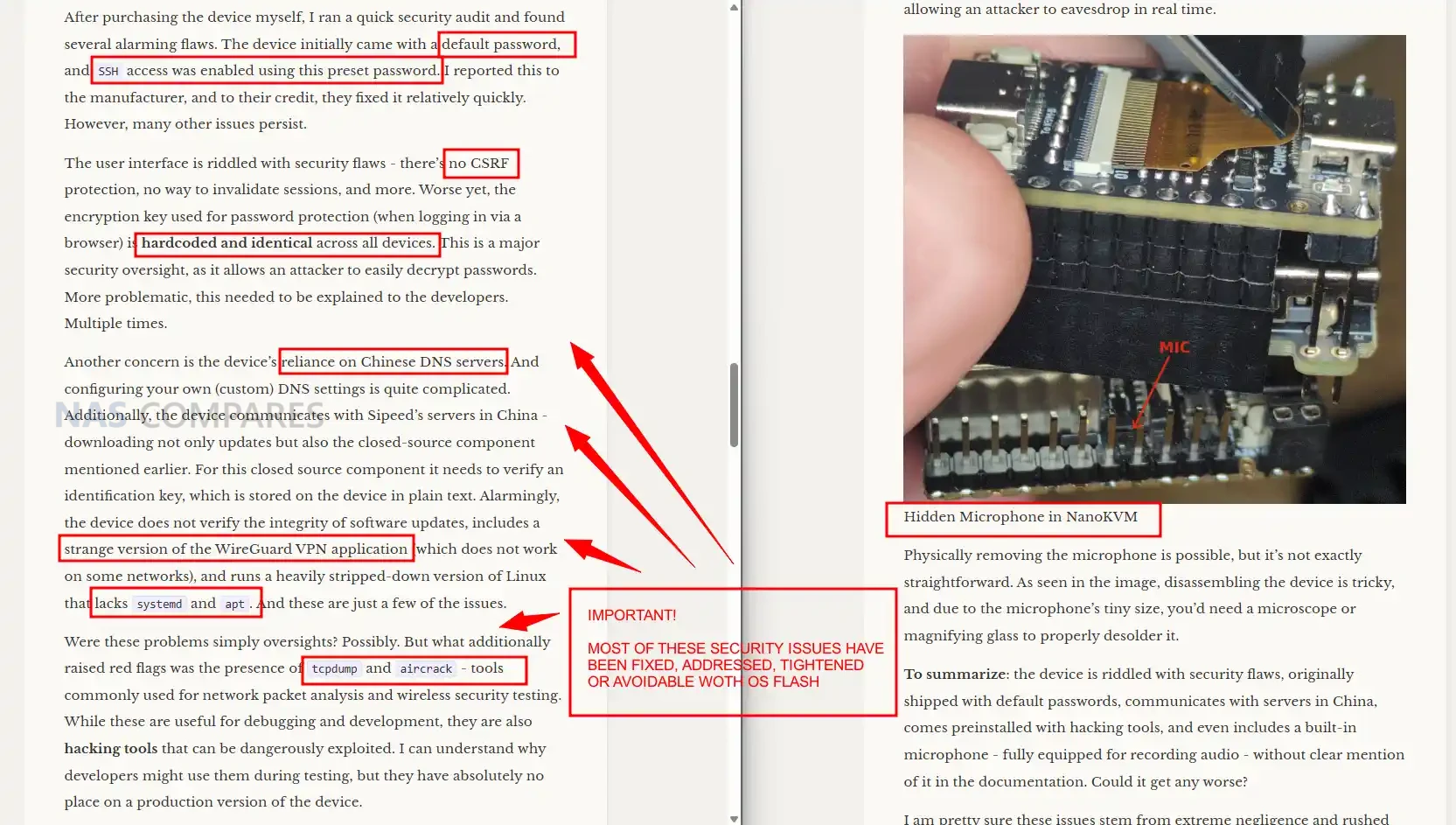
What Telefoncek.si article from Feb ’25 drew attention to was the combination of this hardware and a software stack that already contained working audio tooling. Researchers who obtained early NanoKVM units found that, with SSH access, standard ALSA tools such as amixer and arecord could be used to adjust gain and record ambient sound through the built in microphone, and that the resulting audio files could be copied or potentially streamed off the device. At that time, the NanoKVM product page described its relationship to the LicheeRV Nano SDK and resources in general terms, but did not highlight that a functioning microphone remained present on the KVM board. For many users, that gap between what the SBC documentation said and what the KVM product page emphasized was perceived as a lack of clear disclosure rather than a predictable consequence of module reuse.

The NanoKVM Security Concern and Presentation Issues
The initial concern around NanoKVM security was not limited to the microphone. Early firmware builds shipped with default credentials, SSH enabled, weak web security controls, and hardcoded encryption keys that were identical across devices. Researchers also found diagnostic and security utilities present on the system image that were more appropriate for development or lab use than for a small appliance likely to be exposed on home or small business networks. These findings created a picture of a product that had been moved from prototype to retail relatively quickly, with baseline functionality in place but limited attention paid to hardening or least privilege.
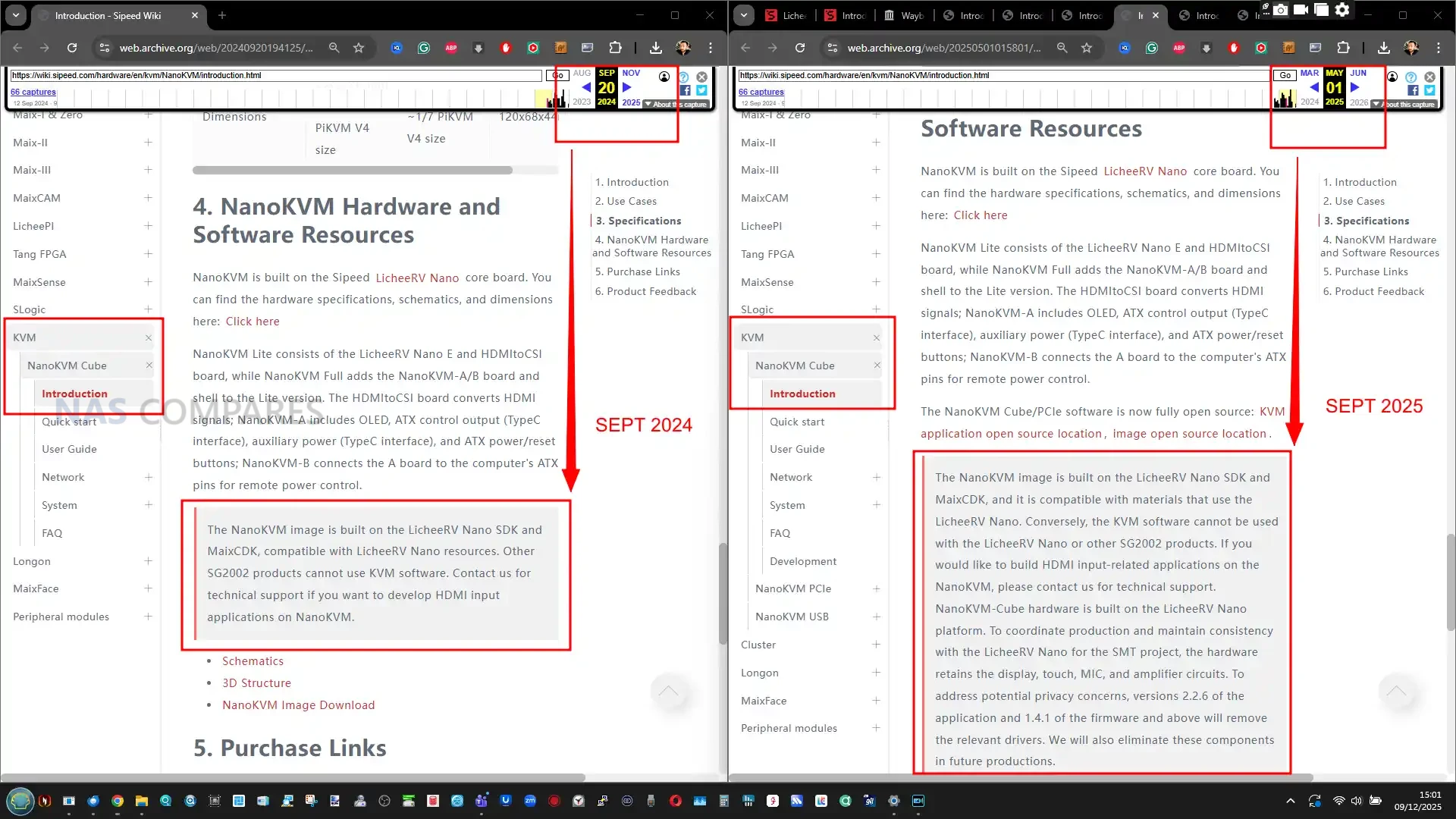
Presentation played a significant role in how the microphone issue was perceived. For the LicheeRV Nano SBC, the presence of audio input and output is clearly listed as part of the hardware specification, and that makes sense for a general purpose module. For NanoKVM Cube, the public facing documentation initially focused on KVM features, HDMI input, and compatibility with the LicheeRV Nano SDK, while leaving the inherited audio hardware implicit. Only later did the NanoKVM wiki entry gain explicit wording that the Cube retains display, touch, microphone, and amplifier circuits from the base module, and that newer firmware versions would remove the relevant drivers and future production runs would omit these components entirely.
Sipeed’s public responses combine these two aspects. On the one hand they point to the LicheeRV Nano documentation and the updated NanoKVM wiki as evidence that the microphone is not intended to be secret. On the other hand they argue that, from a threat model perspective, the presence of a board level microphone does not materially change risk once an attacker has obtained full control of the device, since they could already perform sensitive actions through the host system. For critics, the issue is less about the technical possibility of audio capture in a fully compromised scenario and more about expectation and trust: a network attached KVM marketed primarily on its remote control capabilities but not clearly calling out built in audio capture hardware is likely to be treated with more suspicion, especially when it comes from a vendor that has already needed several rounds of security fixes.
Reality Check – How Much of a Concern is this?
From a strict security engineering viewpoint, the onboard microphone in the NanoKVM Cube does not create a new, independent way into the device. An attacker still needs a working exploit, exposed service, or misconfiguration to gain sufficient access before any audio capture is possible. In that sense, the primary risk is still the usual set of issues that apply to any IP KVM: exposed management interfaces, weak credentials, unpatched firmware, or poor network segmentation. If those fundamentals are handled correctly, the probability that a remote attacker can turn the Cube into a listening device is significantly reduced, and using alternative firmware or a locked down software stack can further narrow the options.
The impact side of the equation is different. Once a NanoKVM Cube is compromised at a system level, the presence of a functional microphone increases the potential harm compared with a KVM that only relays keyboard, video, and mouse. A device that sits in a home office, lab, or equipment room and can capture ambient sound can turn a general compromise into a privacy incident that extends beyond the connected host system. For some users that incremental risk will be acceptable if the device is strictly isolated, regularly updated, and treated as an untrusted appliance at the edge of the network. For others, the residual possibility of room audio capture from a small, unattended box may be enough to justify either physical removal of the mic, replacement with a later hardware revision, or avoiding this particular model altogether.
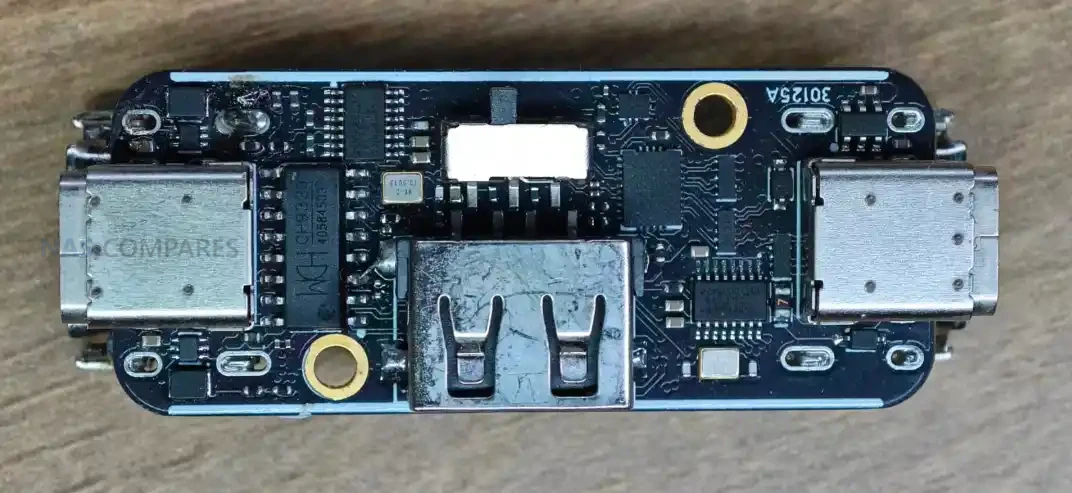
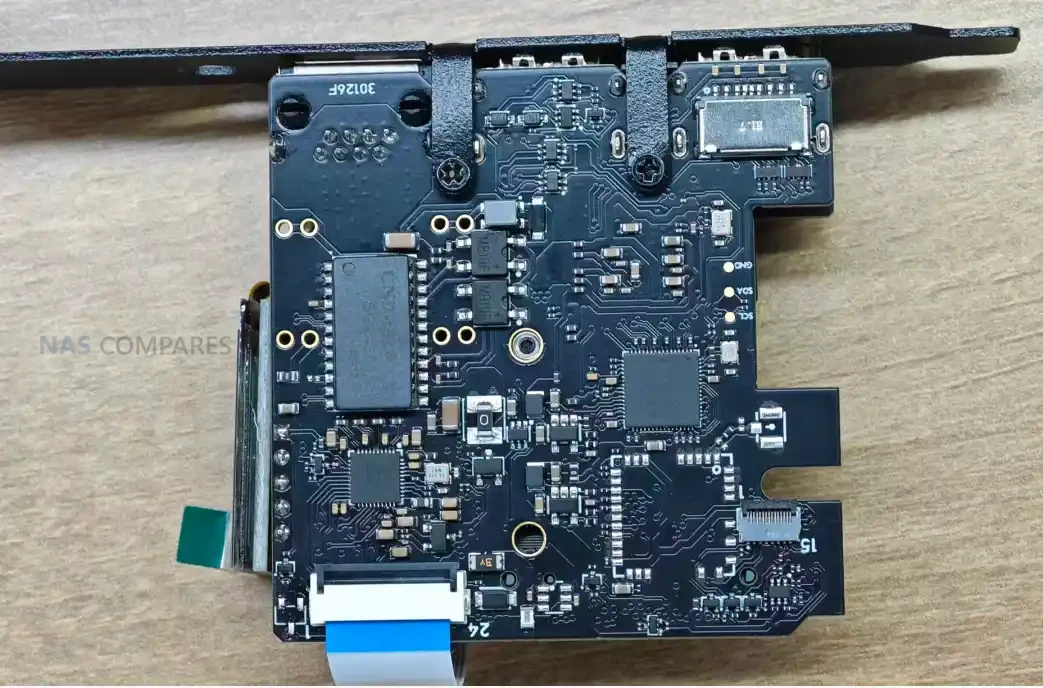
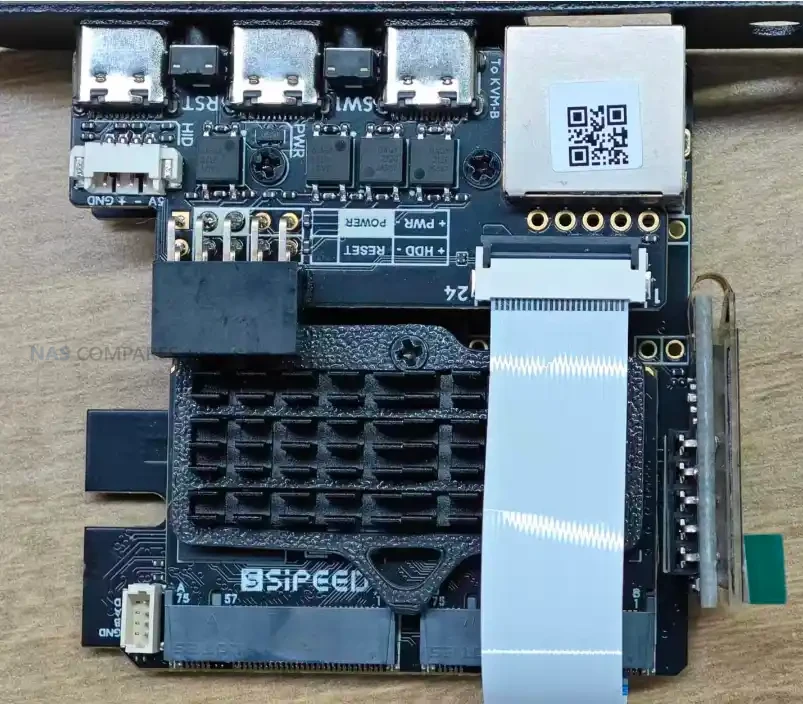
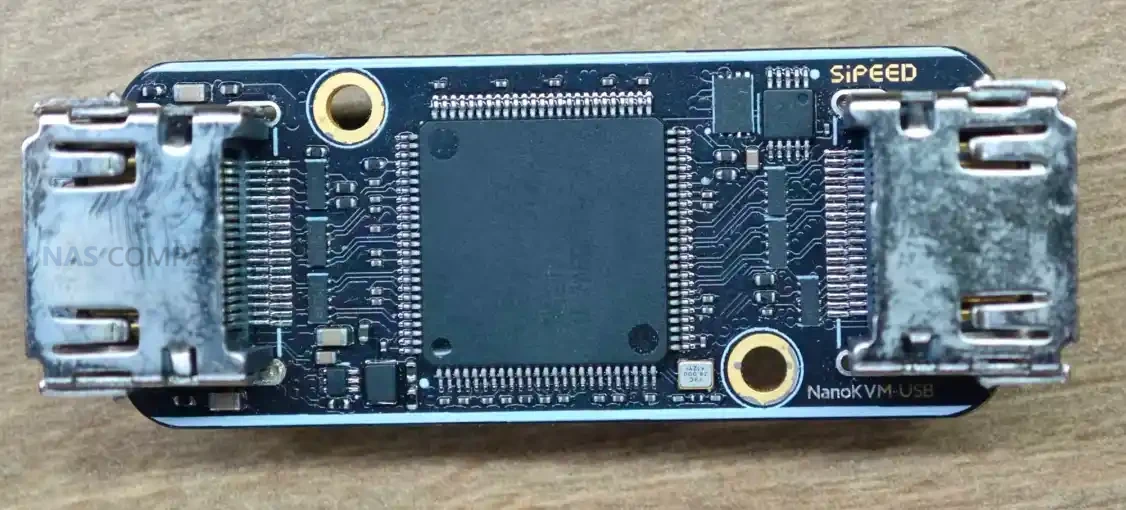
Note. Here is the board view of the NanoKVM USB and NanaKVM Pro PCIe, with no microphone visible:
 |
 |
 |
 |
Asking Sipeed Questions about the NanoKVM Microphone Issue – How and Why This Occurred?
To clarify how the microphone ended up in a shipping KVM product and what Sipeed intends to do about it, I put a series of written questions to the company. The goal was not to reassess the technical findings already covered by independent research, but to obtain clear statements from the vendor on 4 points: how they view the documentation and disclosure around the microphone, which specific NanoKVM variants and hardware revisions include it, what mitigations they believe limit its security and privacy impact for existing deployments, and what concrete changes they are planning for future production runs. The questions and Sipeed’s responses are reproduced in full below. Thanks again to Caesar Wu for his time in answering my questions.
Why was there a microphone on the device, and how/why it’s absent from the documentation?
This premise contains a serious factual error made by the original article. The presence and rationale for the microphone are not undocumented; they are explicitly mentioned on the product’s main Wiki page: https://wiki.sipeed.com/hardware/en/kvm/NanoKVM/introduction.html#NanoKVM
Which Version/Batch/Revisions of NanoKVM feature this Microphone?
The microphone is featured on the NanoKVM Lite and NanoKVM Cube versions. These are derivative products based on the LicheeRV-Nano (RISC-V SBC core module) and consequently inherited its Single Board Computer (SBC) peripherals, including the microphone, speaker, and MIPI touchscreen support.
Is this present on other versions of NanoKVM (i.e PCIe, Pro, USB, etc)?
No. Other products use custom-designed boards dedicated solely to the KVM scenario. They do not reuse the SBC module and therefore do not include non-KVM-essential components.
Why was this microphone not eliminated at the point of production?
The core part of NanoKVM-Cube/Lite is LicheeRV Nano. We reuse LicheeRV Nano as a standard “SOM” in many different products, like AI Camera MaixCAM: https://www.aliexpress.com/item/1005006912917562.html . And our toB customer also use it as a standard linux core board(Just like RPi CM4, CM5), they are very satisfied with the onboard microphone, speaker, and touch screen. As stated in my previous email, we maintain that logically, the retention of the microphone on the board does not introduce any negative impact on security. While the onboard components (microphone, speaker power amplifier (PA), and touchscreen connector) introduce a slight increase in Bill of Materials (BoM) cost, this decision significantly simplifies inventory management.
In fact, the base LicheeRV Nano product already comes in 4 configuration variants (Basic, Eth, WiFi, and Ethe+WiFi). If we were to further segment the inventory by adding options for the presence or absence of the microphone and touchscreen connector, the total number of SKUs would increase exponentially(the number of SKUs multiplies by two for every added configuration options). Therefore, based on a comprehensive consideration of security, cost efficiency, and inventory management complexity, we maintain the microphone, speaker PA, and touchscreen connector as the default base configuration.

What steps are being taken to ensure that this does not pose a Security/Privacy threat to user who have the nanoKVM in active deployment?
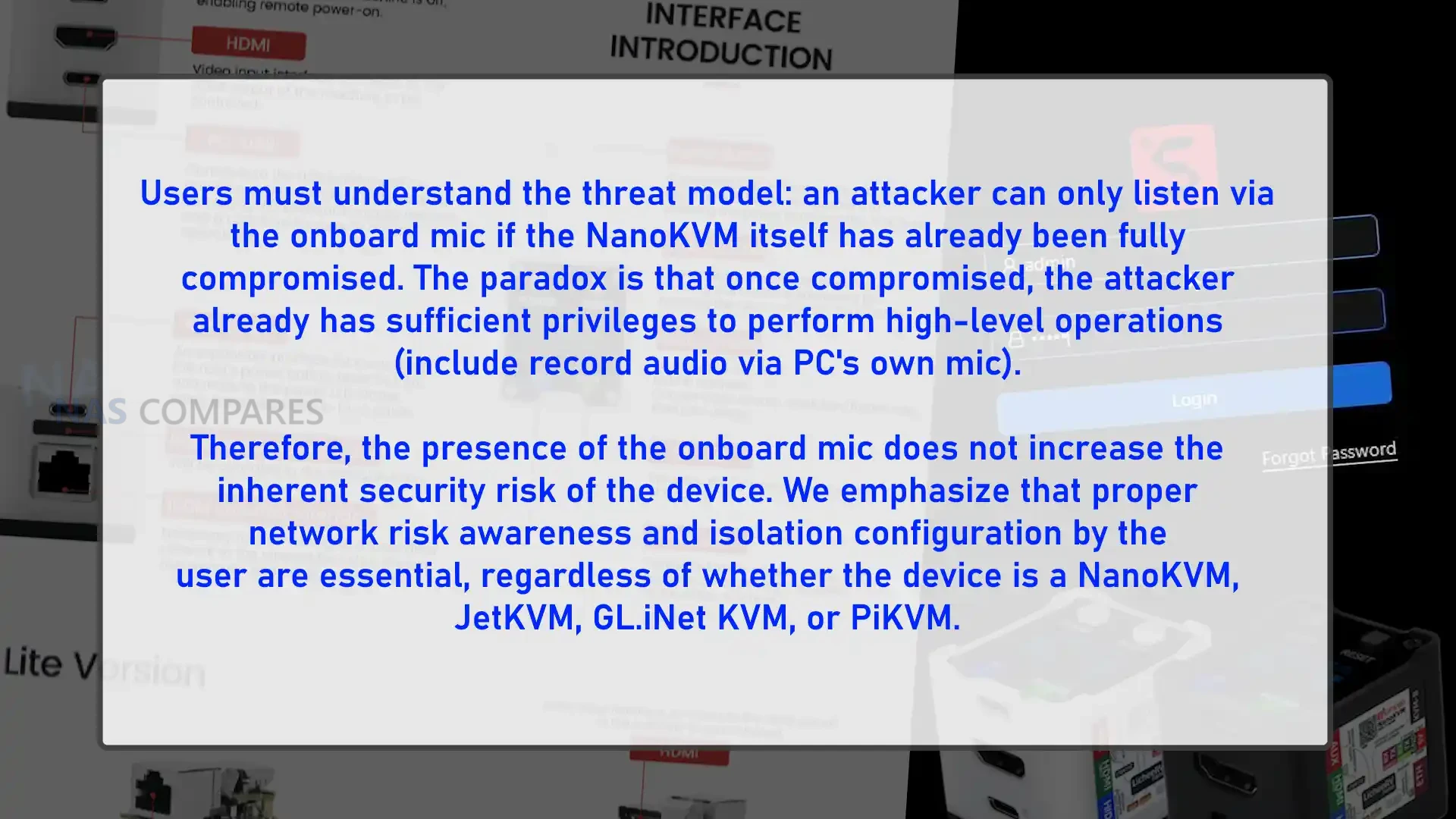
Users must understand the threat model: an attacker can only listen via the onboard mic if the NanoKVM itself has already been fully compromised. The paradox is that once compromised, the attacker already has sufficient privileges to perform high-level operations (include record audio via PC’s own mic). Therefore, the presence of the onboard mic does not increase the inherent security risk of the device. We emphasize that proper network risk awareness and isolation configuration by the user are essential, regardless of whether the device is a NanoKVM, JetKVM, GL.iNet KVM, or PiKVM.
What further steps have been made/planned at Production to avoid this occurring again in future hardware releases?
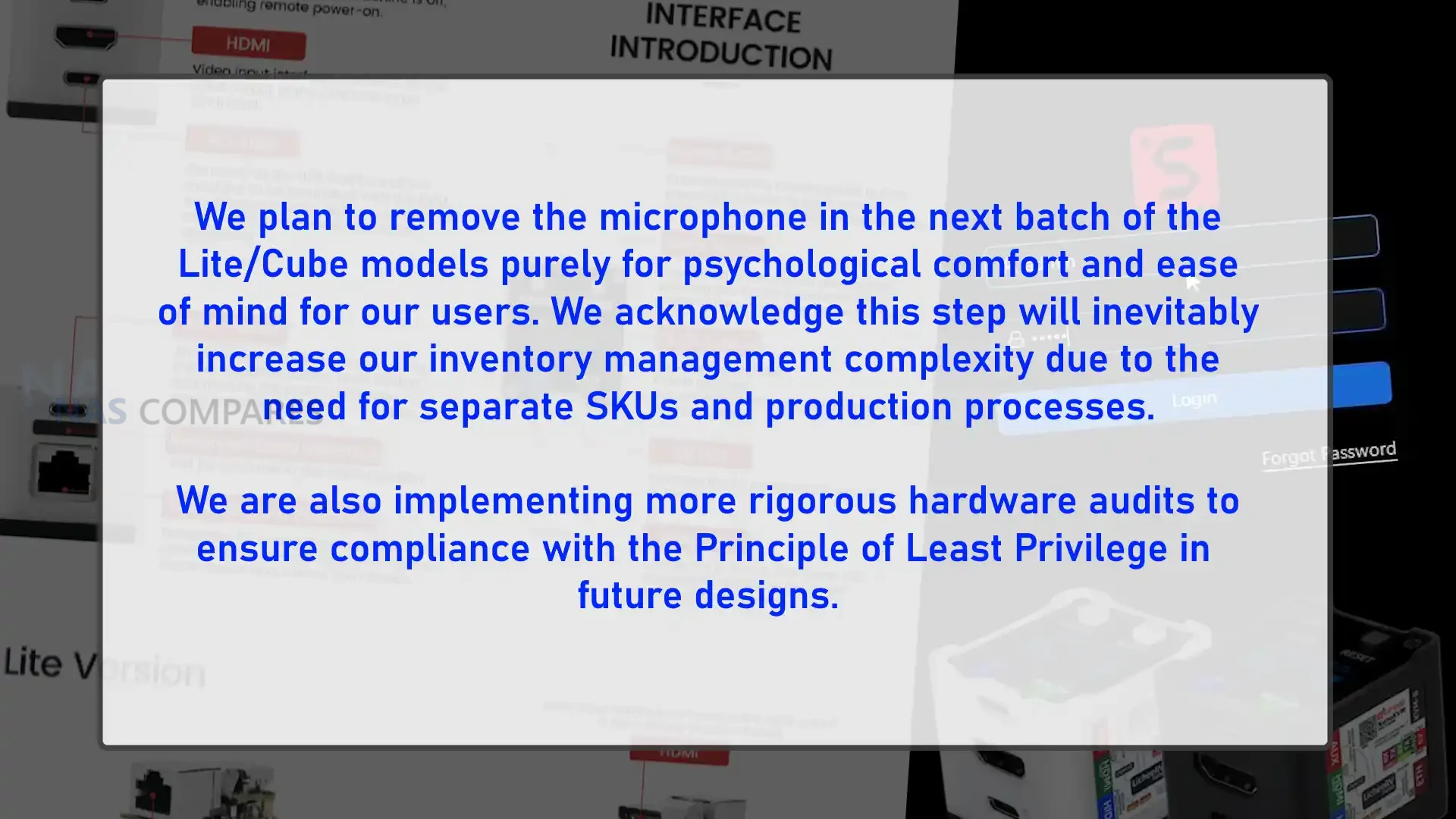
As stated in Question 4, we plan to remove the microphone in the next batch of the Lite/Cube models purely for psychological comfort and ease of mind for our users. We acknowledge this step will inevitably increase our inventory management complexity due to the need for separate SKUs and production processes. We are also implementing more rigorous hardware audits to ensure compliance with the Principle of Least Privilege in future designs.
Conclusion – Should NanoKVM Owners Be Worried?
For current NanoKVM Cube owners, the level of concern depends largely on how and where the device is deployed. In a well segmented environment where the KVM sits on an isolated management network, with updated firmware and strong access controls, the presence of a dormant microphone on the board is a secondary issue behind the more general risk of any remote management appliance. In small or less structured setups where the NanoKVM has direct exposure to the internet or shares a LAN with everyday client devices, both the historical software weaknesses and the possibility of audio capture in a successful compromise are more relevant factors in deciding whether to keep using the unit unchanged.
Looking ahead, Sipeed has stated that newer firmware removes the audio drivers and that future Lite and Cube batches will omit the microphone and related circuitry entirely, which addresses the concern for new buyers over time. For existing devices, users who are uncomfortable with any residual audio capability have practical options: physically removing or disabling the mic at board level, reflashing with a minimal or community maintained software stack, or replacing the hardware with a later revision or a different KVM platform. The key is to treat the NanoKVM Cube as a high impact management tool rather than a neutral accessory, and to decide whether its cost and feature set justify the additional precautions it requires in a given environment.
📧 SUBSCRIBE TO OUR NEWSLETTER 🔔
🔒 Join Inner Circle
Get an alert every time something gets added to this specific article!
This description contains links to Amazon. These links will take you to some of the products mentioned in today's content. As an Amazon Associate, I earn from qualifying purchases. Visit the NASCompares Deal Finder to find the best place to buy this device in your region, based on Service, Support and Reputation - Just Search for your NAS Drive in the Box Below
Need Advice on Data Storage from an Expert?
Finally, for free advice about your setup, just leave a message in the comments below here at NASCompares.com and we will get back to you. Need Help?
Where possible (and where appropriate) please provide as much information about your requirements, as then I can arrange the best answer and solution to your needs. Do not worry about your e-mail address being required, it will NOT be used in a mailing list and will NOT be used in any way other than to respond to your enquiry.
Need Help?
Where possible (and where appropriate) please provide as much information about your requirements, as then I can arrange the best answer and solution to your needs. Do not worry about your e-mail address being required, it will NOT be used in a mailing list and will NOT be used in any way other than to respond to your enquiry.
 TRY CHAT
Terms and Conditions
TRY CHAT
Terms and Conditions





|
 |


UnifyDrive UP6 Mobile NAS Review
UniFi Travel Router Tests - Aeroplane Sharing, WiFi Portals, Power Draw, Heat and More
UGREEN iDX6011 Pro NAS Review
Beelink ME PRO NAS Review
UGREEN iDX6011 Pro - TESTING THE AI (What Can it ACTUALLY Do?)
OWC TB5 2x 10GbE Dock, UGREEN NAS Surveillance Software, AceMagic Retro PCs, Gl.iNet Comet 5G @CES
Access content via Patreon or KO-FI
Discover more from NAS Compares
Subscribe to get the latest posts sent to your email.
Still a Sipeed, so still poor support. My nano worked 3 times, then no more video. Support was not helpful so I will not buy another Sipeed product.
REPLY ON YOUTUBE
Even if it has a mic, if there’s no holes for it through the case, it’s not going to hear anything anyway and depending on where you put it, it might only hear can noise.
REPLY ON YOUTUBE
Remote KVM, whether via out-of-band IPMI, or via these devices or the much more expensive enterprise KVM solutions that came before them, is incredibly common in business. Mic or not, I’d never allow any of them to run wild on the internet, so aside burying the feature in a few layers of obfuscation, ‘nothing much to see here’ about sums things up.
REPLY ON YOUTUBE
it’s not a hidden, they simply used a board from a previous project
REPLY ON YOUTUBE
I remember one scene in the Johnny English movie where the villain climbed over some obstacles with his acrobatic skills, while Rowan Atkinson just opened the gate. Using the mic is like the villain, and Rowen Atkinson is like every other exploitable method available. ????????????
REPLY ON YOUTUBE
You didn’tmention if there;s a hole in the case where the microphone is positioned, that would indicate an intention to use it for listening. Did you test the microphone to see what it can pick up, was the sound mufflked etc.? Does the installed software include drivers for the microphone, and is there code that communicates sound to the inteernet?
REPLY ON YOUTUBE
It wasn’t secret. They used the cheapest board on the market to make the product. So the board just had it on it by default. Doesn’t mean the OS uses it. It could probably have been mentioned in the manual. But who reads those anyway.
REPLY ON YOUTUBE
Shouldn’t your thumbnail be “Not very well hidden microphone”?
REPLY ON YOUTUBE
The KVM is based on a SoC development board, that SoC was developed mainly for IP cameras, many IP cameras have audio so a development board would likely have a microphone!. Do the manufacturers of chocolate spread say they kill orangutans?
REPLY ON YOUTUBE
Please reply how will it be delivered in India
REPLY ON YOUTUBE
Can we do live streaming from this device?
REPLY ON YOUTUBE
never trust anything built in China. The gov runs the companies. GET a NAS and watch their spyware keep track of everything you do and report right back to china
REPLY ON YOUTUBE
I think this is well blown out of proportion, I’ll just quote what I said on Jeff Geerling’s channel, but I agree it’s about presentation, just like WD and CMR/SMR drives.
“I’m glad you said it like coz “China bad”, while many electronics in households are made in China, and people don’t have a problem with that do they! And like you highlighted, many of these early products, especially early starters just use the nearest (technical) and cheapest off the self thing that they can find, and often that means it has features they don’t need. Why design your own boards and components if you can buy something ready made more cost effective. I think this “hidden microphone” internet screeching is a nothing burger and out cry over nothing. Do I think products that don’t need audio recording (like TVs as a prime example) should have mics in them, no, and long term generally speaking about products, yes it is a concern, but I can appreciate the cost and easy of sourcing ready made components. And people need to be less naive, their phone in their pocket has a mic in it, a KVM is likely to spend most of it’s life in an unattended room, with little conversation if any.”
REPLY ON YOUTUBE
I think this is well blown out of proportion, I’ll just quote what I said on Jeff Geerling’s channel, but I agree it’s about presentation, just like WD and CMR/SMR drives.
“I’m glad you said it like coz “China bad”, while many electronics in households are made in China, and people don’t have a problem with that do they! And like you highlighted, many of these early products, especially early starters just use the nearest (technical) and cheapest off the self thing that they can find, and often that means it has features they don’t need. Why design your own boards and components if you can buy something ready made more cost effective. I think this “hidden microphone” internet screeching is a nothing burger and out cry over nothing. Do I think products that don’t need audio recording (like TVs as a prime example) should have mics in them, no, and long term generally speaking about products, yes it is a concern, but I can appreciate the cost and easy of sourcing ready made components. And people need to be less naive, their phone in their pocket has a mic in it, a KVM is likely to spend most of it’s life in an unattended room, with little conversation if any.”
REPLY ON YOUTUBE
I think this is well blown out of proportion, I’ll just quote what I said on Jeff Geerling’s channel, but I agree it’s about presentation, just like WD and CMR/SMR drives.
“I’m glad you said it like coz “China bad”, while many electronics in households are made in China, and people don’t have a problem with that do they! And like you highlighted, many of these early products, especially early starters just use the nearest (technical) and cheapest off the self thing that they can find, and often that means it has features they don’t need. Why design your own boards and components if you can buy something ready made more cost effective. I think this “hidden microphone” internet screeching is a nothing burger and out cry over nothing. Do I think products that don’t need audio recording (like TVs as a prime example) should have mics in them, no, and long term generally speaking about products, yes it is a concern, but I can appreciate the cost and easy of sourcing ready made components. And people need to be less naive, their phone in their pocket has a mic in it, a KVM is likely to spend most of it’s life in an unattended room, with little conversation if any.”
REPLY ON YOUTUBE
I think this is well blown out of proportion, I’ll just quote what I said on Jeff Geerling’s channel, but I agree it’s about presentation, just like WD and CMR/SMR drives.
“I’m glad you said it like coz “China bad”, while many electronics in households are made in China, and people don’t have a problem with that do they! And like you highlighted, many of these early products, especially early starters just use the nearest (technical) and cheapest off the self thing that they can find, and often that means it has features they don’t need. Why design your own boards and components if you can buy something ready made more cost effective. I think this “hidden microphone” internet screeching is a nothing burger and out cry over nothing. Do I think products that don’t need audio recording (like TVs as a prime example) should have mics in them, no, and long term generally speaking about products, yes it is a concern, but I can appreciate the cost and easy of sourcing ready made components. And people need to be less naive, their phone in their pocket has a mic in it, a KVM is likely to spend most of it’s life in an unattended room, with little conversation if any.”
REPLY ON YOUTUBE
I think this is well blown out of proportion, I’ll just quote what I said on Jeff Geerling’s channel, but I agree it’s about presentation, just like WD and CMR/SMR drives.
“I’m glad you said it like coz “China bad”, while many electronics in households are made in China, and people don’t have a problem with that do they! And like you highlighted, many of these early products, especially early starters just use the nearest (technical) and cheapest off the self thing that they can find, and often that means it has features they don’t need. Why design your own boards and components if you can buy something ready made more cost effective. I think this “hidden microphone” internet screeching is a nothing burger and out cry over nothing. Do I think products that don’t need audio recording (like TVs as a prime example) should have mics in them, no, and long term generally speaking about products, yes it is a concern, but I can appreciate the cost and easy of sourcing ready made components. And people need to be less naive, their phone in their pocket has a mic in it, a KVM is likely to spend most of it’s life in an unattended room, with little conversation if any.”
REPLY ON YOUTUBE
I think this is well blown out of proportion, I’ll just quote what I said on Jeff Geerling’s channel, but I agree it’s about presentation, just like WD and CMR/SMR drives.
“I’m glad you said it like coz “China bad”, while many electronics in households are made in China, and people don’t have a problem with that do they! And like you highlighted, many of these early products, especially early starters just use the nearest (technical) and cheapest off the self thing that they can find, and often that means it has features they don’t need. Why design your own boards and components if you can buy something ready made more cost effective. I think this “hidden microphone” internet screeching is a nothing burger and out cry over nothing. Do I think products that don’t need audio recording (like TVs as a prime example) should have mics in them, no, and long term generally speaking about products, yes it is a concern, but I can appreciate the cost and easy of sourcing ready made components. And people need to be less naive, their phone in their pocket has a mic in it, a KVM is likely to spend most of it’s life in an unattended room, with little conversation if any.”
REPLY ON YOUTUBE
You guys are afraid of China, we down here in the East (not China) don’t buy iPhone or Made in US stuff for the same reason… Not because of the US, but because Isxxel easily uses US-made stuff for their spyware.
REPLY ON YOUTUBE
You guys are afraid of China, we down here in the East (not China) don’t buy iPhone or Made in US stuff for the same reason… Not because of the US, but because Isxxel easily uses US-made stuff for their spyware.
REPLY ON YOUTUBE
You guys are afraid of China, we down here in the East (not China) don’t buy iPhone or Made in US stuff for the same reason… Not because of the US, but because Isxxel easily uses US-made stuff for their spyware.
REPLY ON YOUTUBE
You guys are afraid of China, we down here in the East (not China) don’t buy iPhone or Made in US stuff for the same reason… Not because of the US, but because Isxxel easily uses US-made stuff for their spyware.
REPLY ON YOUTUBE
You guys are afraid of China, we down here in the East (not China) don’t buy iPhone or Made in US stuff for the same reason… Not because of the US, but because Isxxel easily uses US-made stuff for their spyware.
REPLY ON YOUTUBE
You guys are afraid of China, we down here in the East (not China) don’t buy iPhone or Made in US stuff for the same reason… Not because of the US, but because Isxxel easily uses US-made stuff for their spyware.
REPLY ON YOUTUBE
IT IS A HUGE DEAL!!
Boycott that company PERMANENTLY
Anyone can spin this any way they want to but the bottom line is that a mic was included in a NAS. If they don’t know it is there WTH are they doing? Hackers will try to enable it even if the vendor doesn’t..
REPLY ON YOUTUBE
The sensational article was originally published 10 months ago. Regardless of the author’s specific intent, we immediately reviewed the device and modified certain behaviors that, while technically harmless, were perceived as “suspicious” by some users, particularly those sensitive to devices originating from China. We took these steps to address those psychological concerns.
While we published detailed, professional documentation addressing these points, the technical complexity often prevents the average user from fully understanding the facts. Consequently, users are often more easily influenced by emotional social media articles and videos.
Since the #NanoKVM’s release, we have received valuable support from community developers via Pull Requests, as well as good-faith disclosures of genuine vulnerabilities from various security organizations. We are committed to responding to and fixing these issues promptly.
Finally, we would like to remind users that rather than attempting to find “absolutely secure” or “non-Chinese manufactured” devices—a quest often misled, as even competing products like JetKVM and GL.iNet KVM are manufactured in Shenzhen, China—the most effective defense lies in learning and properly configuring network isolation and security measures.
REPLY ON YOUTUBE
A few drops of hot glue will solve mic problem.
REPLY ON YOUTUBE
I want the Mic. I’ve added speakers to all my home servers that give me post information in beeps. Put a cheap camera on there too that I can point at the system internals to monitor LEDs in the case. Having this on an IP KVM would be a great advantage in my opinion. I would do all the isolation you’ve expertly advised. Thanks for all the information you provide!
REPLY ON YOUTUBE
No, but I do not even know what kvm is 😉
REPLY ON YOUTUBE
we base our vitriol off of a nation that openly flouts IP concerns and releases cloned shit with scrubbed chips as there is shit all ethics of 90% of these products from a particular region that forces us to call foul for having something we dont expect or undocumented. i understand using something off the shelf, but if its used as a security appliance , every fucking thing about it should be documented. PERIOD.
REPLY ON YOUTUBE
As stated in a previous video about these KVMs. They are not suitable for a professional production environment and I stick by that.
REPLY ON YOUTUBE
It’s not hidden. It is literally in the documentation for the board used in nanokvm.
REPLY ON YOUTUBE
There was no secrecy IMO, they stated what board they were using and if people don’t read the included hardware, they were VERY clear about that and they weren’t using it were they? The initial software release was bad though. Also, even if it was hacked, they would only hear server fans ????
REPLY ON YOUTUBE
Sad that this would have passed under the radar if the author hadn’t used so many “China = bad” memes
Next time i want to see a device pinging Richmond virginia or near the nsa headquarters and see how people react
REPLY ON YOUTUBE
if those who have it ant it worries you just cut it off simple
REPLY ON YOUTUBE
My harsh opinion is that all reviewers who didn’t see the mic or read about the board used as a base have failed us in some way. And I say that not even knowing if there’s a mic on the RPi ????
REPLY ON YOUTUBE
If you are worried of microphones, just get some Delta fans for your computers.
REPLY ON YOUTUBE
17:09 Their answer presupposes that their software doesn’t contain spyware. So, yes, while the microphone is no significant additional threat as far as third parties go, that doesn’t include the potential threat of downloaded firmware having spy code built in, that could be activated with some sort of magic packet and then sending data to the CPLA.
REPLY ON YOUTUBE
19:56 “When, realistically again, a lot of the hardware we use and maybe even the device you’re watching this on right now, not only does it got a microphone and a speaker attached but a lot of the components are made in china” You mean a phone? Yes, my phone has a microphone so that I can call people. It NEEDS to have a microphone. The KVM does not.
REPLY ON YOUTUBE
Agreed. Access is much more important than the existence of a mic. What they might be able to hear from the closet is way less important than having unauthorized access to my connected devices.
REPLY ON YOUTUBE
A device like this is designed is designed to give you BIOS level access to the computer in case you needed to reinstall the OS or update the BIOS firmware. Sort of a more advanced remote desktop system.
I’m not too worried personally for my usage – I have the poe/pcie card versions, and any out of band management i have segregated on its own vlan without internet access.
I do agree it should be listed on the main specs page (even if its something that unused – at least it would be there for you to see easily)
REPLY ON YOUTUBE
I’m skeptical of backdoor in anything from China. I kind of like the AI narration.. much clearer.
REPLY ON YOUTUBE
I don’t know…does that microphone come with Managed Services support? 😀
REPLY ON YOUTUBE
If you have a speaker, you effectively also have a microphone. Speakers can function as mics.
REPLY ON YOUTUBE
This was knowf for months if not years in the github account.
REPLY ON YOUTUBE
*UPDATE 9/12/25* The original NanoKVM (so, not the device in this video/article, but the first development version) features a small on board microphone that can be activated over SSH. This *looks* like it was a case of the brand reusing an existing board and it having the mic onboard (the LicheeRV Nano – which DID mention the microphone in it’s hardware specifications, but it is not detailed on the NanoKVM spec sheets at the time of discovery). I am currently going over the NanoKVM Pro device in this video for any further issues of hardware irregularities or issues discovered since this video was published (the device has been in action for 3 weeks more now), but even early checking has shown up negative/nothing. Bottom line, that device was not released finished, and early reviews of that device absolutely SLAMMED it for security issues (again, see Aparld’s vid linked in the description!) largely related to poor practices (plain text passwords, chinese DNS, etc), so no one should be deploying it on mission-critical clients anyway. Nevertheless, this sounds like (at best) a stupid mistake by the brand, and (at worst) poorly developed and badly baked hardware. I have reached out to the brand for more on this and will add here as/when it arrives. In the meantime, check out Jeff’s Level 2 channel for his video on this (here https://www.youtube.com/watch?v=RSUqyyAs5TE ), which does a solid job of nailing the salient points! You can find the original investigation of the device (here https://telefoncek.si/2025/02/2025-02-10-hidden-microphone-on-nanokvm/) .
REPLY ON YOUTUBE
Check the news today. This thing has a remote activated microphone that connects to China. Eeek
REPLY ON YOUTUBE
it’s great but i’ll not give them any money till they stabilize the nanokvm usb + media format. i don’t think they put more than 1 day of effort into it since the problems were reported. which has been like 6 months or a year.
REPLY ON YOUTUBE
Would be intrested to know how the atx controller works and how its get brought out of the pc case through a pci bracket etc no one has covered this at all
REPLY ON YOUTUBE
better than jetkvm
REPLY ON YOUTUBE
Is Virtual Disk locked to ISO only? Be nice to load up anything like BIOS updates (dont judge me)
REPLY ON YOUTUBE
Is he live streaming YouTube?
REPLY ON YOUTUBE
RTMP सपोर्ट हैक्या
REPLY ON YOUTUBE
Can I do live streaming with this?
REPLY ON YOUTUBE
Can somebody just explain the most basic use case of why someone might need a kvm? He jumps right into the features without really introducing the concept. I get that normal KVMs are for managing multiple machines/monitors/keyboards, but beyond that why might this be useful for me? Does it replace stream decks? Is this just a cute home assistant screen? Like I can’t figure out what this adds to my life (but I like gadgets and would love to be convinced)
REPLY ON YOUTUBE
I have the internal version since September, great device
REPLY ON YOUTUBE
Lowkey looks like a DJI MIC 2 RX. Also says pre-order…
REPLY ON YOUTUBE
One feature that I’ve seen only with JetKVM so far: controlling and being powered by the DC barrel jack for the host device. This is extremely useful for many of the mini-PC and desktop NAS boxes with an external PSU that are so popular at the moment.
REPLY ON YOUTUBE
Concerned about security & CCP backdoor from mfgr.
REPLY ON YOUTUBE
Would it be reasonable to use this on a LAN to use cad design software or would the stated latency be too much?
REPLY ON YOUTUBE
It says preorder
REPLY ON YOUTUBE
Can the original nanokvm switch to “pikvm os”? I am looking for to upgrade. Either this, jetkvm, or something else
REPLY ON YOUTUBE
aliexpress, IP theft haven. its not that its chinese, there are a plethora of perfect Chinese products, its the fact that a good product ideas gets stolen and thoroughly enshitified by fly-by-night leeches on that platform. this is why i never shop at that site. tldr, ali-anything = shit ethics.
REPLY ON YOUTUBE
Why is it 29$ in preorder? ????
REPLY ON YOUTUBE
doubled down on the chapter markers i see.
REPLY ON YOUTUBE
Om nom nom! ????
REPLY ON YOUTUBE
aaaaaaand it’s sold out
REPLY ON YOUTUBE
I wish motherboard manufactures would catch on and put IPMI as standard. We want full control of out computers.
REPLY ON YOUTUBE
HDMI passthru is THE feature that has been missing from all the rest.
REPLY ON YOUTUBE
What would be the home use for this? Looking for an excuse to buy it lol
REPLY ON YOUTUBE
Looking forward to your video on the UGreen UPS being used with other OS like TrueNAS etc. Also love your videos, my favourite source of information.
REPLY ON YOUTUBE